Whether you plan on taking action shots or portraits, one rule of thumb is to give your subject or point of interest space or room to move.
This article belongs to a series of photography composition techniques. To start from the beginning, please refer to The Big Picture – Photographic Composition Techniques .
I’ll begin with an illustration of a moving object. Let’s say a running cheetah. If the cheetah is centered in the photograph, there’s no balance for the viewer. People tend to look in the same direction as the moving object they see. Take that space away and the viewer is left disappointed (whether they know it or not!).
The more common way of avoiding such problems is to create active space – the area in which the subject is moving into. However, sometimes a photograph can benefit by using dead space – the area behind the subject.
Continuing with our cheetah example, placing the cheetah towards the left of the image (assuming he’s running to the right) will create the active space we’re looking for. Now the cheetah has room to move. Alternatively, imagine that the cheetah is kicking up a lot of dirt while he’s running. If you place him towards the left giving him active space, you’ll loose that part of the image. In this case, placing the cheetah on the far right and using dead space would be the better choice.
Assuming we won’t all be out taking pictures of speeding cheetahs, I’ll briefly give a more realistic example: your child running in a school race. Junior is winning, arms in the air as he breaks through the finish line. This would be best using active space. That way, he won’t immediately be “moving” out of shot - he will have room to move (maybe leaving a little room behind him to show his fellow classmates eating his dust). Now, rewind 30 seconds before this scene. Junior is in the lead, his fellow classmates left in his wake. Like any proud parent, you’re going to want to show this! If you used active space, you’d only capture Junior. Using the dead space behind your subject would capture the entire scene.
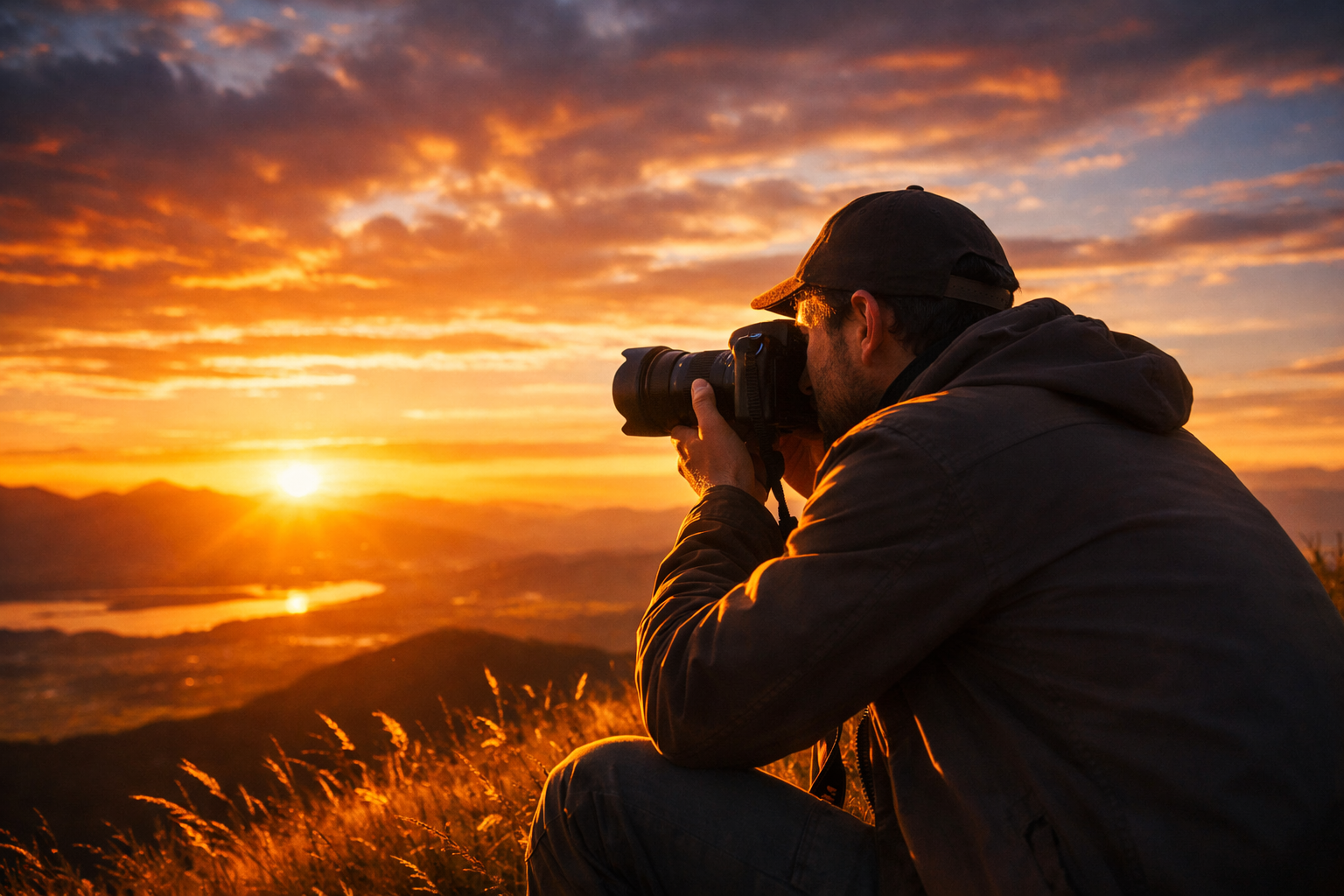
As with moving subjects, the same “rule” applies when taking photographs of people. If your subject is looking left (your left, not hers), place her on the right – allowing her to look into the photo. This will create a sense of balance and depth. Similarly, if your subject (be it a person, dog, elephant, whatever) is facing a certain direction, the space should be given to that side. For example, a person facing left should be placed on the right.
This post is part of the series: Photography Composition
To take the best photos, there are many different photographic composition techniques you need take into consideration. This article series on photography composition will provide you with guidelines, tips and techniques to help you learn how to take better photos.
- The Big Picture – Photographic Composition Techniques
- Give Them Space - Photography Composition Techniques
- Capture Photos from Different Angles – Photography Composition Techniques
- Don’t Forget to do a Background Check - Photography Composition Techniques
- Contrast - Photography Composition Techniques
- Fill Your Frame - Photography Composition Techniques
- Framing Your Subject - Photography Composition Techniques
- Making Use of Lines – Photography Composition Techniques
- Rule of Thirds - Photography Composition Techniques