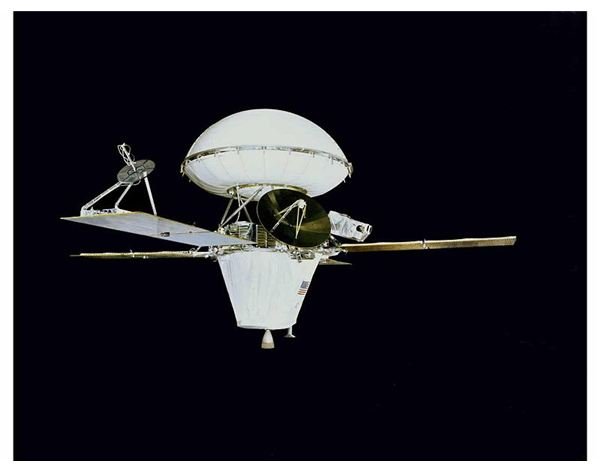
The Viking mission to mars was a highly anticipated experiment with technological achievements rivaling anything humans had attempted to do at the time. According to 1970s space exploration, what the scientists at NASA accomplished was amazing. How to get there was the challenge.
What Viking Meant to Mankind
As the most expensive mission sent to Mars at the time, the Viking probes ultimately provided the best database of information about fourth planet in the solar system until the rovers Spirit and Opportunity landed in 2003. Following the limited success of the Mariner missions, NASA endeavored to learn more about the red planet. In 1975. Two Titan III-E rockets launched Viking 1 and Viking 2. Each of the probes ferried a lander and an orbiter to our sister planet. Once the probes reached Martian orbit the landers detached, entered the atmosphere and soft-landed at the chosen sites. Meanwhile, the orbiters continued their patrol of the Martian surface from above. Each used a variety of scientific instruments to collect data over the next few years, relaying the information to Earth. According to NASA, the entire experiment cost approximately one billion dollars.
Orbiters of the Viking Mission
In addition to acting as transport vehicles for the landers, the Viking orbiters performed initial reconnaissance to determine the best landing spot for the craft. After the surface mission successfully began, they also acted as the communication relays for the landers. The orbiters were able to photograph large swaths of the Martian surface, providing a topographic map of the planet, which NASA still uses as a reference.
The vehicles themselves were powered by a combination of liquid-fuel rockets and four solar panels. Each contained six gyroscopes for stabilization, two antennas and tape recorders with 1280 megabits of storage capability.
The Landers are Successful
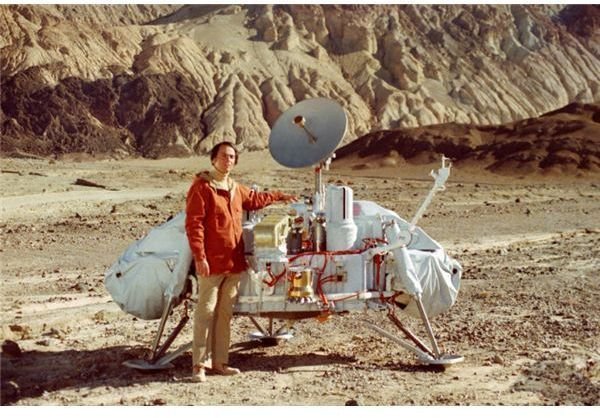
The brunt of the scientific research was handled by the landers. Each carried instruments designed to study biology, chemical composition, magnetic properties, meteorology and seismology. Sensors collected data about the surface and atmosphere. Two cameras, each capable of 360-degree panorama images were mounted on the vehicles, as was a sampler arm, capable of collecting rock and soil samples.
Each Viking lander was powered by two radioisotope thermal generators. Landing was accomplished using monopropellant hydrazine powered rockets fitted to the bottom of the vehicle in four clusters of three. This gave the vehicle stability as it deorbited. Both landers also had two antennas, capable of direct communication with Earth if the orbiters failed. However, the tape recorder was capable of storing only 40 megabits of data.
Results of the Mars Mission
Viking 1 was launched on August 20, 1975. The orbiter arrived the following year on June 19 and the lander touched down on the surface on July 20. After a little over four years, the orbiter depleted its attitude control fuel and shut down on August 17, 1980. The lander continued delivering information for another two years until it eventually failed during a software update. The antenna retracted, terminating communication on November 13, 1982.
The Viking 2 mission was less successful. The rocket launched on September 9, 1975 and obtained orbit on August 7, 1976. The lander arrived on the surface on September 3. After nearly two years, the orbiter suffered a fuel leak in the propulsion system and shut down on July 25, 1978. The lander lasted another year and a half until a battery failure caused its deactivation on April 11, 1980.
More About Mars Missions
Image Sources
Viking orbiter (Supplied by NASA; Public Domain; https://upload.wikimedia.org/wikipedia/commons/7/75/Viking _spacecraft.jpg)
Carl Sagan and the Viking lander (Supplied by NASA; Public Domain; https://upload.wikimedia.org/wikipedia/commons/e/e8/Sagan _Viking.jpg)
This post is part of the series: Viking Mission to Mars
The mission to Mars of the Viking 1 and Viking 2 spacecraft were both amazing in their aeronautic pursuits and exploratory success. While NASA was able to deliver two sets of crafts to the red planet, challenges to the experiments conducted remain a controversy.