There are numerous German aviation pioneers that helped establish the foundations of the industry in the early 1900s. Among other things, their nationality caused controversy in regards to who really performed the first powered flight, possibly beating the Wright Brothers by two years.
Otto Lilienthal
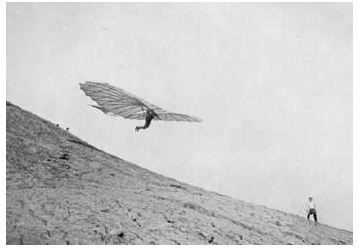
One of the greatest German aviation pioneers was Otto Lilienthal. During the late 1800s, he developed a number of hang glider designs capable of heavier-than-air flight. His most popular work was documented by photographers of the era and became the basis for modern hand glider and ultralight aircraft. Using a triangular control frame, Lilienthal was able to control his center of gravity with his body, allowing him to fly easily from the tops of hills to the ground at roughly 10 meters per second. He was able to show that stable aircraft design was possible and even made advancements that eventually led to the biplane. Research conducted by the pioneer helped change the use of aerodynamic design forever.
Gustave Whitehead
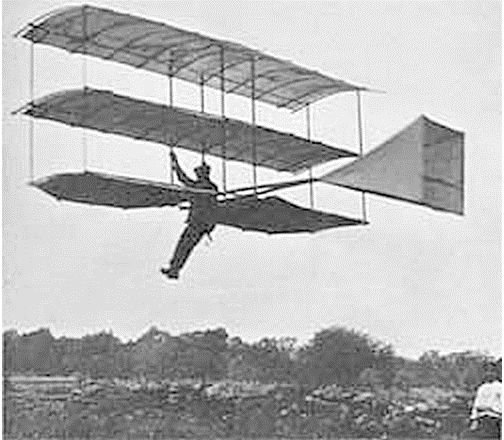
Born Gustav Albin Weisskopf, this German pioneer of aviation changed his name upon immigrating to the United States. Using a self-built engine, Whitehead allegedly made his first flight in 1901, two full years before the Wright Brothers and Karl Jatho. In Connecticut, Whitehead was credited in newspapers with performing fixed-wing flights over the course of two years. The design was an aluminum craft with a wingspan of 36 feet (11 m). This was the first time that metal was used rather than wood. Whitehead pioneered other concepts as well such as rubber wheels that enabled more efficient landings and cement runways. After his death in 1927, he began a small rise in popularity with the controversy over who performed the first powered flight. This helped stimulate debate with many aviation enthusiasts.
Karl Jatho
As an aviation pioneer of Germany, Karl Jatho is believed to have flown a powered airplane a full four months prior to the Wright Brothers. On August 18,1903, Jatho flew a single-cylinder 10 horsepower engine that powering a single two-blade propeller. Although his design was different from the Wright Brothers in that the wings were flat rather than curved, it still sustained flight of 200 feet (60 m) at an altitude of 10 feet (three meters). Jatho failed to capitalize on the event and was overshadowed by Orville and Wilbur Wright later the same year. He eventually set up a flying school for pilots and the preliminary dynamics of an aircraft factory . However, both failed prior to his death in 1933.
Heinrich Focke and Georg Wulf
In 1909, Heinrich Focke worked with Georg Wulf to build a powered glider and followed it up with a motorized plane the next year. By 1912, the two had perfected their designs, which became used by the German military in the World Wars under the name of the Focke-Wulf Company. Focke also has the distinction of designing the world’s first helicopter in 1936, the Focke-Wulf Fw 61, inspired by Juan de la Cierva’s autogyro.
Of all the aviation pioneers throughout history, Germans hold a strong position amongst some of the most famous.
References
“Focke-Wulf” Aviastar: https://www.aviastar.org/manufacturers/0908.html
“We Were the First” The Karl Jatho Project: https://www.karl-jatho.com/html/we _were_the_first.html
Gustave Whitehead: https://gustavewhitehead.org/
Otto Lilienthal: https://www.flyingmachines.org/lilthl.html
Image Sources
Otto Lilienthal Glider. (Supplied by Dr. Richard Neuhauss at Wikimedia Commons; Public Domain; https://upload.wikimedia.org/wikipedia/commons/6/6b/More _otho_flying.JPG)
Whitehead in his Glider. (Supplied by Wikimedia Commons; Public Domain; https://upload.wikimedia.org/wikipedia/commons/4/4e/Whitehead _in_his_Glider_1.jpg)
This post is part of the series: Avaition Pioneers
There are many people that can be considered pioneers in the field of aviation. While some of these are widely-known, others are simply recognized in the industry.