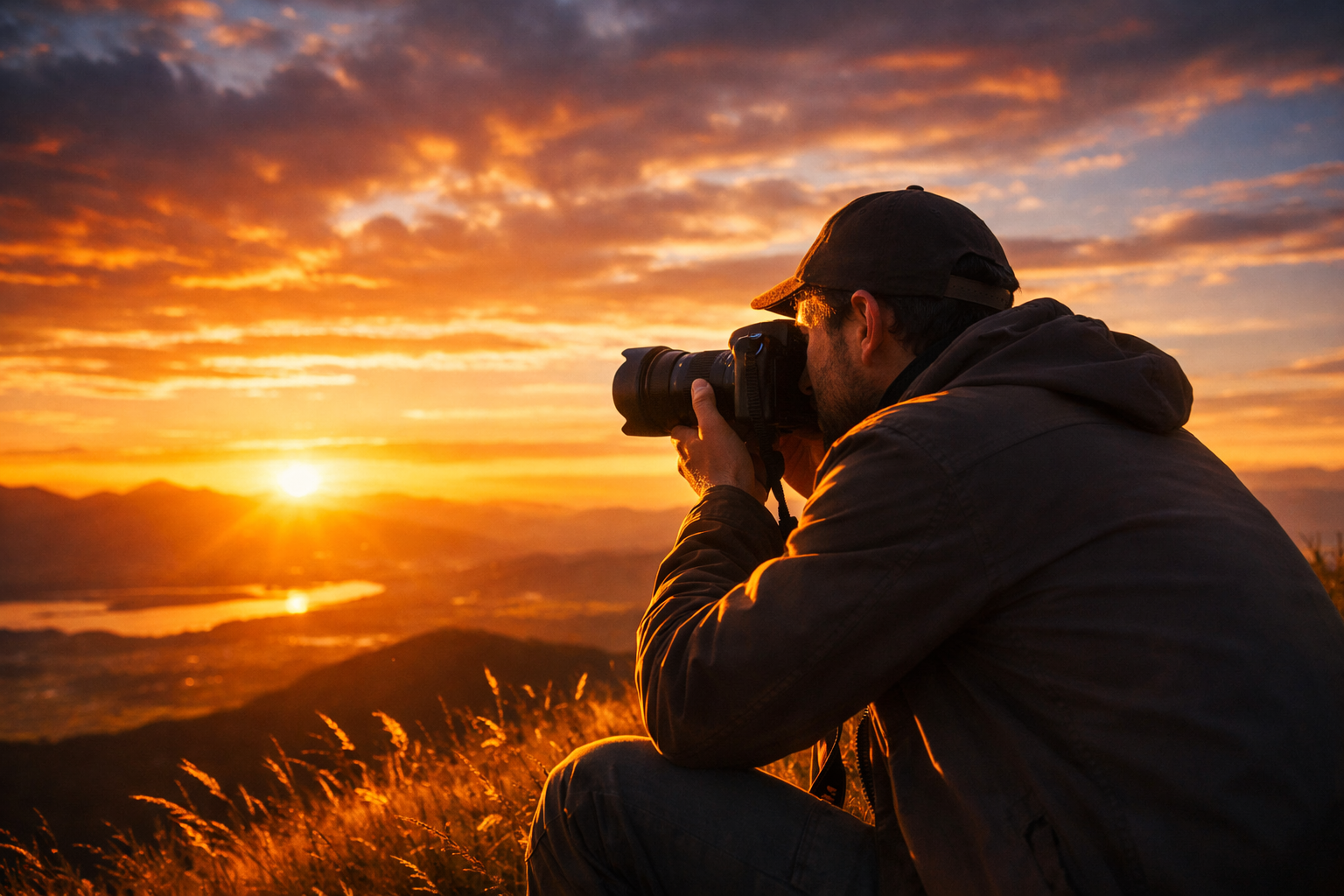
Photography. The mention of the word conjures images of beautiful scenery, portraits, still life and everyday life captured in the blink of an eye. But not many know the history of photography and just how far back the camera actually dates.
History of Photography - Through the Years
The history of photography was not inspired by a single person or invention. In fact, the camera’s development had numerous influences that date back to the early 1800’s, even though the recording of images dates back even further than this.
The Fourth Century
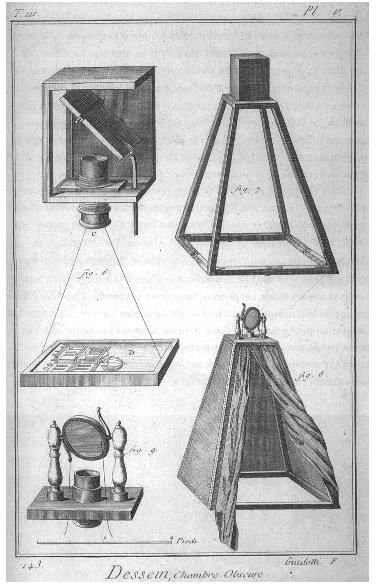
The camera obscura, which was first recorded in the fourth century by Aristotle, was actually a room that was completely enclosed. There was a hole in one wall that diffracted the light coming through which produced an image of the scene outside onto the opposite wall. From these stationary first beginnings the camera, as we know it today, slowly began to evolve.
The Tenth Century
In the tenth century, Arabian scholar Hassan ibn Hassan (Ibn al Haitam) records the camera obscura in his writings, and Leonardo da Vinci (1452-1519) documents the use of the camera obscura in his manuscripts. In 1568 Daniel Barbaro developed a lens with the instructions one was to filter out all light entering the room except that passing through the lens. This would project the image onto a piece of paper and enable the artist to trace the image, complete with color, motion, water twinkling and birds flying. The development of this lens turned the camera obscura into an optical instrument.
(Click on images to emlarge)
The Seventeenth Century
It was the seventeenth century that saw the camera obscura change to a portable device. Measuring approximately one foot square this particular model had a lens within a metal tube and a mirror inside to turn the image right side up. Although there were many attempts to improve the art of recording images, it wasn’t until the 1800’s when photography saw its next big development.
In 1826-1827, Nicéphore Niépce managed to take what is considered the first photograph using a technique known as heliography.
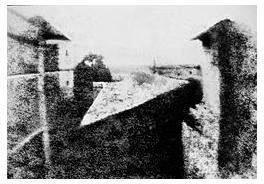
This image was the view from Niépce’s estate, Le Gras. Produced onto a pewter plate using the light sensitive medium bitumen of Judea, this process took approximately eight hours of exposure in the sunlight. The original resides in the University of Texas, Austin. Although Niépce presented the technique of images on pewter to British scientists in the hopes of financial gain, it did not garner the support he had hoped.
In December of 1829 Niépce signed a partnership agreement with Louis Daguerre, but in July of 1833 Niépce died suddenly leaving his notes to Daguerre. While Daguerre really had no scientific background, he made two important discoveries that contributed to the development of photography. He found that if he exposed silver to an iodine vapour before exposing it to light, and then to mercury fumes after the picture was taken it would form a latent image. He then placed the plate in a salt bath which set the image. In January 1839 Daguerre announced his process and labelled it the daguerreotype. Polaroid still uses a similar process today for its photos.
Fox Talbot, upon reading of Daguerre’s invention, began perfecting his own process. In 1838 he received an effective fixer from John Herschel, the astronomer. Herschel showed that hyposulfite of soda (sodium thiosulfate) would dissolve silver salts. Talbot realized if he coated paper sheets with silver chloride, it created an intermediate negative image, which he called the calotype process. This negative image could then be used to reproduce a positive print, much like most chemical films today. George Eastman later improved this process by refining it and it is basically this technology used in film cameras today.
This post is part of the series: The History of Photography - From the Fourth Century to Today
Have you ever wondered where photography came from? When was the first camera invented? Who invented photography? How has photography developed over the years? This article series will teach you about the history of photography and the origins of the camera.