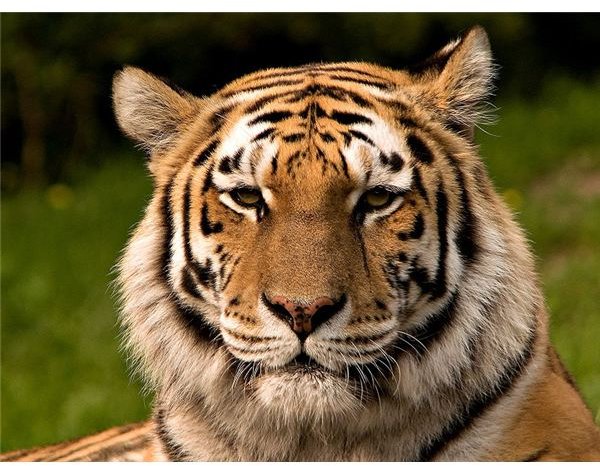
The Frozen Ark Project is a global initiative that will ultimately harness the power of genetics to prevent animals from becoming extinct. Gene banks have been created to collect, preserve, and stockpile the DNA of endangered animals.
Saving the Most Endangered Animals
Noah had the right idea. When disaster was forecast he gathered the animals two by two and bundled them into the ark to preserve their genetic diversity . A modern day version exists, designed to save thousands of creatures faced with extinction. It’s called the Frozen Ark Project and is being run by scientists from the Natural History Museum in London. Rather than offering shelter in a wooden boat, salvation comes in the form of laboratories, where animal cells, tissue and DNA will be stored in liquid nitrogen.
Importance of Preventing Extinction
Despite the best work of conservationists genetic diversity will diminish as thousands of animals are expected to be wiped off the face of the planet within the next few decades. Not from a heavy downpour, but because of pollution, destruction of their homes, war and climate change. Eminent environmentalist and the project’s patron, Sir Crispin Tickell of Oxford University highlighted the scale of the problem in an interview with the British Broadcasting Corporation. “Extinctions today probably equal the last five great extinctions.”
Severely Endangered Animals
When a species disappears a whole evolutionary history of adaptations is lost, but now their genetic codes can be stored for future scientists to learn from, and maybe use in conservation efforts. The technology has moved on leaps and bound since Noah’s time.
How the Frozen Ark Project Works
Tissue samples will be taken from endangered species and transported to several laboratories around the world that are part of the Frozen Ark Project. The DNA will be extracted, frozen for safe-keeping, and all being well could remain viable for 100,000 years or more. A 30,000 year old mammoth was found in the Siberian permafrost, and it had good DNA, that had remained stable in average temperatures of about -10C. Frozen Ark material will be stored at -196C, so the DNA could potentially last an incredibly long time indeed.
Can we Resurrect Extinct Animals?
The main priority is to maintain a record of past genomes, but though current technology makes animal resurrection impossible, that’s not to say it won’t be a viable option in the future. The DNA could be used to create clones of extinct animals that could be implanted into surrogate mothers from closely related species. Where possible, sperm and egg cells will also be stored, so that an artificial fertilization programme could be initiated once a species comes close to the brink.
DNA is an astounding molecule, containing the detailed blueprints of an animal’s composition, development and evolutionary history. The stored material, these genetic codes, could also be used in captive breeding programmes to restore genetic variation where it’s been lost through inbreeding.
Two by Two
First into the ark was the DNA of the scimitar-horned oryx, which was declared extinct in the wild in 2003. Other early samples included the biological material from a coral fish called the banggai cardinal. Many more will follow over the coming years. With thousands of animals on the endangered list, the need is urgent if extinction is to become a thing of the past.


