Bed bugs have been making a comeback, so once again there is an arthropod assault infesting urban areas. Fortunately, these tiny critters don’t cause diseases, but they are highly irritating when they feed on human blood. So how do they do it?
What do Bed Bugs Look Like?
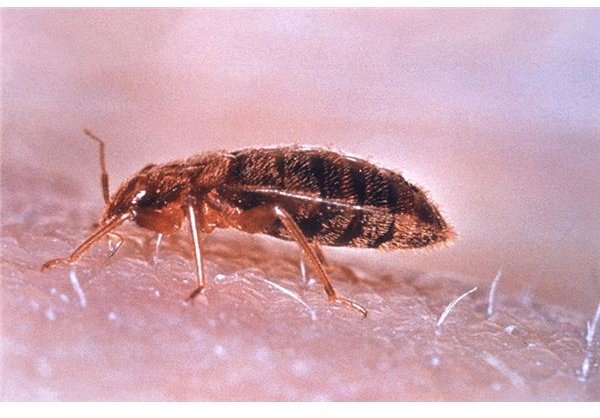
A bed bug (Cimex lectularius) can be seen by the naked eye. They are flat, oval-shaped and approximately 4-5 mm in length. Their colouring is reddish brown, though this changes to a purple colour after a good feed. When full of blood their shape changes, and they become more spherical. They are also easier to crush when they are in this state, and blood splats are often the first sign of infestation as people move in their sleep and squash the human parasites.
They do not have wings and so cannot fly, but they crawl or are carried passively in or on clothing and luggage. Their legs are reasonably powerful, and they can make their way up vertical surfaces such as walls, and bed posts, though they can’t handle highly polished surfaces. Like all insects there is an abdomen, thorax and head segments. The eyes are nearly black in colour.
Bed Bugs Bite
The bloodsucking creatures only come out at night (generally speaking) and prefer to go on their feeding frenzy closer to dawn. Though they can survive off the blood of other animals, it’s human blood that is number one on their menu.
They are attracted by carbon dioxide, (you’re exhaling loads of the gas all the time) and warmth. The long thin antennae contains the sensory organs. The bugs gorge themselves on blood taken from the peripheral circulatory system. To do this they have to penetrate blood capillaries. The mouth region has two pairs of pointed stylets. One pair pierces and penetrates the skin epidermis, which is painless. A sawing motion has been observed by some scientists as the insect creates a hole to allow it to get to its dinner. This is all done without alerting the host, which is an effective survival strategy, until you rollover on them.
The other pair of stylets has two hollow tubes. One releases saliva which acts as an anticoagulant (stops the blood from clotting), and the other tube sucks up the blood. It’s the saliva that causes the bite to itch.
A bed bug usually takes 5-10 minutes to finish its meal.
Sources
Image of Bed Bug: The Centers for Disease Control and Prevention
Bug’s Eye View by Brian J Ford and Debbie J Stokes https://www.brianjford.com/06-08-bedbug-rms.pdf