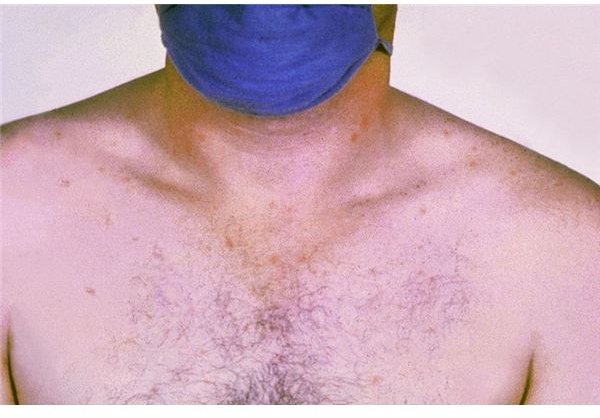
Typhoid fever, or simply typhoid, was responsible for erasing one third of the population of Athens in Greece. Today, it is the cause of approximately 200,000 deaths per year. In this article we focus on typhoid fever, typhoid symptoms, and how to prevent typhoid infections.
How Common is Typhoid Fever Now?
Typhoid fever, or simply typhoid, is a serious invasive bacterial disease of humans caused by the bacterium Salmonella typhi. A related microorganism (Salmonella paratyphi), can also cause typhoid fever, although with less severe symptoms. The name S typhi is derived from the ancient greek “typhos”, a sort of cloud that was believed to cause disease and madness in ancient Greece (the Great Plague of Athens). Typhoid fever occurs primarily in developing countries with poor sanitary conditions. According to Crump et al (2004) typhoid fever infects 21.6 million people and is responsible for roughly 200,000 deaths each year. Currently, within the United States, estimates of 200 to 400 cases of typhoid fever are reported per year.
Typhoid Symptoms
According to the Center for Diseases Control (CDC), typhoid symptoms are: “sustained fever as high as 103° to 104° F (39° to 40° C).” Patients also experience stomach pains, headache, diarrhea (although constipation is also possible) and/or loss of appetite. The incubation period is usually one to two weeks. The duration of the illness is about four to six weeks. A characteristic type of rash, called “rose spots,” may appear in some cases of typhoid. These “rose spots” are about 1/4 inch red spots that appear usually on the abdomen and chest. Mortality rates are low if treated soon after it is diagnosed. The treatment consists of antibiotic therapy. Strains of resistant S. typhi have developed due to the over use of antibiotics or prescribed antibiotic courses that haven’t been concluded.
Bacteria of Typhoid Fever
Recently, the genome of 19 strains of S. typhi have been compared (Holt et al, 2008). By comparing these genomes, scientists have found that there is little genetic variation between strains. Also, a significant loss of genetic function seems to characterize S. typhi evolution, characteristic of small size populations of microorganisms. Typhoid-causing agents seem to have chosen a strategy of being a pathogen of humans only, and not a promiscuous microorganism. The persistence of the microorganism is consistent with the idea that asymptomatic carriers are the main vectors for this disease, at least in developed countries.
Typhoid Fever Prevention
Typhoid fever infections occur when people eat food or drink beverages that have been handled by a person who is shedding S. typhi or if sewage contaminated with the bacterium gets into the water people use to drink or wash food. This is why typhoid is more persistent in countries where poor hygiene is widespread. Infections can occur whilst visiting areas where the disease is endemic (Asia and Latin America for example). Prevention is the key to avoiding such infections. Well-cooked food and bottled water usage will prevent, to a great extent, typhoid infections. Vaccination, although not 100% effective, exists for travelers going to endemic regions.
Sources:
Crump et al (2004) . The global burden of typhoid fever. Bull World Health Organ. 82(5):346-53. URL: https://www.medscape.com/medline/abstract/15298225
Holt et al (2008). High-throughput sequencing provides insights into genome variation and evolution in Salmonella Typhi. Nature Genetics 40, 987 - 993