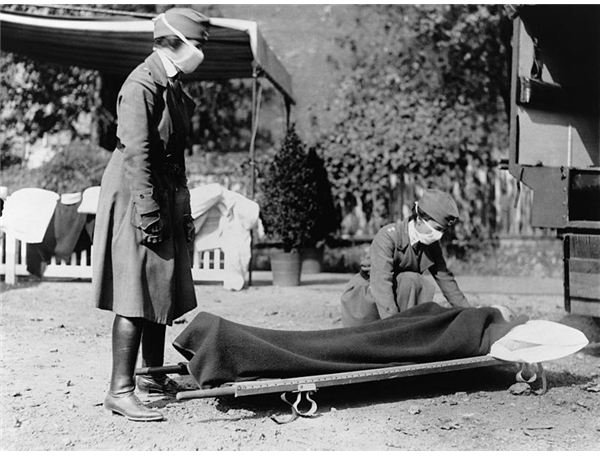
The 1918 flu virus devastated the world, killing between 20 million and 50 million people. Its lethal nature caused more deaths than the bombs and bullets of World War 1. Scientists are trying figure out what made it so deadly, in the hope of preventing such a pandemic from happening again.
1918 Flu Epidemic Deaths
The 1918 flu virus was the most devastating infectious agent to strike humans. The lethal killing machine wiped out tens of millions of people, with some estimates putting the number of victims at close to 100 million.
Scientists still don’t fully understand what made the 1918 flu virus so deadly, but ongoing research is searching for the genetic culprits, knowledge that could help prevent a similar pandemic from occurring.
1918 Flu Virus Genes
To understand how the 1918 flu virus took hold researchers have been able to study some of its genes to help them work out how it killed its victims.
University of Wisconsin-Madison researchers and teams from two centres in Japan have identified three genes that they claim made the virus so deadly. They were able to extract them from the preserved lung tissue of a 1918 victim.
Autopsies of 1918 flu virus victims revealed that the bug had infected lung tissue, causing haemorrhaging. A mystery was how the virus moved from the upper respiratory tract and reproduce so successfully in the lungs to bring about viral flu symptoms and eventually death.
Genetic Clues
To see how the virus works, scientists placed the extracted genes (one at a time) into a modified modern day human flu virus. Then they infected ferrets with the infectious agents to see how the virus spread in the body. Ferrets were used because apparently the virus spreads in their bodies in a similar way to humans.
During the course of the experiments the scientists saw how three genes - PA, PB1, and PB2 - colonized lung tissue and successfully reproduced there. RNA polymerase was in abundance; an enzyme involved in viral reproduction.
There have also been other genetic clues to the lethal nature of the 1918 flu virus. In 2004 Yoshihiro Kawaoka (who led the three gene research) identified a gene which made the 1918 flu virus more virulent in mice.
In 2007 scientists ‘recreated’ the virus and infected monkeys with it. Flu symptoms rapidly spread and their lungs were destroyed within days. A contributing factor was their own immune system. It went into overdrive, and a gene called RIG-1 appeared to be involved. Its protein levels were low in infected tissues and scientists postulated that this led to the immune system going out of control.
Stopping Pandemics
Research studies into the causes of the 1918 flu virus are not a history exercise. We need to be ever vigilant of the threat posed by viruses. The scares about bird flu in recent years demonstrate the need to be at least one step ahead of the microbial world. Genetic research equips scientists with the knowledge to be better able to spot virulence factors and design ways of stopping them in their tracks before viruses can do any lasting damage.


