This list of tropical weather terms and explanations will help grade school and middle school students understand the weather forecasts for tropical regions.
It can be much easier to understand what the weather forecaster is talking about if you understand the terms being used. The following is a list of the most common tropical weather terms with explanations and definitions that are easy to comprehend. To understand tropical weather terms, knowledge of some basic meteorological terms is required. Here are a few important general weather definitions in regards to this topic:
Cyclone: This is not actually a term specific to tropical weather, but it is important to understanding some of the other terms. A cyclone is sometimes called a tornado . It is the circular motion of air that creates a funnel that is powerful enough to tear apart homes and businesses. This circular motion is also apparent in hurricanes and tropical cyclones.
Isobar: A line on a map connecting points of equal atmospheric pressure.
Basic Tropical Weather Terms and their Definitions
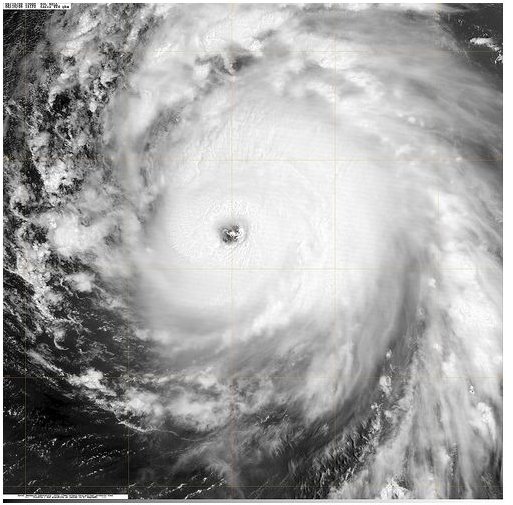
Hurricane: A hurricane occurs over water and has the same circular wind pattern as a tropical cyclone. A tropical cyclone becomes a hurricane when the wind speeds exceed 74 miles per hour for at least one minute and the circulation becomes very pronounced. The term hurricane is used when discussing a system over the North Atlantic, Gulf of Mexico, North Pacific E of the dateline, and the South Pacific E of 160E. It is called a typhoon in the N pacific west of the dateline. When looking at a picture of a hurricane you will be able to see the ‘eye’ eye of the storm as a circle with clouds trailing out all around in a spinning pattern. Hurricanes receive a name as soon as they become hurricanes to help identify them as they occur and afterwards as needed. An example is Hurricane Katrina.
Intertropical Convergence Zone: This is the geographic location where the trade winds from the north and the south meet. There is almost always a band of clouds and thunderstorms along this region because of the air that is mixed when the trade winds meet around the equator.
Post-Tropical: This term is used after a hurricane or cyclone has lost some power and does not meet the wind speed requirements to be called a hurricane or typhoon. Using the term Post-tropical allows the continued use of the name that was given to the storm when it was a hurricane or typhoon. These storms are still powerful and dangerous, but this term is used more for convenience.
Tropical cyclone: This storm is almost a hurricane or typhoon. It has gone beyond the level of a tropical storm with wind speed and organization of the storm clouds. A tropical cyclone develops over tropical waters and has a well-defined surface (think thunderstorm) with some wind circulation. A cyclone may never achieve the wind speeds needed to become a hurricane or typhoon, but it is still a dangerous storm with a lot of rain and high winds. It may have gusts that meet the hurricane requirements but does not keep them as a sustained wind speed.
Tropical depression: This is the beginning of a tropical storm. Wind speeds cannot exceed 39 miles per hour and there is at least one closed isobar. This means there is a circular area where the atmospheric pressure is the same. The next level is a tropical storm.
Tropical storm: This is the second level of storm strength on the way to becoming a hurricane or typhoon. The wind speeds of a tropical storm fall in between 39 miles per hour and 73 miles per hour and there are two or more closed isobars.
Typhoon: This storm is the same as a hurricane, only they have varying geographic locations. A tropical cyclone becomes a typhoon when the wind speeds exceed 74 miles per hour for at least one minute. It is called a typhoon in the N Pacific west of the dateline.
These are the most common tropical weather terms with explanations that you will often hear on the weather channel and in the news around the world.
Resources and References
These resources contain more weather terms with included technical definitions:
National Weather Service Terms Used By Meteorologists: https://www.erh.noaa.gov/er/box/glossary.htm
National Weather Service Ocean Prediction Center: https://www.opc.ncep.noaa.gov/product _description/keyterm.shtml
Western Region Climate Center: https://www.wrcc.dri.edu/ams/glossary.html
State Climate Office of North Carolina: https://www.nc-climate.ncsu.edu/education/glossary
Photo Credit: CoreBurn, https://www.flickr.com/photos/65765645@N00/3836794423