
This shark has a unique feature from other species in its family. Learn what it is and find more interesting tiger shark information, including facts about its description, habitat, diet and more.
The Tiger Shark
The tiger shark, one of the largest shark species in the world, earned this name because of its tiger-like stripes and its aggressive behavior as a hunter like a tiger . It is also known as the maneater shark because it is known to attack man. After the great white shark, it has the highest number of reported attacks on humans. Don’t let this intimidate you too much though. Shark attacks are not that common. In fact, more people are hit by lightning than attacked by sharks. Continue reading for more interesting tiger shark information.
Description
The average tiger shark is 10 to 14 feet long and weighs 850 to 1,400 pounds. The largest is believed to be 17 feet, weighing over 2,000 pounds. They are gray in color with a white underbelly. The dark, vertical stripes fade or disappear as they mature into adulthood. Their snout is short and rounded and their mouth is large with saw-like teeth.
Habitat
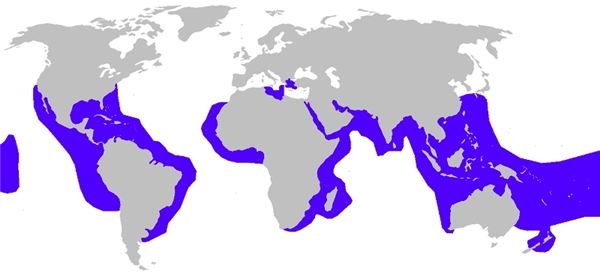
These sharks can be found throughout the world in tropical and sub-tropical waters. Normally they stay offshore in depths as deep as 1,150 feet during the day and move inshore at night to hunt and feed. They do migrate and can travel long distances over a short period of time.
Diet
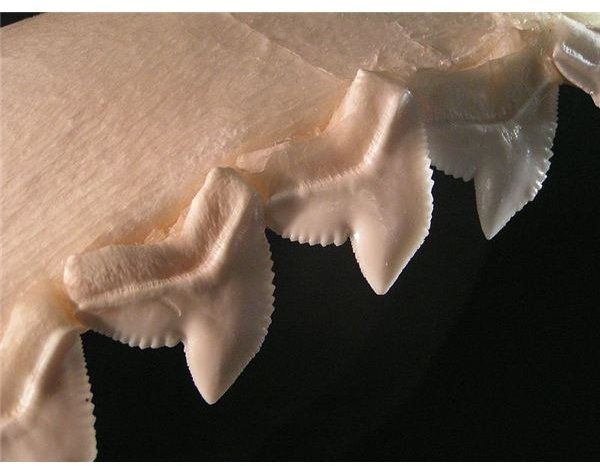
Tiger sharks have been given the nickname “wastebasket of the sea” because they will swallow just about anything it finds. Their powerful jaws and serrated teeth allow them to easily crack shells and their saw-like action allows them to tear chunks from large animals. Prey includes sea turtles, clams, mollusks, fish, stingrays , squid, seals, dolphins, sea snakes, birds and other sharks. They are also known to gulp down items such as plastic and glass bottles, tin cans, license plates, rubber tires, burlap sacks, drums, chicken coops, and unexploded munitions.
Reproduction
Tiger sharks are the only species of its family (Carcharhinidae) that is ovoviviparous, meaning their eggs hatch within the body of the female. The gestation period is 14 to 16 months and the mother gives birth to 10 to 80 pups per litter. Pups are 1 to 1 1/2 feet long at birth and are ready to breed in 7 to 8 years.
More Facts
The following includes more interesting tiger shark information:
• They have excellent sight and smell.
• Full grown tiger sharks have little to no fear from predators that share their habitat.
• They are killed by man for sport. They are hunted for their flesh which is used as high quality leather and their liver which is an excellent source of vitamin A.
• In the wild, they live up to 50 years.
• The tiger shark is listed as “Near Threatened”.
References
https://animals.nationalgeographic.com/animals/fish/tiger-shark.html
https://www.flmnh.ufl.edu/fish/gallery/descript/tigershark/tigershark.htm
https://marinebio.org/species.asp?id=37
https://www.elasmo-research.org/education/shark _profiles/carcharhinidae.htm
Photo Credit
https://commons.wikimedia.org/wiki/File:Tiger _shark.jpg
https://commons.wikimedia.org/wiki/File:Tiger _shark_distmap.png
https://commons.wikimedia.org/wiki/File:Tiger _shark_teeth.jpg