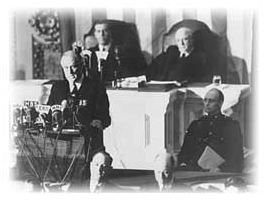
On December 8, 1941, the day after the Pearl Harbor attack, President Franklin D. Roosevelt addressed the US Congress. In one of the most famous speeches in US history, FDR urged Congress to declare war on Japan. This lesson plan focuses on the speech and its effect on American public opinion.
Background
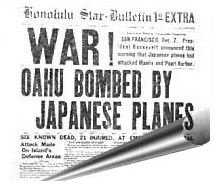
The Japanese attack on Pearl Harbor on December 7, 1941, was a shocking wakeup call to Americans. The American public had preconceived notions of Western superiority and were astonished and outraged by the breathtaking success of Japan’s carrier-based air strike. Over 3,000 Americans were killed or wounded. The damage and destruction of US bases, ships, and aircraft was heavy and crippling. Japan followed up its attacks by invading Hong Kong, Guam, the Philippines, Wake and Midway. Our country was stunned.
This lesson plan will encourage students to study a primary historical source (FDR’s historical “Day of Infamy” speech) that articulates overwhelming American sentiment and resulted in Congress’ declaring war on Japan. Rep. Jeanette Rankin of Montana, a life-long pacifist and the first woman to be elected to the House, was the only dissenting vote.
Learning Objectives
After completing this lesson plan, students should be able to:
- Understand the effect of FDR’s speech to America’s mood and morale following the devastating attack on Pearl Harbor.
- Evaluate the rhetorical style and devices FDR used to stir the listeners’ emotions.
- Debate whether Jeanette Rankin’s sole dissenting vote on the declaration of war was foolish, principled or stubborn.
Resources
Day of Infamy Speech (Includes Audio of FDR)
[Damage photos and casualties of the Pearl Harbor Attack](https://www.sflistteamhouse.com/Misc/Pearl Harbor/original.htm)
About.com: Women’s History: Jeanette Rankin - First Woman Elected to Congress
Class Activities
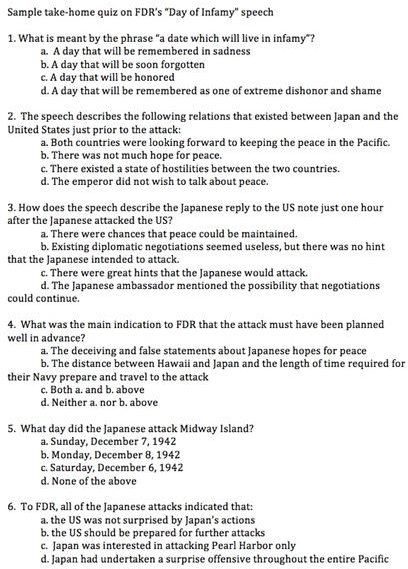
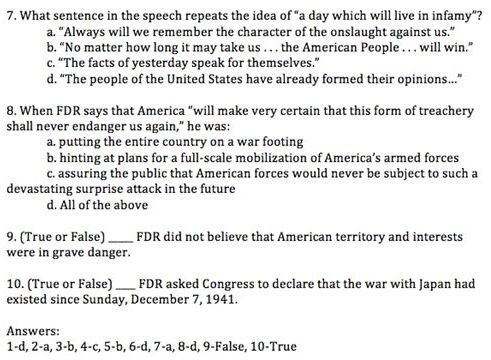
Print the “Day of Infamy” speech and assign it as reading homework. Handout could include the short take-home or in-class quiz posted at the end of this section.
or
Break the students into groups who will read sections of the speech aloud during the class. For effect, have one student each read the staccato sentences of the speech beginning with “Yesterday, the Japanese government also launched…”
Further Steps
The reading and discussion can be the basis of additional activities as follows:
Assign a single-page essay assignment focusing on one or more of the following:
- Analyze the importance of the style of the speech from a stylistic viewpoint:
How does Roosevelt use emotional language to communicate his meaning?
What is the effect of his repeating the phrase “Last night,…” followed by an allusion to the Japanese?
What language does Roosevelt use to unite the American people?
What is the student’s opinion of Jeanette Rankin’s lone dissenting vote? Was she brave and principled, or foolish and stubborn?
Organize a class debate on whether Representative Rankin’s lone vote of dissent in the face of overwhelming public opinion was foolish, wise, principled or stubborn.