Why take a slow photo when you could take a fast one? Discover the benefits of spending half a second, or even longer, taking just one photo.
Speed Up or Slow Down?
In photography, we’re often interested in going fast. We want fast lenses for low light photography, low noise at high ISO settings so we can get enough light with fast shutter speeds…it’s a race to take the photo as quickly as possible before motion spoils the shot.
Sometimes, though, we may want to use a slow motion shutter speed; in fact, there are even filters for the sole purpose of decreasing the amount of light that enters the lens so that we can keep it open longer! Here are a few reasons why we might want to take a slow shot.
Showing Motion
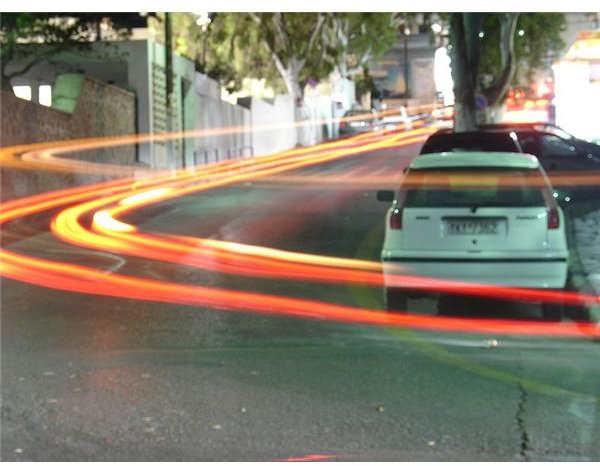
With a slow motion shutter speed, we can capture a sense of motion, whether this be a slight blur from a basketball player sinking a ball or a streak from something that moves off camera during the time required to take the picture. For example, in the photo at right, the car that just drove around the block is no longer visible, but its lights have left an impression in the photo, creating an interesting effect that
would be difficult to get otherwise.
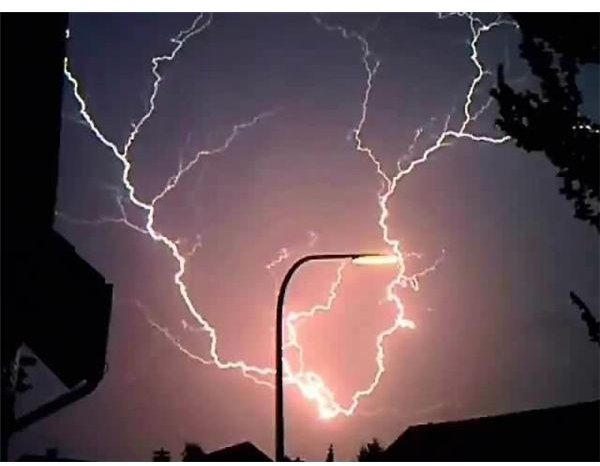
In the image at left, the exposure is long enough to capture a long streak of lightning (although this doesn’t require a particularly long exposure time!)
Water
Photographing water is such a common use of slow motion shutter speeds that it deserves its own section. Moving water, when shot with
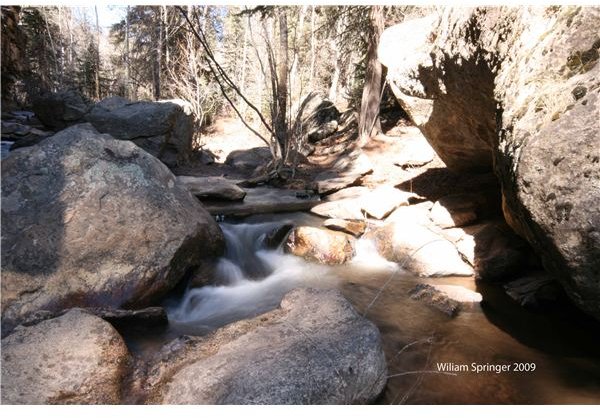
slow shutter speeds, gives a glossy look that many people find extremely pleasing. The photo to the right was taken by the author using a half-second exposure. Click on it to see a larger shot and notice the silky look of the water!
This image was shot without a tripod, as none was available, but generally you always want to use a tripod on longer shots to keep the camera steady. If no tripod is available, one solution is to find a hard surface to set the camera on. Whichever method you choose, it can also be helpful to use a timer to trigger the shutter so that there are no vibrations from pushing the button.
Darkness
Of course, sometimes we use a slow shutter speed not for a special effect but due to the absence of light! When shooting a night scene , we may have to choose between increasing the length of time the shutter is open and using more light or a higher ISO. A high ISO results in more noise, while adding light to the scene may destroy the look we’re trying to capture.
Exposures that run into minutes (or even longer) can provide interesting effects. One way to experiment is to find a dark scene with only a small amount of moonlight and shoot in available light only; the exposure may need to be several minutes. (Obviously, use a tripod!) With this little light, the light meter on your camera may not function correctly, so you’ll need to determine the correct exposure by trial and error. Which, after all, is how we learn to make great photos!