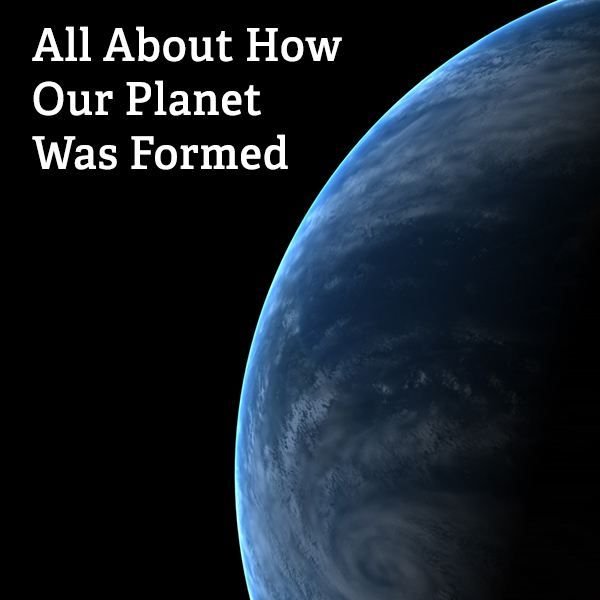
The planet Earth, formed through a long and tumultuous marriage of fire and ice. Glaciers slid across continents; volcanoes spit forth lava creating islands, and earthquakes shattered land masses, pushing up mountains. This is a guide to those processes and the landmarks they created.
In the Beginning
The study of geology brings us the closest to the secrets of how our planet was formed millions of years ago. Through the examination of rock formations, calculations of the movement of glaciers, an understanding of the erosive powers of water and wind as well as knowledge of the continental drift, scientists and researchers can explain how great geological landmarks came to be.
Learning how the various geological processes shaped the land formations of Earth helps us to appreciate the beauty and majesty of places like Mount Everest, Victoria Falls and Glacier National Park. The following articles discuss several of these processes and how they are used to help us understand our planet.
- Exploring Plate Tectonics and Rock Formations
- How River Systems Are Formed
- A River Runs Through it: How Meanders Are Formed
- Composition of the Earth’s Crust
- About the Erosional Plains
- On the Trail of a Glacier
When the Earth Moves
Although we are usually unaware of any movement (unless there is an earthquake) the tectonic plates of this planet are in constant motion and result in changes to the landscape. The plates are primarily giant slabs of the Earth’s crust, about 100km thick and are to be found in the lithosphere, the planet’s outer shell. The continents are embedded into the plates which “float” on a layer known as the athenosphere. The slip of one plate under another causes mountains to rise, the ground to shake and the earth to open. But changes also occur out at sea as the ocean floor expands. Discover more about the processes involved in the articles below.
- The Making of an Earthquake
- Formation of the Rocky Mountains
- Seafloor Spread - Why the Ocean Floor Is Growing
Running to the Sea
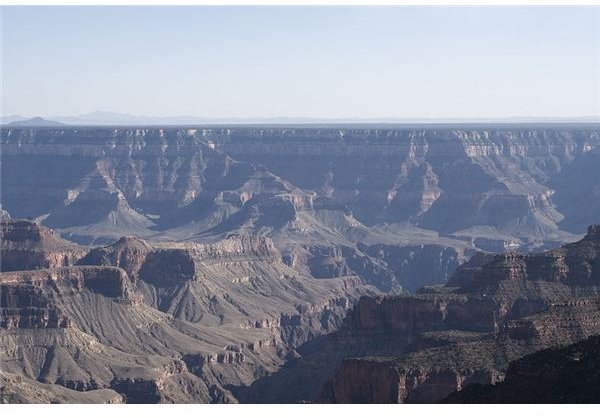
Water, as the power that moves mountains and forms canyons, is often taken for granted. Standing on the North Rim of the Grand Canyon, the splendor of color and the magnitude of its size overwhelms the senses. Yet, this and other famous landmarks, such as Angel Falls in Venezuela had their birth in the running of water to the sea. The power of running water, over time, creates some of this planet’s most breathtaking and spectacular land formations. From Niagara to the Mississippi delta, the flow of water continually changes the face of our planet.
- Grand Canyon National Park: Geology and History
- How the Niagara Gorge Formed
- The Formation of Waterfalls
- Geology of Niagara Falls
- Erosion and Deposition of Rivers
- River Deltas and How They Form
Lakes and Fjords
Ever wonder why certain areas of the world are dotted by lakes and fjords? How did these great bodies of water come into being? What was so powerful that it could carve deep into the Earth’s crust, leaving deep holes in its wake to fill with water? Was it one geological force or several? These articles will give you a glimpse into the geological processes that brought us the Great Lakes, the fjords and other bodies of water.
- The Uniqueness of Crater Lake: Myth and Facts
- Fjords of Norway
- Geology of the Great Lakes
- Corries Glacation-Landforms
Geology of Oceans
The largest geological formations are found beneath the waves of the Earth’s oceans. How did formations in and around the oceans form? What are sea stacks and deep sea trenches? How did the White Cliffs of Dover form?
While things may look calm beneath the waves, the opposite is true. Beneath the ocean, great changes happen that equal, if not surpass those seen on Earth’s surface. How can this be? The following articles reveal all.
- Deep Sea Trenches
- How Headlands Are Formed
- Formation of Sea Stacks
- History of Famous Ocean Landforms
Letting off Steam and Blowing Your Top
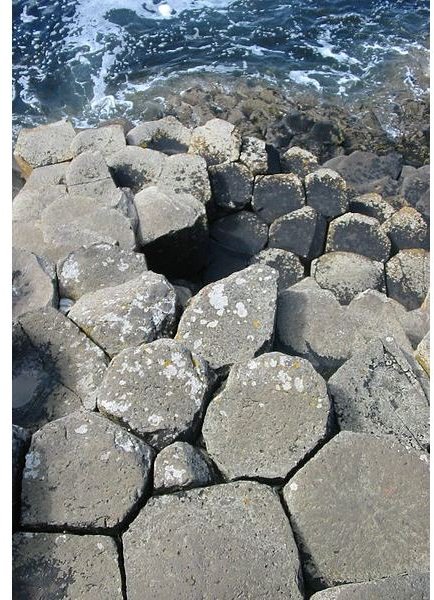
A volcano is one of the ways that the planet can let off some steam.. Like geysers, volcanoes are a means for heat that has built up beneath the Earth’s crust to escape.
Geysers release steam and hot water, which do not alter the appearance of the planet, while volcanoes release molten lava, ash and smoke, changing the landscape by toppling mountains and/or creating islands.
Learn more about volcanoes and how they formed major areas on Earth, such as the Giant’s Causeway, in the following articles.
Through the End of Time
Whether caused by erosion, eruption or earthquake, the surface of the planet is constantly morphing and changing. From famous mountain chains, lakes and rivers to huge continents and oceans, Earth structures are in continual motion. Spinning, bumping, erupting, shaking and crumbling, the Earth never sits still.
References
- Photo Credit - North Rim of Grand Canyon by Pciet under Creative Commons public domain on Wikimedia Commons
- Photo Credit - Giant’s Causeway by Man vyi (Own work (own photo)) under public domain on Wikimedia Commons
- Giant’s Causeway - http://www.giantscausewayireland.com/