What are the erosional plains? Here we will look at the three main erosional plains - the alluvial plain, wind-eroded plain and the glacial plain. We explain them each and discuss the processes through which they are formed. In addition, we list a few locations where each formation has occurred.
Erosional Plains
Erosional plains are developments on the Earth’s surface caused by natural weathering of glacier activity, wind movement or water (sea, river & stream) torrent and are subdivided on the basis of the type of erosional agent. Here we will discuss the glacial plain, wind-eroded plain & alluvial plain. Erosional plains are likely to develop on landscapes that are relatively flat with low height elevations and shallow depressions. Some plains may develop below sea level but not higher than the surrounding region; this is a result of endogenetic factors and diastrophic movements.
Types of Erosional Plains
Alluvial Plain
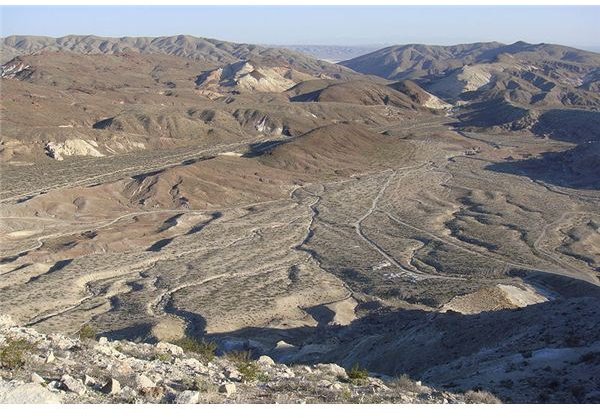
The alluvial plain is an erosional plain that occurs from weathering caused by water currents in the sea, river or stream. Fluvial (water) movement comes from higher land regions and wear away landmasses to produce low relief plains. This is what is known as the alluvial plain. These landforms are made up of the deposition of sediment over a long period of time from the fluvial movement to form alluvial soil. An alluvial plain is characterized by its relatively flat and gently sloping landform and is normally formed at the base of a range of hills. Continuous fluvial weathering of these hills is what causes sediments to move and spread across lower levels to produce this type of plain. These plains are formed mostly by slow running rivers, as slower fluvial movement picks up less sediment off the river floor causing more particles to settle and develop into an alluvial plain. Areas where more particles are dropped off are sometimes referred to as flood plains, and the particles that settle are called alluvium.
Wind-Eroded Plain
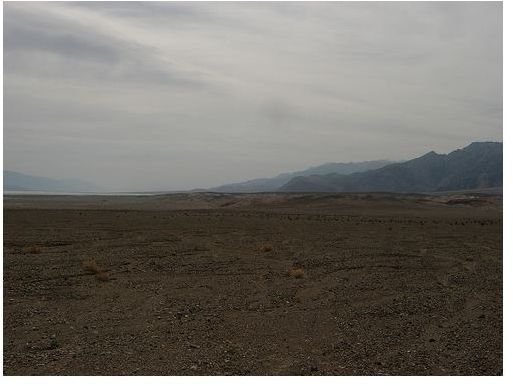
Wind-eroded plains develop in dry land expanses. These formations are created by continuous abrasive wind activity wearing down land formations by a grinding action and a sandblasting of wind-borne particles to shape and disfigure landscape surfaces. Wind-eroded plains are found in arid regions with large supplies of unconsolidated sediment. Vegetation is sparse, as a result of such severe wind erosion. These plains are usually infertile since the most fertile parts of the soil are removed by abrasive wind activity. Soil productivity and maintenance is poor, which impacts seedling survival and growth and ultimately the survival of any type of plant life.
Glacial Plain
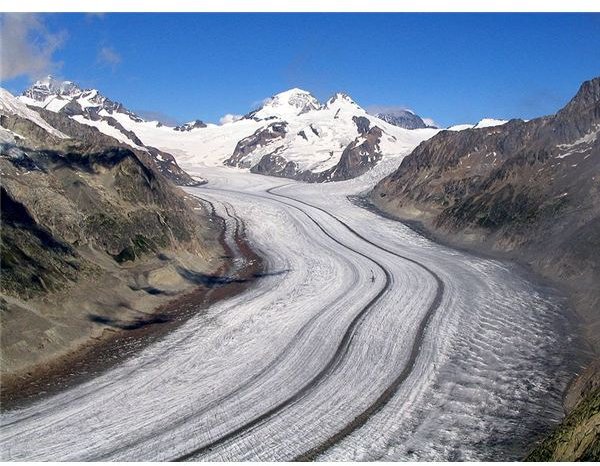
These are structures formed by the movement of ice from highland areas to low land levels. Slow and continuous glacial movement takes place over time to cause sizable erosive work to produce a glacial plain. There are two types of glacial structures - true glacial plains, formed of pure glacial material and outwash plains, formed from deposition of materials such as sand, marl, gravel, silt & clay after the ablation (melting) of glaciers and ice sheets. Marl deposits from a glacial plain are often used to make cement and are great fertilizers as well. Outwash glacial plains often form an alluvial plain when the ice has melted. As ablation occurs, the water rises and moves away from the glacial plain and takes with it fine, eroded sediment. As the speed of the water decreases, so does its capacity to carry objects in suspension. The water then gradually deposits the sediment across the landscape and creates an alluvial plain.
Location of Erosional Plains
Erosional Alluvial Plain - These are formed all over the globe from the effects of vast water movement . Prominent alluvial plains are the Mississippi Delta, Plain of Lombardi (Italy), Yangtze Plain (China), Indus Plain (Ganga), Amazon Plain (Brazil) and Mekong Plain (Cambodia).
Wind-Eroded Plain - These are very uncommon and take the longest to form as they exist in dry regions lacking vegetation. Wind-eroded plains can be found in Libya – The Hamada Red Plain (Sahara Desert) and India - Aravalli Range (Jaisalmer -Thar Desert).
Glacial Erosional Plain - These are found in colder regions with temperatures slightly above and below zero degrees Celsius. Actual glacial plains exist in Sweden, Finland, Ladakh, Imphal Basin and Canada.
References
Singh Y. P. (2009) Geography, Class XI. Delhi: V. K. Jain
Eolian Processes - https://pubs.usgs.gov/gip/deserts/eolian/
The Problem of Wind Erosion - https://www.weru.ksu.edu/new _weru/problem/problem.shtml
Ecoregions of the Mississippi Alluvial Plain (EPA)- https://www.eoearth.org/article/Ecoregions _of_the_Mississippi_Alluvial_Plain_(EPA)
Alluvial Plain, A Wisdom Archive on alluvial plain - https://www.experiencefestival.com/alluvial _plain
Glacial Lake Plains - https://www.geo.msu.edu/geogmich/glacial-lakeplain.html
Glossary of Glacier Terminology – USGS, science for a changing world - https://pubs.usgs.gov/of/2004/1216/no/no.html
Natural Condition, Yangtze Plain - https://www.china.org.cn/english/en-sz2005/zr/dltz-py.htm
Lombardy, Encyclopedia Orbis Latini – https://www.orbilat.com/Encyclopaedia/L/Lombardy.html
Plains of Northern India - https://www.indianetzone.com/24/the _northern_plains_india.htm
Temehu, The Sahara - https://www.temehu.com/Cities _sites/sahara.htm
Glaciers of Europe, Glaciers of Sweden - https://pubs.usgs.gov/pp/p1386e/sweden.pdf
Landforms of Glaciations, Canada - https://www.physicalgeography.net/fundamentals/10af.html
Image Credit
Alluvial Plain, Wikipedia, https://commons.wikimedia.org/wiki/File:AlluvialPlain.JPG
Wind Eroded Plain, https://www.flickr.com/photos/75683070@N00/3378209610/
Glacial Plain, https://commons.wikimedia.org/wiki/File:Grosser_Aletschgletscher_3178.JPG