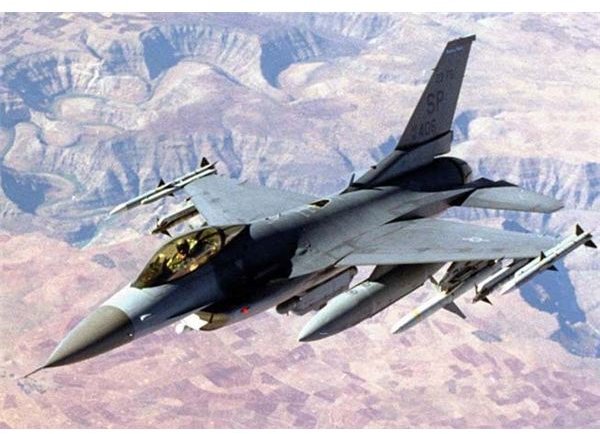
The military of virtually all nations have made rockets a mainstay of their arsenal in the 21st century. Obviously the U.S. and Russia have the more sophisticated systems, but Israel, France, and yes, Iran have highly effective systems.
Missiles in Air Combat
Shortly after the close of WWII, both the U.S. and the Soviets began developing guided rockets to be fired from interceptor fighters to thwart the threat of each other’s bombers should the Cold War heat up. The U.S.’s first salvo in this arms race was the GAR (Guided Aerial Rocket)—4 Falcon. It came in two versions—a semi-active radar guided bird (this means the interceptor had to keep the target ‘painted’ with its radar beam throughout the attack) and an infrared (IR) guided version.
The Falcon was fired in salvos of three—two radar and one IR. It was an expensive system, with each missile costing at the time (1956) about $300,000. The Falcon also turned out to be less than completely reliable.
Fortunately, the Navy at the time was developing its’ own air-to-air missile—the Sidewinder, or GAR-8. IR guided, this was a much simpler and cheaper system and eventually would replace the Falcon. With continuous improvements over decades, the Sidewinder has become the primary short range air interceptor missile (AIM) for today’s fighters. It is now designated the AIM-9.
Carried on a fighter’s wingtips (it is slim and light), they can be independently targeted and launched.
For mid range combat, the AIM-7 Sparrow has been the workhorse since the late ‘70s. For long range combat, the new AMRAAM-120 (Advanced Medium Range Air to Air Missile) has become the standard. It features an active radar guidance system combined with an inertial guidance system. Once fired, it can track the target itself while the fighter aircraft performs evasive maneuvers. It has a range of 20 miles, so it can be fired at a target before the launching aircraft can be seen.
All AAMs are of course solid propellant powered.
Anti-Aircraft Rockets
The fear of each other’s bombers caused both sides in the cold war to develop a series of anti-aircraft rockets, or surface-to-air-missiles (SAM). For the U.S. these started with the Nike Ajax, which later was upgraded to the Nike Hercules. The Hercules used four Ajax boosters clustered for its first stage.
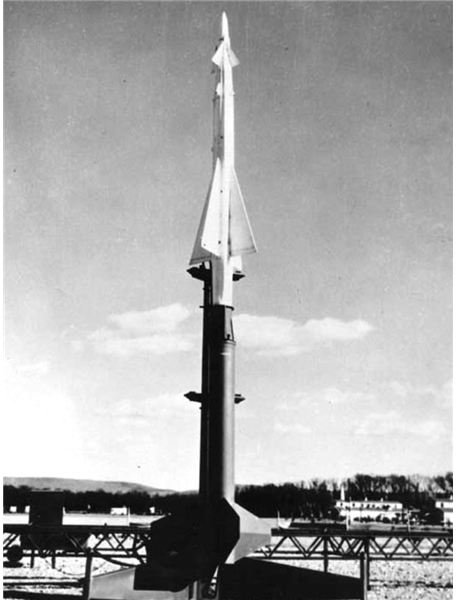
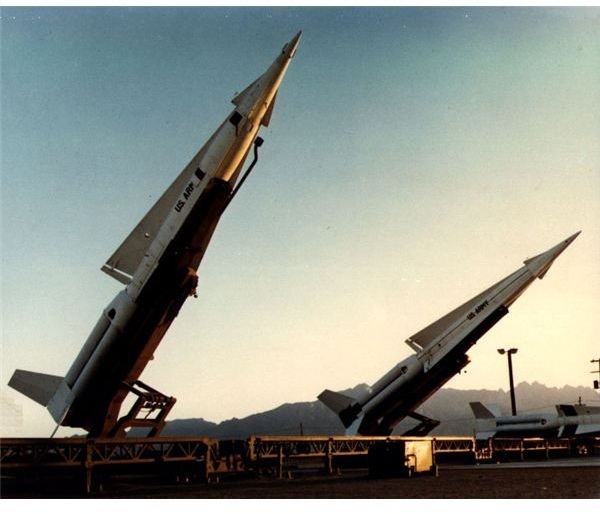
The Soviets developed a series of highly effective SAMs. One of them shot down a U2 spy plane over Soviet territory causing a major international incident in the ‘60s.
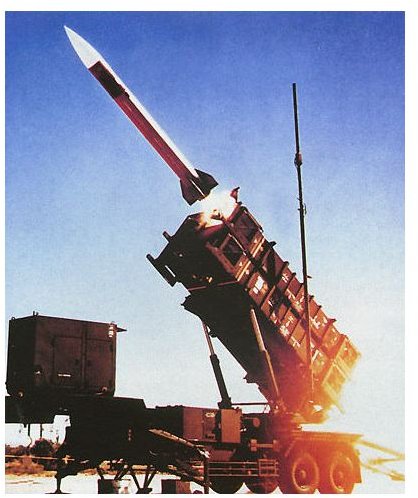
Today, the U.S. is not so concerned with bombers. Its major SAM is the missile which is effective against both aircraft and short to medium range ballistic missiles. Patriots were used in the first Gulf war to counter Saddam Hussein’s Scud missiles.
Hitting a Bullet with a Bullet
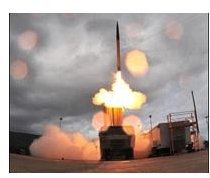
The U.S., as we’ve said, is not so concerned about bombers these days. It is concerned about ICBMs, and so has developed at least two anti ballistic missile missiles (ABM). These are shrouded in secrecy, for obvious reasons, but one, launched from a naval vessel, is dubbed the Aegis. We know about it because it was used to destroy one of our satellites that was due to reenter and perhaps cause havoc on the ground.
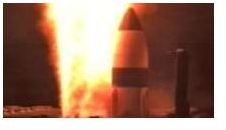
We do know the ABMs do not carry explosives or nuclear warheads, although that is possible. They use what is called ‘kinetic kill.’ In other words, they ram an incoming warhead and destroy it.
MAD
During the Cold War, both sides pursued a policy know as MAD—Mutually Assured Destruction. Each knew, especially when ICBMs were introduced, if one attacked, the other would be obliterated in 30 minutes.
Both side’s ICBMs began as liquid fueled rockets. For the U.S., it was the Atlas and the Titan series. But having to fuel the rockets delayed the ability to launch quickly. As soon as solid propellant technology developed sufficiently, the U.S. went with it. The first was the Minuteman. It could be launched on a moment’s notice.
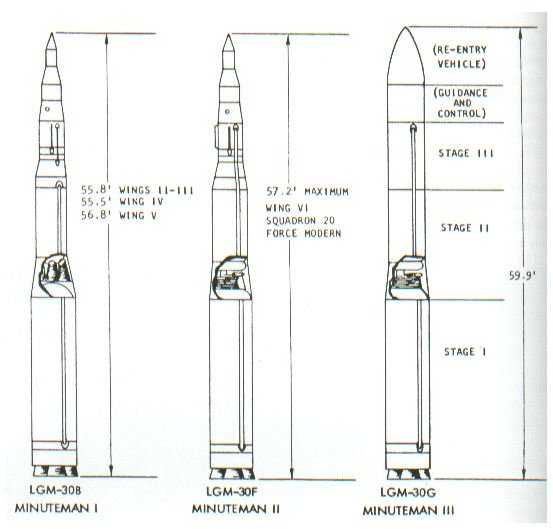
Today, we have Minuteman III, a larger, more powerful rocket that carries multiple warheads.
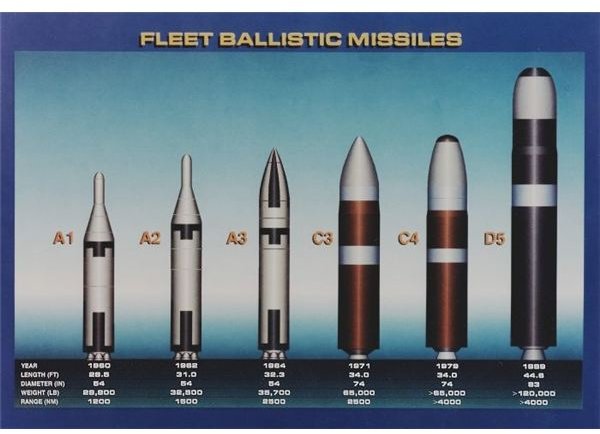
But there is another solid propellant rocket in the arsenal. Somewhere, in the oceans of the world, are 18 stealthy submarines carrying 24 Trident missiles. No potential enemy knows where these subs are. Each Trident carries multiple warheads. The rocket has a range of at least 4000 miles. It most likely is 5000.
Trident is the third generation of the first solid propellant strategic missile, the Polaris, and the Poseidon, also sub launched.In the illustration, the first three missiles on the left are Polaris’, the middle two are Poseidons and the one on the right is the Trident.
Sources and Credits
https://www.nationalmuseum.af.mil/factsheets/factsheet.asp?id=334
Nike images: US Army
Patriot: US Army https://www.army-technology.com/projects/patriot/
Aegis launch: Dept. of Defense https://www.bestsyndication.com/?q=20080220-satellite _killer_dod_image.htm
ABM launch: Raytheon
https://www.spacewar.com/reports/Terminal _High_Altitude_Area_Defense_Radar_Successful_In_Missile_Defense_Test_999.html
Minuteman development: US Air Force
Polaris to Trident: Lockheed Martin https://www.designation-systems.net/dusrm/m-27.html
This post is part of the series: Uses of Rockets–Then and Now
Rockets have been used for many tasks for the past 2000 years. Most uses have been as weapons of war, but they have also been used to research the upper atmosphere, high speed flight, and even to take us into space.