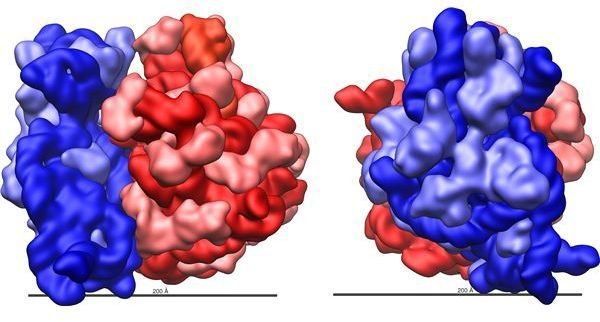
How much do you know about ribosomes? What are the questions that spring to mind when you think about these fascinating little molecules? Perhaps you already know that they are the sub cellular organelles that produce proteins, fulfilling a vital function in the metabolic reactions of the organism.
Ribosomes
If you’ve never come across the word or the molecule before, then ribosomes are fascinating little structures within eukaryotic and prokaryotic cells. What do you need to know about them? Why do they constitute such a key part of our understanding of how the cell and the organism functions? Let’s take a look at some of the most fundamental questions you might like to have answered about ribosomes.
Who Discovered Ribosomes?
George Palade , a Romanian-born naturalized American and cell biologist, was the first to describe free cytosolic ribosomes through his work at the Rockefeller Institute (although they had not been named at that time).1 In his work with Philip Siekevitz and others, he went on to investigate the ribosomes on the rough endoplasmic reticulum and the function of the ribosome in the production of proteins.
Where Are Ribosomes Found?
Ribosomes are to be found in both eukaryotic and prokaryotic cells. ‘Free’ ribosomes are found in the cytosol (which is the fluid supporting the organelles within a cell ), and others are found bound to cell membranes e.g. in the endoplasmic reticulum (giving it a ‘rough’ appearance under the microscope, hence the name.)
What Is The Function Of The Ribosome?
The ribosome is where messenger RNA, made up of nucleotides whose sequence is coded by genes in the DNA, is translated into proteins. The primary structure of these proteins is a simple sequential chain of amino acids prior to folding into a structure with a secondary (e.g. β-sheets and α-helices), tertiary or quaternary level of complexity. As components of the rough endoplasmic reticulum, ribosomes also constitute part of the pathway for the export of proteins like insulin from the cell.
Why Are Ribosomes Necessary?
Ribosomes produce protein within the cell. How important is that? Well, what would you do without protein? What is made of protein? Enzymes, upon which the cell metabolism is dependent, are (usually) made of protein. They catalyse (speed up) reactions that would otherwise take much longer to be completed. Proteins also enable cells to signal to each other, and they take part in the transport of molecules. And without structural proteins you wouldn’t have nails, muscles or hair! So proteins, and therefore ribosomes, are actually pretty important.
What are Ribosomes Made Of?
Ribosomes are made up of ribosomal RNA (i.e. chains of nucleotides coded for in the cell’s DNA) and proteins. A ribosome consists of two subunits, the large subunit and the small subunit, each measured in ‘Svedbergs’ (S). This unit of measurement relates to the procedures required to separate out different fractions of lysed cell preparations. There is a difference in the number of RNA and proteins in the small and large subunits.
What Diseases Affect Ribosomes?
It seems a natural enough assumption that a problem or defect in the functioning of the ribosome could have severe consequences for the organism. There have been numerous discoveries regarding ribosome involvement in various diseases e.g. Alzheimer’s disease and gastric cancer. A disorder affecting the accuracy and efficiency of protein production may have a profound effect on the organism.
Do Eukaryotic and Prokaryotic Ribosomes Differ?
Eukaryotic (i.e. from a cell with a membrane bound nucleus) and prokaryotic (from a cell without a membrane bound nucleus) ribosomes differ in size (i.e. Svedberg measurement) and number of proteins and RNA per subunit. Prokaryotic ribosomes are smaller at around 80S altogether (both subunits) as opposed to 100S for the eukaryotic ribosome.
References.
1 Palade, George E. Autobiography. The Nobel Foundation 1974. (25/09/2009). From Les Prix Nobel en 1974, Editor Wilhelm Odelberg, [Nobel Foundation], Stockholm, 1975 https://nobelprize.org https://nobelprize.org/nobel\_prizes/medicine/laureates/1974/palade-autobio.html
Picture credit - author Vossman - released under Creative Commons Attribute ShareAlike