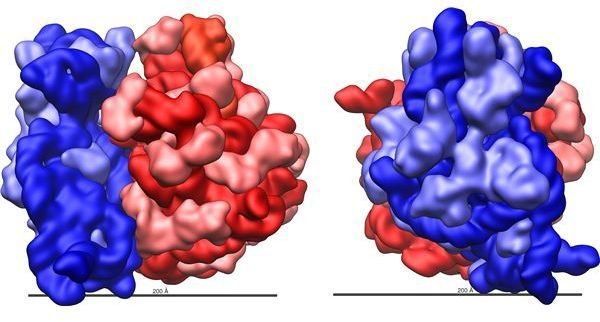
Ribosomes are fascinating sub cellular organelles that play a key role in the organism - but who was first to discover them? Find out about the first steps of investigating the morphology and function of the ribosome, and just how important it is in the metabolism of the cell.
What Equipment Was Necessary for Discovery of the Ribosome?
Prior to the development and use of the electron microscope and differential centrifugation, there were practical limits to how far the components of cell structure could be effectively studied through the use of the light microscope. However their discovery and refinement enabled scientists to peek much closer at the smallest fundamental unit of life itself, the cell, and to make some startling and amazing discoveries. Without these advances we might never have acquired knowledge of the ribosome, that little protein-manufacturing production line of the cell.
The Romanian-born American cell biologist George Palade was introduced to the potential of electron microscopy by the Belgian Albert Claude. (Claude himself was a Nobel prize winner, awarded jointly to himself, Palade and Christian de Duve, and has been credited with the discovery of the endoplasmic reticulum). Claude was the person who invited Palade to work at the Rockefeller Institute in New York in 1946.
George Palade’s Discovery Of The Ribosome - And So Much More
As a result Palade was the first person to identify ‘free’ cytosolic ribosomes (in terms of structure and morphology rather than function). They were not known by this name at the time however: the name we know them by came later. Palade contributed to the refinement of the differential centrifugation procedure which enabled so many marvellous discoveries to be made.
Palade’s other discoveries, both singly and in collaboration with others, includes elucidating mitochondrial structure, refining existing knowledge of the morphology of the endoplasmic reticulum and detailing the components of chemical synapses. However he is perhaps best known as the discoverer and elucidator of ribosomal structure and function.
George Palade, The Ribosome And The Nobel Prize
In 1955 Palade, with his collaborator Philip Siekevitz, identified the molecules attached to the rough endoplasmic reticulum as ribosomes, and further identified their substance as ribonucleoprotein (i.e. the ribosomal RNA and proteins we know now to make up the large and small subunit of the ribosome). In collaboration with others he identified the function of the ribosomes as being the site of protein production for the cell.3
He continued his investigations into the function of the ribosome and other cell components and was subsequently awarded the Nobel Prize in Physiology or Medicine in 1974 along with Claude and De Duve.1 However, the Nobel was just one among many prizes with which he was awarded during his lifetime, as a quick scan of one of his newspaper obituaries makes clear.4
How Did The Ribosome Get Its Name?
Ribosomes are widely quoted as deriving their name from ribonucleic acid (i.e. the ribosomal RNA which form a key part of the two ribosomal subunits), and the Greek word ‘soma’, which means ‘body’.2 They were identified as discrete units of the cell well before receiving this name, however.
References
1 Palade, George E. ‘Autobiography’. The Nobel Foundation 1974. 1975. (25/09/2009). From Les Prix Nobel en 1974, Editor Wilhelm Odelberg, [Nobel Foundation], Stockholm, 1975. https://nobelprize.org/nobel\_prizes/medicine/laureates/1974/palade-autobio.html
2 ‘Ribosomal’. https://medical-dictionary.thefreedictionary.com . 2007. (25/09/2009). https://medical-dictionary.thefreedictionary.com/ribosomal
3 Karolininska Institutet. ‘The Nobel Prize in Physiology or Medicine 1974’. Karolininska Institutet. October 1974. (25/09/2009). https://nobelprize.org https://nobelprize.org/nobel\_prizes/medicine/laureates/1974/press.html
4 ‘George Palade’. https://www.telegraph.co.uk . 23/10/2008. (25/09/2009). https://www.telegraph.co.uk/news/obituaries/3249286/George-Palade.html
Picture credit - author Vossman - released under Creative Commons Attribute ShareAlike 3.0