Despite the best efforts of conservationists the endangered species list gets ever longer as some animal populations continue to decline at an alarming rate. This article explores how genetics can help to preserve species, and make extinction a thing of the past.
Species Endangered
Of course, there wouldn’t be any need for genetics to intervene to save endangered species if we took more care of the environment. The biggest threats to wildlife are climate change, pollution, hunting, poaching, and habitat loss. But until stringent regulations are in place, enforced, and adhered to, science is ‘stepping up to the plate’ and coming up with viable ways of preserving species should they come close to extinction and not be able to produce sufficient amounts of offspring. Genetics is not the only option to preserve species, but it is a useful tool. Following are three ways where genetics can help, and is helping with the preservation of endangered species.
Gene banks
Gene banks are helping to preserve endangered species by storing the biological and genetic material of animals that are under threat of extinction. Preserving species in their natural habit is the top priority, but gene banks are useful in two important ways: 1) scientists can study DNA samples to find out how genetic information could be relevant to animal survival and 2) use the preserved material to clone animals and ‘bring a species back to life.’
One of the most important gene bank projects is the Frozen Ark Project , a global initiative being run from the Natural History Museum in London that is collecting and stockpiling the DNA of endangered animals. It’s being used to find out how the ‘animals work’ at the molecular level.
Cloning and the Preservation of Endangered Species
Though once the realm of science fiction, animal cloning is now a possibility and many species have been cloned. For conservation efforts this could mean that a clone is created from stored genetic material and implanted into the surrogate mother of a closely related species. Although it might be simpler to store egg and sperm cells of a threatened species.
The problem with animal cloning is that it is still a difficult procedure and many clones die shortly before or after birth. There is also a big unknown factor here too, and that is the effects of the cloning procedure on the long term health of the animal.
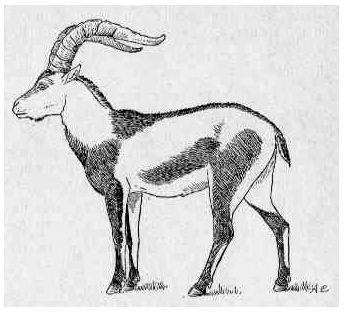
It was announced in early 2009 that a member of an extinct species of mountain goat - the Pyrenean ibex- was born. It was a clone that had been created with the help of domestic goats. However, it died of breathing difficulties within minutes of coming into the world. The technology of animal cloning is inefficient, in this attempt 439 ibex-goat hybrid clones were created. The eventual aim is to refine techniques and improve the technology.
Conservation Genetics
Understanding conservation genetics can help preserve endangered species in a number of ways. For example - 1) one of the threats to species survival is inbreeding and lack of genetic diversity. Captive populations of endangered species can be managed so as to restore genetic diversity, by introducing related sub-species for example 2) knowledge of mating patterns and reproductive strategies of threatened species can be determined at the molecular level.
Essentially the field combines several disciplines - molecular biology, ecology, population genetics, mathematical modelling, and evolutionary systems - with the aim of preserving biological diversity.