Much confusion prevails over derivative work copyright – when is such a copyright appropriate and given? What qualifies your work as derivative work? This article explains derivative work before discussing what qualifies it to get a copyright.
Derivative Work Copyright – What is Derivative Work?
Before discussing derivative work copyright, you need to have a clear picture of what a derivative work is. Only then can you decide whether to go for derivative work copyright. The Copyright Act (17 U S C) defines derivative work as:
“A “derivative work” is a work based upon one or more pre-existing works, such as a translation, musical arrangement, dramatization, fictionalization, motion picture version, sound recording, art reproduction, abridgment, condensation, or any other form in which a work may be recast, transformed, or adapted. A work consisting of editorial revisions, annotations, elaborations, or other modifications which, as a whole, represent an original work of authorship, is a derivative work”.
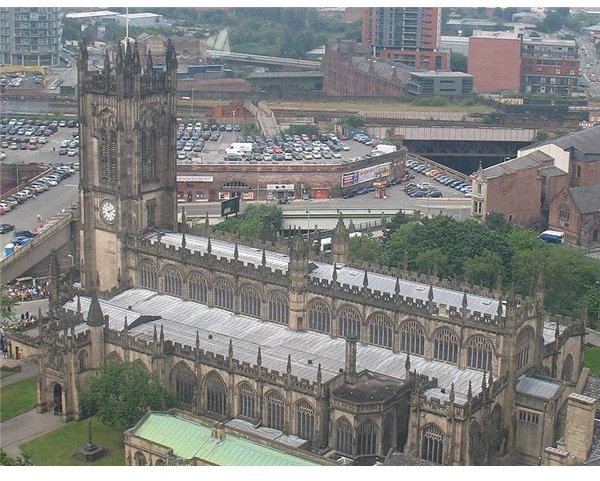
The adjacent image is a derivative work based on a photograph taken by S. Flude in 2007.
Another example of derivative work is Mona Lisa with Moustache, which is based on the original Mona Lisa painting. The artist, Marcel Duchamp, just added a moustache to the original painting and copyrighted the image in France.
Normally, you cannot use any copyrighted material without explicit consent of the copyright owner or without citing reference to the copyright owners of the work in fair use.
In short, a “derivative work” is based on original work forms of other people. The base work form (the original work) may or may not be copyrighted by the person who created it.
Now that we have a clear picture of what “derivative work” is, let us now focus on derivative work copyright.
Understanding Derivative Work Copyright
You cannot apply for derivative work copyright in some situations. This section discusses these cases and the circumstances where you can apply for the copyright.
- The foremost qualification for a derivative work to be copyrighted as yours is that there should be enough difference in the original work and derivative work that it qualifies as your own intellectual property . The difference between the original work and the derivative work determines if you can get a copyright for a derivative work. There is no fixed percent, however, as how much difference should be there in the derivative work to qualify for copyright. It often depends on the individuals who reviews the case if it is questioned.
- If the original work never carried a copyright, you may be able to make relatively minor changes and have a copyrighted work of your own. You cannot, however, just imitate the original work and ask for a copyright as it already belongs to some person or organization. For instance, you cannot ask a copyright for an existing skin of Media Player that is meant to be distributed freely.
- There are many age-old manuscripts and pictures that were never copyrighted (manuscripts like the Ayurveda or cave drawings). If you translate it or add illustrations, you have created something original - a piece of intellectual property that did not previously exist, and in which you have copyright. You can then register your copyright. Similarly, in the case of cave drawings, you can take photographs, and have copyright in the images you have made. The act of making a photograph gives the photographer an original work, but does not give them a claim to the original object.
- If you have completely modified the original work, there is no need to check for eligibility, as it is your own work. You can go ahead and register the copyright if you want. In that case, it will not be considered a derivative work.
If you are using an unchanged portion of a work, you can contact the copyright holder and obtain consent for the copyright and cite a reference to the originator. You may also be able to use a fraction of an original (known as “Fair Use” under US copyright law) without requesting permission. Fair use allows you to quote or use an image, as in a screenshot, or information from another source, and as long as the reference is there, you need not worry about copyright infringement . However, if the copyright holder asks you to remove the work or parts of it, you have to remove it immediately.
In addition, if you are using parts of a derivative work to comment, criticize, or for citing something, you are not infringing the derivative work copyright act as long as you are using a small enough part of the copyrighted work to be allowed under fair use.
Related Reading:
Understanding the Difference between Patents and Copyrights
References
1. The US Copyright Office - Copyright Law Chapter 1, Section 104A
2. Image Credit - https://commons.wikimedia.org/wiki/File:Manchester _Cathedral.JPG
This post is part of the series: Understanding Copyright and Copyright Infringements
This article series on Internet ethics and copyright laws help you understand different copyright laws, avoiding copyright infringements, and how to file a copyright infringement case. It also includes a sample copyright infringement example that helps you in filing a case against violator.