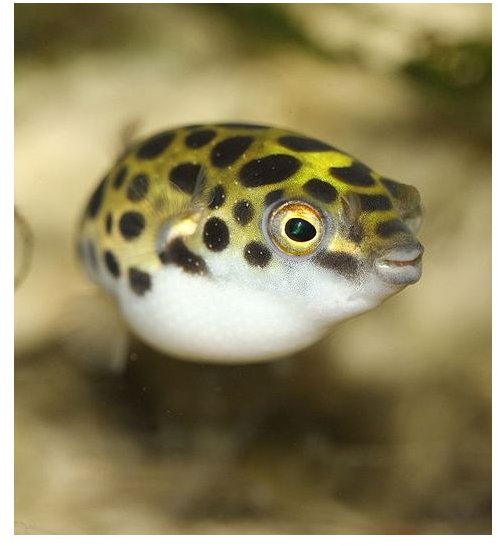
The puffer fish is an incredible creature with a unique way in protecting itself from predators. Learn what it is and find more puffer fish facts, including why you should avoid eating one.
The Puffer Fish
Puffer fish, also known as puffers and blowfish, belong in the family Tetraodontidae. This name of family was derived from the Greek words tetra meaning “four” and odous meaning “tooth”. There are over 120 species that can be found in tropical and subtropical oceans worldwide. Continue reading for interesting puffer fish facts, including their unique way of ballooning up when they feel threatened.
Description
Color and size varies. Some are about one inch long while others grow to almost three feet in length. They have tapered bodies with bulblike heads, are scaleless, and have four teeth that are fused together resembling a beak. Their stomachs are highly elastic, allowing them to swell up to three to four times their normal size.
Defense Mechanism
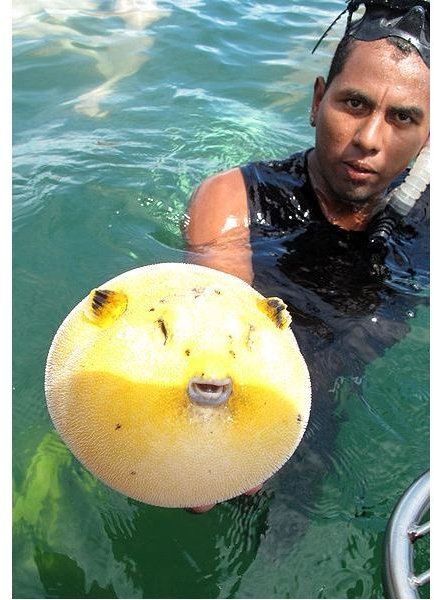
Puffer fish are slow and somewhat clumsy swimmers which makes them an easy target for predators. If possible, they prefer swimming into a crevice to escape harm, but when this is not an option, they will swallow water (or air if outside of the water) and turn themselves into a large ball, making it difficult for some predators to consume them. This defense mechanism is normally used for desperate situations because once they enter this state, they lose about half of their speed and most of their maneuverability.
Poison
Most puffer fish contain a poison in their livers, gonads, intestines and skin called tetrodotoxin, which is highly toxic. It is up to 1,200 times more lethal than cyanide, and one fish has enough poison to kill 30 adult humans. It is also one of the most violent intoxicants. Symptoms appear within 20 minutes to 3 hours after the poison has been ingested. It starts out with a slight numbness of the lips and tongue, followed by headache, nausea, vomiting, diarrhea, respiratory distress, convulsions and eventually complete paralysis. Many will remain conscious with a clear mind while going through this ordeal until they take their last breath. Death usually occurs within four to six hours. There is no antidote but with supportive treatment, it is possible to survive.
Despite these puffer fish facts, people eat some of the most dangerous species. It is an expensive delicacy in Japan called fugu. Although it is prepared by specially-trained chefs who carefully remove the poison, many people die each year from eating them.
More Puffer Fish Info
Some predators like the tiger shark are not affected by the poison.
Most puffer fish live in the ocean, in and offshore, but some species can be found living in brackish and fresh water.
Their diet consists mostly of algae and invertebrates. The larger species can break through the shells of mussels and clams with their strong, fused teeth.
Their beak-like mouths are also able to remove toes and fingers.
Puffer fish are oviparous, meaning they lay eggs.
References
National Geographic: https://animals.nationalgeographic.com/animals/fish/pufferfish.html
Sea World/Busch Gardens ANIMALS: https://www.seaworld.org/animal-info/animal-bytes/animalia/eumetazoa/coelomates/deuterostomes/chordata/craniata/osteichthyes/tetraodontiformes/pufferfish-porcupinefish.htm
Dangerous Creatures of the Sea: https://web.utah.edu/umed/students/clubs/international/presentations/dangers.html
U.S. Food and Drug Administration: https://www.fda.gov/Food/FoodSafety/FoodborneIllness/FoodborneIllnessFoodbornePathogensNaturalToxins/BadBugBook/ucm070842.htm
Photo Credit: