Long the mainstay of Sci-Fi films set in space, the space station is an essential element in colonizing the “final frontier”. But, what is a space station, and what are the elements needed to design one?
Rings In Orbit
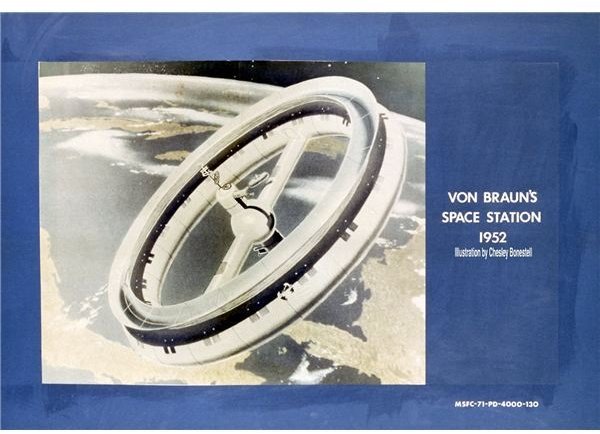
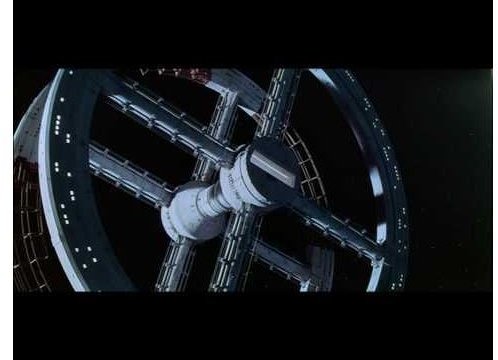
Space stations typically were portrayed as rings or wheels based on Werner Von Braun’s idea of a circular space station, as seen in figure on the left below. This concept was taken a step further in the film, 2001 A Space Odyssey with a two ring structure. These stations rotated to provide a simulated gravity for the occupants.
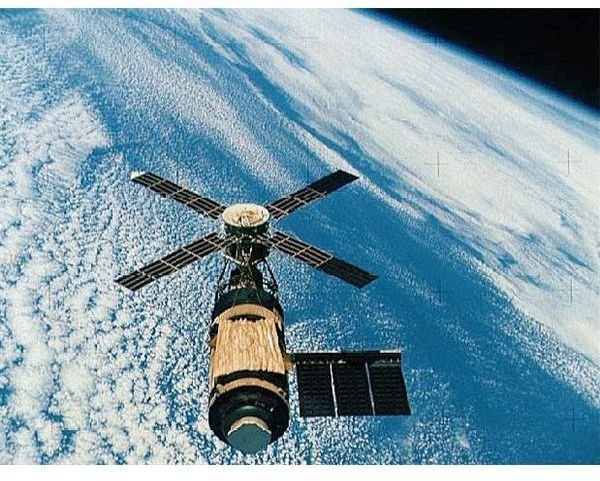
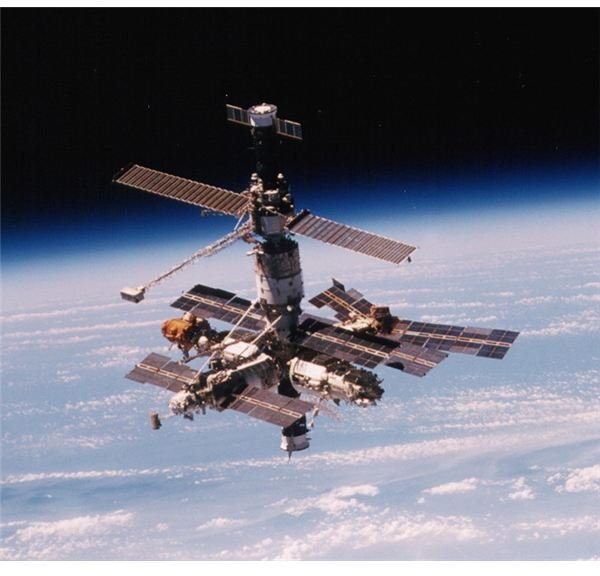
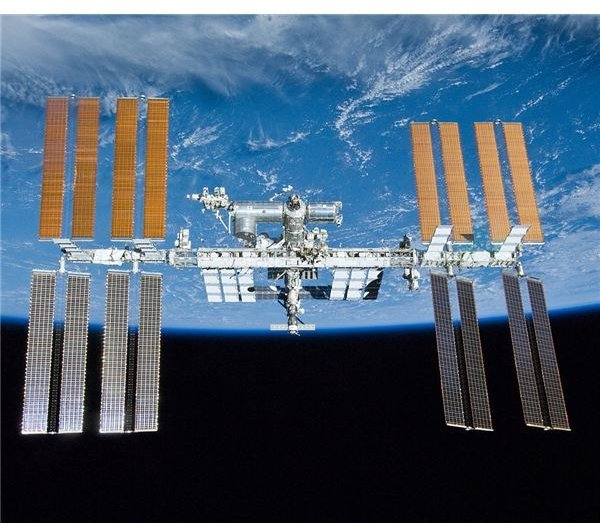
Reality reared its ugly head and we find ourselves looking at a much more economical structure with Skylab , Mir and the International Space Station. This LEGO-like assembly of modules and trusses allowed these stations to be constructed minimizing the mass to be launched into orbit, and therefore the cost of the project. Although they don’t have the sleek appeal of Von Braun’s station, they provide the functionality necessary to keep humans in orbit, although without the simulated gravity, which creates some problems for the astronauts with muscle and bone loss.
Essential Elements Of Space Station Design
Living in space requires that you bring part of Earth along with you. One needs the basics:
• Air
• Food
• Water
• Environmental control - heating and cooling
• Light
• Maneuvering rockets and fuel
• Protection from radiation and micrometeorites
All of this we take for granted here on Earth, but they are all something that an astronaut needs for survival in space, and all of it has to be launched into orbit. You need some form of structure to contain you and your accessories. This typically comes in the form of a cylinder, which minimizes weight while giving a structure that is strong and can be pressurized and easily fits in the launch vehicle.
A power source is required to run the pumps, electronics, computers, heaters, coolers, and other equipment on the station, and this comes from arrays of solar cells. Batteries are needed to power the station when it is in Earth’s shadow, and the solar cells stop generating electricity.
All of this equipment generates heat, which has to be removed from the station, otherwise it will begin to heat up like an oven, especially with the Sun’s direct rays illuminating the station for 45 minutes out of the 90 minute orbit. So, the station has to have radiators to radiate that excess heat into space. To make the radiators work you need some type of fluid to carry the heat from the station’s modules to the radiators, which for the International Space Station is liquid ammonia.
To keep the station functioning properly control systems will be needed to:
• Maintain the station’s orbit
• Monitor its power requirements
• Environmental control
• Provide communications, data collection and storage
• Water purification and a number of many other tasks that are required to make the station function.
This involves many computer systems with back-ups as well as the sensors to monitor all the systems of concern, and controls to affect changes as needed for smooth operation of the station. Speaking of back-ups, it should be noted that most major critical systems have at least one, if not two back-ups in the event of a failure.
Now that the basic station is in orbit and has the essentials to keep humans alive, it’s time to get down to the real reason for being in space and that is research, which requires a lot of specialized equipment.
Modules
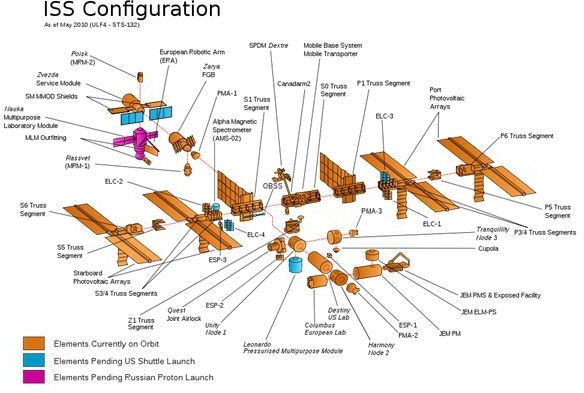
To live on the space station, and conduct research will require dedicated space for these activities. Since it is not practical to construct the station as a complete structure and launch it into space, it goes up in pieces. In the case of the International Space Station (ISS) (see below) that includes a large truss structure to attach the numerous modules to. These modules are designed with dedicated functions, like service and control of the station, nodes to connect modules together and provide docking ports for the spacecraft that will service the station. There will be dedicated modules for research, storage and auxiliary equipment.
The research that is conducted aboard the ISS covers a broad spectrum of sciences from astronomy to pharmaceuticals to semiconductor development and more. This type of work requires specialized equipment, which is designed as replaceable racks that can be inserted into bays on the inside of the modules. This allows the most flexibility in adapting the station to the needs of the science community. There are dedicated science modules designed by the different members of the ISS project: Destiny (USA), Kibo (Japan), Columbus (ESA) and to be launched in December of 2011 Nauka (Russia). There are also several multipurpose modules that can be used for different projects as the demands change.
Staying In Orbit
This discussion barely scratches the surface of the details needed to design a space station. One has to remember that to live in space you have to bring everything with you, all your essential spare parts, food, water, and oxygen, because even though Earth is only 250 miles away, the service calls are far and few in between.
References:
https://science.nasa.gov/science-news/science-at-nasa/2000/ast26may _1m/


