Much remains to be learned about black holes, though experts are trying their best to understand them. One area of interest is the search for the biggest black hole in the Universe.
Understanding Black Holes
Black holes have baffled the scientific community since amateur British astronomer the Reverend John Michell first suggested their existence in 1783. Despite the mystery surrounding them, however, many verifiable facts are now known.
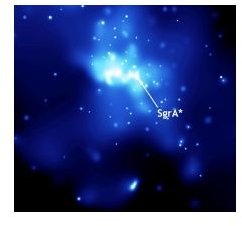
A black hole is a region of space where the gravitational field is so strong that not even light can escape. Experts have deduced that every large galaxy – including our own, the Milky Way – harbors a massive black hole at its center. Astronomers believe that the Milky Way’s central black hole is situated in an area known as Sagittarius A* .
How Astronomers Detect Black Holes
Given that black holes pull in everything, including light and other forms of electromagnetic radiation, they are effectively invisible to direct observation. However, they can still be indirectly detected through their interaction with matter around their boundaries. For example, gas and dust around a black hole emit X-rays as they spiral inwards. Astronomers have observed stars in other galaxies orbiting particularly bright regions containing highly concentrated gas and emitting unusually large amounts of radiation.
Scientists maintain that the size of galactic black holes is directly proportional to the size of the host galaxy. Theoretically, there is no limit to the amount of matter a black hole can swallow, so it is unclear how massive can they become.
The Biggest Black Hole
Although the principles of regular physics break down at the center of black holes, these regions are still bound by certain laws. For example, the Universe has existed for a finite amount of time, which means that there is a limit to the amount of matter the biggest black hole can have consumed.
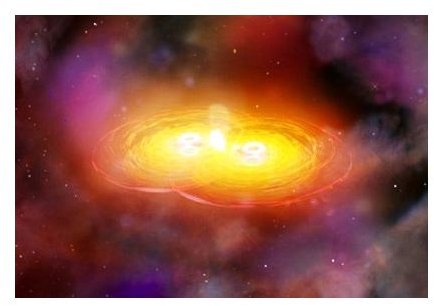
The largest black hole ever observed was announced in 2008. It is located at the heart of the active galaxy (or quasar) OJ 287, 3.5 billion light-years away, and has a mass equivalent to that of 18 billion Suns – the Sun’s mass being 1.99 × 1030 kg, or approximately 333,000 Earths. Interestingly, this supermassive black hole is thought to have a smaller companion black hole that is orbiting it once every 11–12 years. This companion is slowly being pulled into its much larger partner, and the two are expected to merge within the next 10,000 years.
Gargantuan Black Holes Await Discovery
Mathematical models suggest that the biggest black holes in the Universe have a mass of around 50 billion Suns – almost three times the mass of the one harbored by OJ 287. Why most, or perhaps all, galaxies contain supermassive black holes remains an open question, but the ongoing search for these monsters should help provide an answer.
Image Credits
Sagittarius A*: NASA, https://en.wikipedia.org/wiki/File:Gcle.jpg
Black Holes: NASA, https://commons.wikimedia.org/wiki/File:Black _Hole_Merger.jpg
Sources
https://ads.ari.uni-heidelberg.de/abs/1995ARA&A..33..581K
https://space.newscientist.com/article/dn13166-biggest-black-hole-in-the-cosmos-discovered.html
https://www.dailygalaxy.com/my _weblog/2008/09/50-billion-suns.html
https://www.scienceonline.org/cgi/content/summary/303/5662/1261a