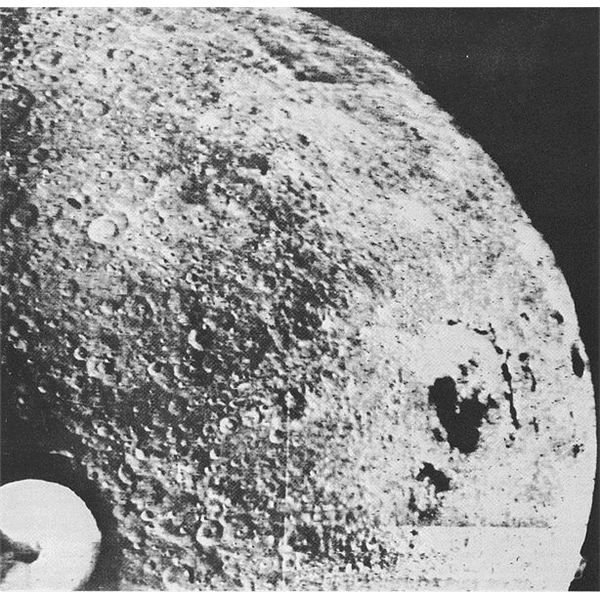
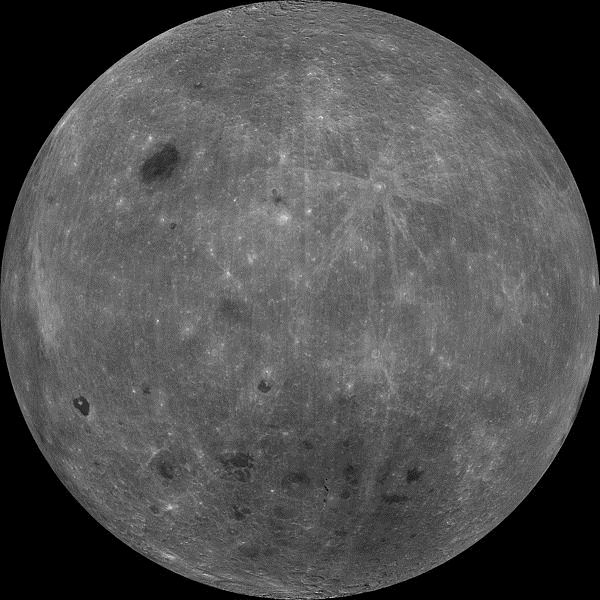
Here is some detailed information about the South Pole-Aitken Basin on the Moon, as well as some stunning images of this immense crater.
The South Pole-Aitken (SPA) is the largest crater on the Moon and has many features that set it apart from the rest of the lunar landscape. The South Pole-Aitken Basin is also one of largest known craters in our solar system and has been sparking the imagination of star gazers young and old since the first images of the South Pole-Aitken crater were taken during the middle of the 20th century. Here is an introduction to what we currently know about the largest crater on the Moon.
Discovery of the South Pole-Aitken Basin
The largest crater on the Moon was first discovered in the early 1960s by the Soviet probes Luna 3 and Zond 3, both of which were launched from Sputnik Earth-orbiting platforms. Although these images became well known in the scientific community in the years to come, it was not until the Lunar Orbiter Program obtained clearer images of the basin in the mid-60s that most astronomers formally recognized the existence of the South Pole-Aitken Basin. By 1978, this region had fully been mapped through the use of images taken during satellite flybys. However, the South Pole-Aitken Basin remains one of the areas of lunar landscape that we know least about, and most astronomers believe that many of our unanswered questions will only be answered by a manned or unmanned mission to explore this unique feature of the Moon.
Location and Details of the South Pole-Aitken Basin
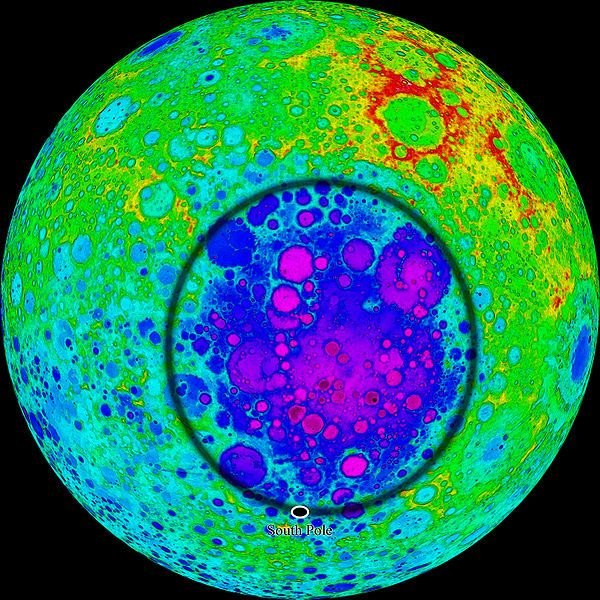
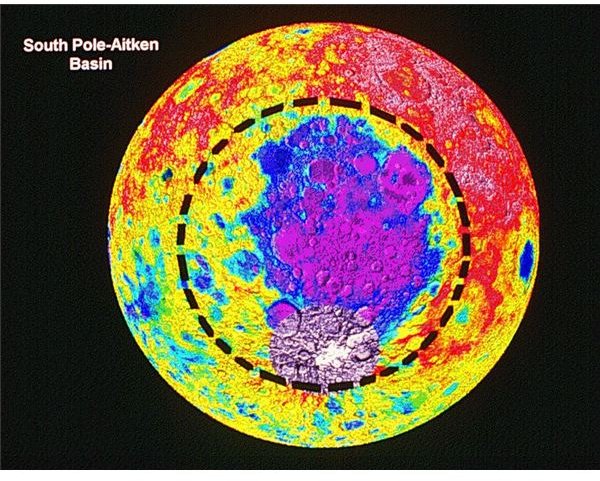
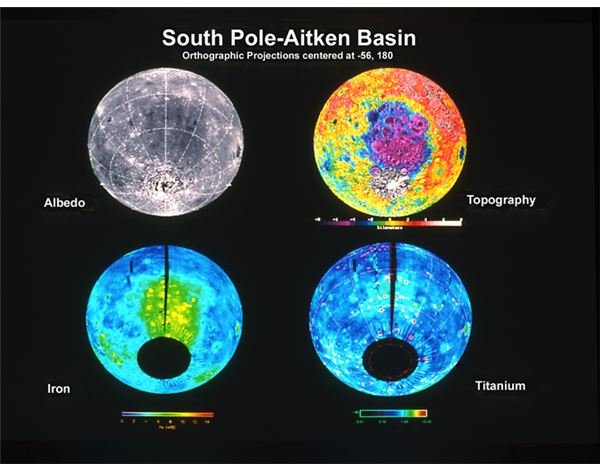
The South Pole-Aitken Basin is located at the southern pole of the far side of the Moon. The basin is approximately 2500 kilometers (about 1550 mi) in diameter and some 12 kilometers (about 7.5 mi) deep. The composition of the rocks and minerals located in this region are unlike any of the lunar samples that were retrieved during the Apollo missions or the lunar meteorites that have been discovered over the years on Earth. Information obtained from satellite imagery implies that the surface of the South Pole-Aitken Basin primarily consists of a combination of titanium, thorium and iron. It appears that the mineral composition of this region of the moon may be due to the fact that the crater penetrated the crust of mantle of the moon that exposed the geochemical signature of the Moon’s core. Current estimates for the depth of the lunar crust place it at approximately 15 km (about 9 mi), and the impact that created this crater could have easily resulted in minerals from the lunar core being deposited on the surface of the South Pole-Aitken Basin. The points of highest elevation are located on the rim of the basin, and the points of lowest elevation on the lunar surface are located near the epicenter of the crater itself.
Origins of the South Pole-Aitken Basin
Despite the size of the South Pole-Aitken Basin, most scientists agree that it is unlikely that the crater was caused by a large meteor traveling at a high velocity when it collided with the Moon. This is because the depth of the crater at the basin is not deep enough for such a scenario to have taken place. Instead, most astronomers now believe that the crater was created by a meteor traveling at a relatively low velocity that struck the southern pole of the Moon at a very low angle. A collision like this would account for the wide diameter of surface damage that the was created by the impact, as well as the low depth of the crater itself.
Sources:
https://en.wikipedia.org/wiki/South _Pole_%E2%80%93_Aitken_basin
https://www.psrd.hawaii.edu/July98/spa.html
https://www.lpi.usra.edu/publications/slidesets/clem2nd/slide _26.html
https://www.uwgb.edu/dutchs/GeolColBk/MoonSPAitken.HTM
Credits:
https://the-moon.wikispaces.com/South+Pole-Aitken+basin
https://www.nasa.gov/mission _pages/LRO/multimedia/lroimages/lola-20100409-aitken.html
https://astroprofspage.com/archives/1484
https://en.wikipedia.org/wiki/File:Aitken _Kagu_big.jpg
https://en.wikipedia.org/wiki/File:Moon _PIA00304.jpg