When was the asteroid belt first discovered? A number of different scientists and astronomers contributed to the understanding of what we now know as the asteroid belt. While some early researchers postulated its existence, it wasn’t until the 1800s that any real evidence was found.
Theory Behind the Asteroid Belt
The process of discovering the asteroid belt began in the late 1700s. Astronomers of the era learned of a numerical equation that helped define the location of each planet within the solar system . Known as the Titius-Bode Law, the concept showed that each planet known at the time was positioned according to a specific sequence. By using astronomical units, the Sun and the planets were issued a number that equated to each other. Scientists discovered that a gap existed between Mars and Jupiter where an additional planet should be located. Additionally, William Herschel discovered Uranus in 1781, exactly where the next planet in the solar system should be located according to the theory.
Asteroids or Planets?
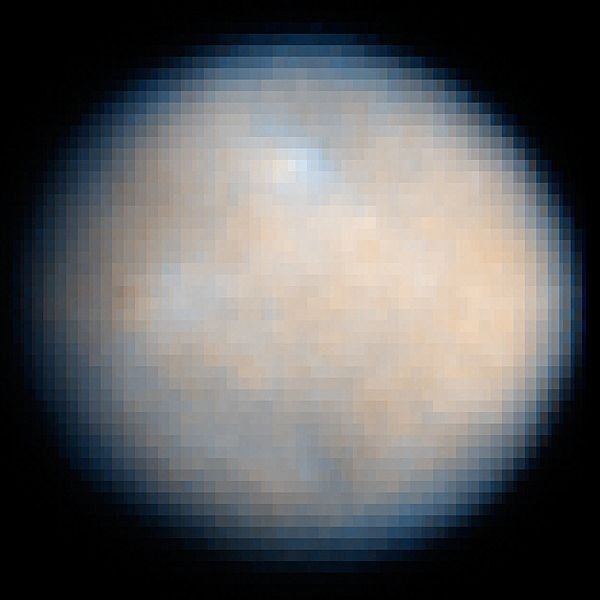
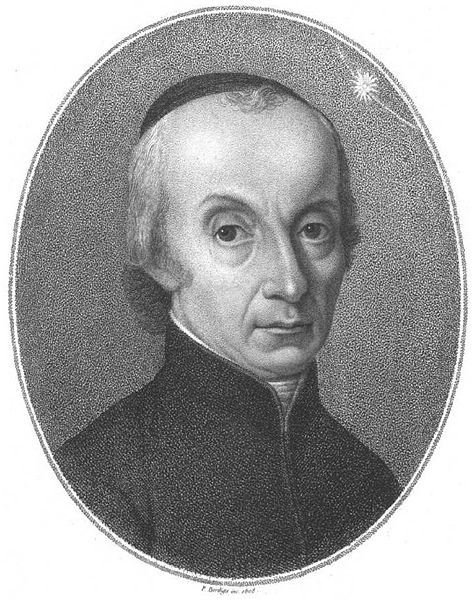
Two decades later, on January 1, 1801, the first asteroid was discovered exactly between Mars and Jupiter. Discovered by Giuseppe Piazzi, the celestial body was first thought to be a comet. However, he later believed it was a planet and named it Ceres. At the same time, Hershel and other astronomers established an organization known as the Celestial Police, a group dedicated to defining and analyzing the exact layout of the solar system. This discovery of Ceres helped improve astronomer’s understanding of the planets positioning at the time.. However, Hershel realized that Ceres was too small to be a planet and referred to it thereafter as an “asteroid.”
Left: Giuseppe Piazzi. (Supplied by the Smithsonian Institute Library; Public Domain; https://upload.wikimedia.org/wikipedia/commons/3/3b/%28253%29 _mathilde.jpg)
Right: Ceres. (Supplied by NASA; Public Domain; https://upload.wikimedia.org/wikipedia/commons/f/fc/Ceres _optimized.jpg)
More Asteroids are Discovered
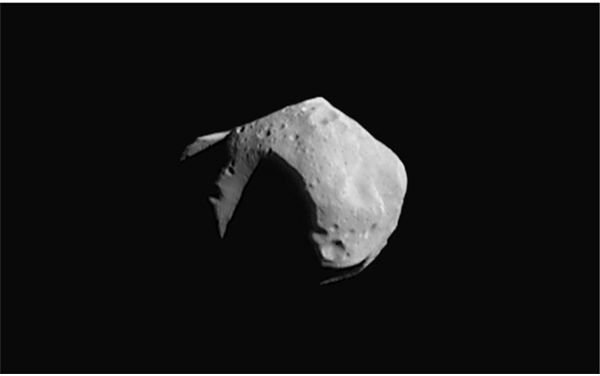
Over the next few years, two additional asteroids were discovered, helping some astronomers understand that a group of asteroids most likely existed in this region between the small planets and the large bodies. Known as Juno and Vesta, the bodies were officially added to the solar system in 1807, with continued debate over whether they were planets or asteroids. In 1845, another object, known as Astraea, was discovered. This, along with the discovery of Neptune the following year, was the final act that prompted the dropping of the asteroid belt from the planetary list.
Right: Asteroid Mathilde. (Supplied by NASA; Public Domain; https://upload.wikimedia.org/wikipedia/commons/3/3b/%28253%29 _mathilde.jpg)
Expansion of the Asteroid Belt
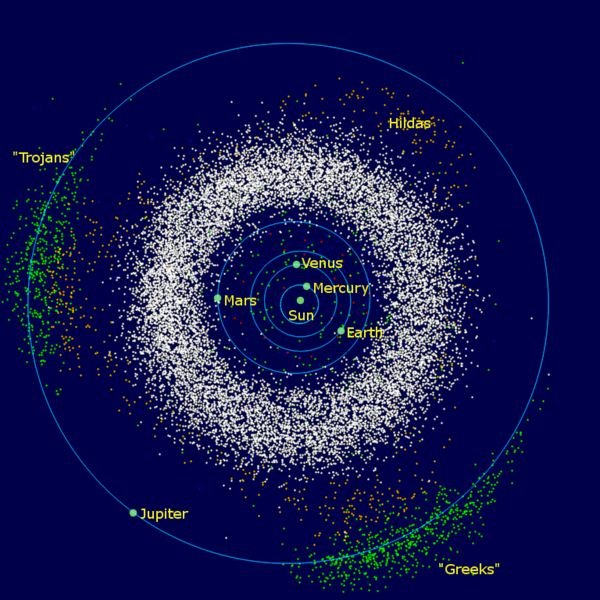
The scientific community continued to add new asteroids over the next few decades. By 1868, one hundred asteroids had been identified. By the halfway point of the 1900s, this number reached 10,000, aided heavily by the process of photography. As of 2009, nearly 300,000 different asteroids have been identified and cataloged , with many more projected to be located in the future.
So when was the asteroid belt discovered? Over a period of 200 years–and its discovery continues.
Left: Asteroid Belt. (Supplied by Mdf at Wikimedia Commons; Public Domain; https://upload.wikimedia.org/wikipedia/commons/f/f3/InnerSolarSystem-en.png)
Resources
“The Asteroid Belt” EdInformatics
“Asteroids” Nine Planets
“The Discovery of the Asteroid Belt” BBC