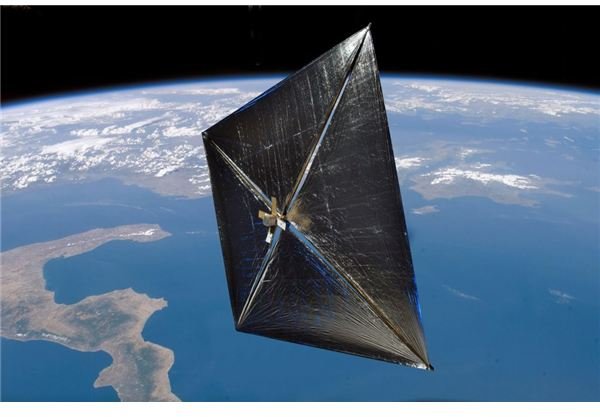
Picosatellites and nanosatellites are miniaturized satellites that allow universities, research institutions and smaller nations to participate in space-based research.
When Small is Innovative
Bigger doesn’t always translate into better—that applies to home electronics and to space technology as well. Though there has been an increase in the size and complexity of some space-based systems, an alternate trend is the development of a new class of smaller and simpler satellites. These smaller units afford opportunities for smaller players to get involved in space research, including third-world nations.
These smaller units include microsatellites in the 1.0 to 10 kilogram range—the so-called nanosatellites—as well as the 0.1 to 1.0 kilogram range—the picosatellites.
Image Credit: NASA
Most of the smaller units are limited in functionality to one or two onboard projects, ranging from technological research to biological experimentation. Because of the smaller size, it is possible to launch several of these satellites simultaneously. One recent Indian space launch, for example, sent eight nanosatellites into orbit.
One subclass of picosatellites—CubeSats—has proved particularly popular. CubeSats, are small cubic satellites of exactly one liter volume. Because of size standardization (10 centimeters on a side), they can be launched by a common orbital deployer developed by Cal Polytechnical State University. CubeSats, because of their relatively low cost to build and launch (less than $100,000), have become the means for universities across the world to involve themselves in space research. Columbia’s first satellite (Libertad 1), for example, was a CubeSat developed by Sergio Arboleda University. Dozens of universities around the world have launched, or are in the process of launching, CubeSats. Reportedly, CubeSats are even in use in spying on “terrorists.“1
The increasing sophistication of small satellites is demonstrated by the development of a pair of picosatellites by the University of Texas and Texas A&M University engineering students. BEVO-1 and AggieSat2 are designed to dock with each other in space without human control, something previously done only by large, multi-million dollar spacecraft.
What does the future hold for the miniturization of satellite technology? Incredibly, a new satellite class has been envisioned—the femtosatellite. Weighing less than 100 grams, these tiny spacecraft will provide new meaning to the neologism “microsatellite.”
1 See References and Resources, below.
References and Resources
Sergio Arboleda University: Libertad 1
NASA: NASA’s CubeSat Launch Initiative
CubeSat Kit: Begin Your CubeSat Mission with the CubeSat Kit
Discovery News: Mini Spy Satellites to Track Terrorists
Also from Bright Hub: How the Space Shuttle is Launched , by George Adcock