It is good to know, in general, what’s around you…so it might be informative to know what is near us in space–what may cannibalize us, what the Milky Way may have already cannibalized, who else is cannibalizing whomever else, in terms of galaxies, and who’s just out there, relatively near us…
Some Introductory Information
When making a list of this sort it should be stated from the get-go that there are some natural processes that affect a list like this, making it time relevant.
The Milky Way has cannibalized neighbor galaxies in the past, so our nearest galaxies have changed over time, and as other galaxies cannibalize other near-by galaxies out there, this list will continue to change.
But for now, our home galaxy is the Milky Way, and after that from nearest to farthest:
(Note: The distances mentioned are from approximately the center of the Milky Way.)
Our Nearest Galaxies
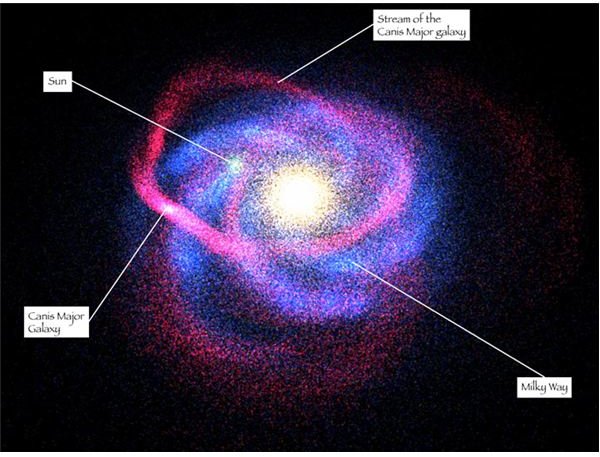
1. Canis Major Darf Galaxy: Discovered in 2003, now our closest galaxy, a dwarf irregular galaxy, and an accretion of the Milky Way; it is approximately 42,000 light years (ly) away from the center of the Milky Way, and is being pulled apart by the gravity of the Milky Way. As it is being pulled apart it is leaving a 200,000 ly long trail of stars and debris called the Monoceros Ring, which wraps three times around the Milky Way.
2. Sagittarius Dwarf Elliptical Galaxy (SagDEG): Currently approximately 70,000 light years from us; also an accretion of the Milky Way, and an elliptical galaxy, satellite of the Milky Way.
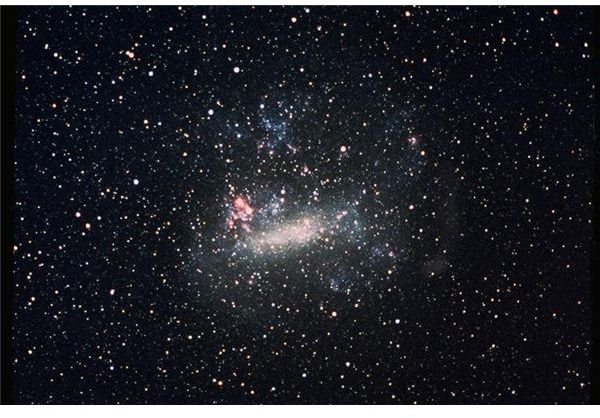
3. Large Magellanic Cloud: Approximately 160,000 light years from the Milky Way. It is the fourth largest local galaxy, and generally considered to be an irregular galaxy, though it dose retain a prominent bar at its center suggesting that it may at one time have been a spiral galaxy.
4. Bootes Dwarf Galaxy: A satellite galaxy of the Milky Way, approximately 197,000 light years from the Milky Way.
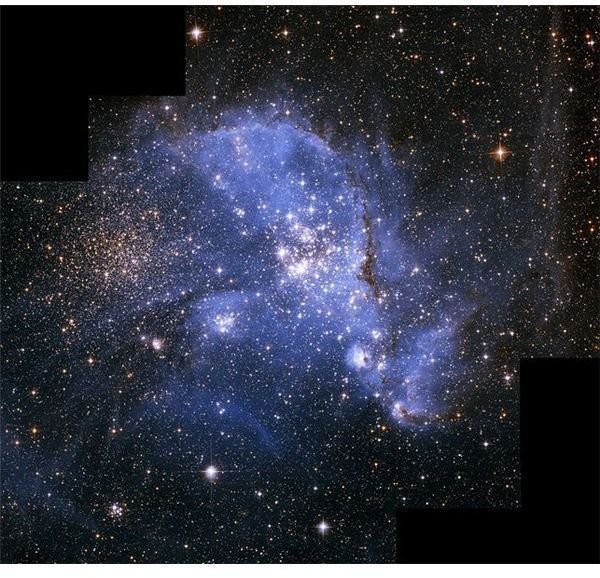
5. Small Magellanic Cloud: About 200,000 ly from us, and one of the most distant galaxies visible to the naked human eye; a dwarf galaxy, at one time thought to be a barred spiral galaxy, it is now somewhat irregular.
6. Ursa Minor Galaxy: Satellite of the Milky Way, a dwarf elliptical galaxy, about 206,000 ly from us, and it appears that there is little to no star formation taking place; the galaxy is mostly filled with old stars.
7. Draco Dwarf: A spheriodal galaxy about 260,000 ly from us.
8. Sextans Dwarf Spheriodal: Receding from the Milky Way, a dwarf spheroidal galaxy, approximately 280,000 ly away..
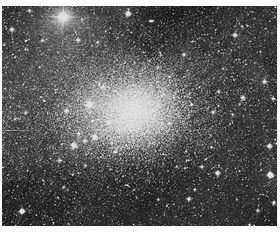
9. Sculptor Dwarf: Approximately 290,000 ly from our solar system, a dwarf spheroidal galaxy; another satellite of the Milky Way. Contains only 4 percent of the carbon and other heavy elements in our galaxy, making it resemble other primitive galaxies near the edge of the universe.
10. Ursa Major I Dwarf: A spheriodal galaxy, satellite of the Milky Way, about 330,000 ly from us.
11. Carina Dwarf: Is a satellite dwarf galaxy of the Milky Way and is receding from the Milky Way, currently about 330,000 ly from us.
12. Fornax Dwarf: An elliptical dwarf galaxy receding from the Milky Way, about 460,000 ly from us currently.
13. Leo II Dwarf Galaxy (or Leo B): About 690,000 ly away, a spheroidal galaxy, full of mostly metal-poor older stars, satellite of the Milky Way.
14. Leo I Dwarf Galaxy: A dwarf spheroidal galaxy about 820,000 ly from us, thought to be one of the most distant satellite galaxies of the Milky Way.
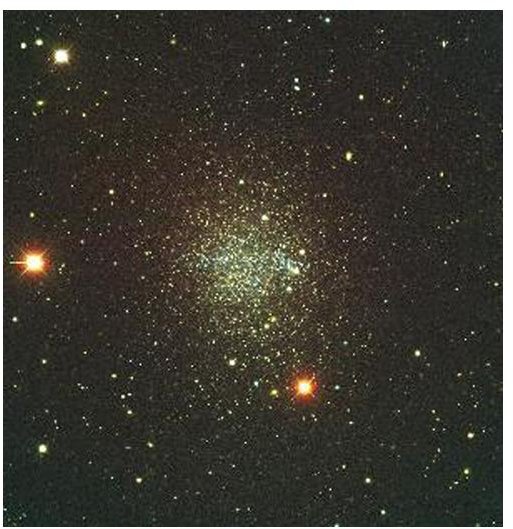
15. Phoenix Dwarf: A dwarf, irregular galaxy, satellite of the Milky Way, about 1,300,000 ly from us.
Other Notables
It may be already apparent, or it may not, but the Andromeda galaxy is not even mentioned on the list, though it is popularly known to many as the nearest galaxy to the Milky Way. Not true. However, it is the largest spiral galaxy near the Milky Way and deserves some mention, as does Triangulum:
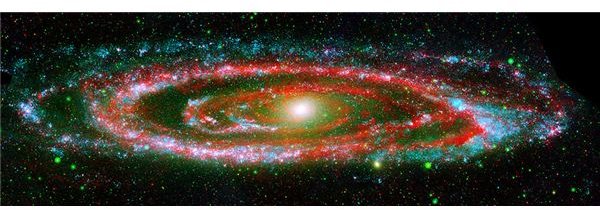
Andromeda (M 31): about 2.5 million ly from us, largest spiral galaxy near us, largest of the Local Group (which consists of the Milky Way, Andromeda, and the Triangulum Galaxy) although perhaps not the most massive, as studies have speculated that the Milky Way might actually contain more dark matter and thus be more massive, although further studies predict that Andromeda and the Milky Way are about equally as massive. It is one of the brightest Messier objects to us. Also, Andromeda is one of the few blue shifting galaxies toward the Milky Way, moving in at approximately 100-140 kilometers per second. The Milky Way and Andromeda are scheduled to collide in approximately 2.5 to 3 billion years.
Triangulum Galaxy (M 33): About 3 million ly away, it is the third largest of the Local Group. In 2007 a black hole 15.7 times the mass of the Sun was detected in the galaxy.
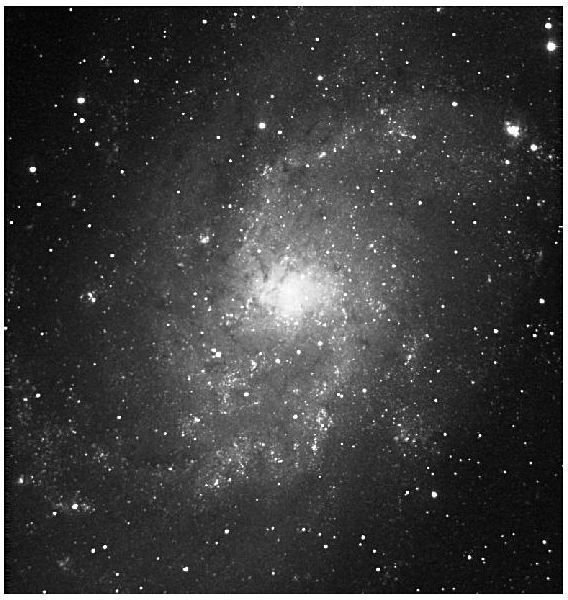
Image Credits
1. Image of Canis Major Dwarf: https://heasarc.nasa.gov/docs/cosmic/gifs/canis.jpg
2. Image of the Large Magellanic Cloud: https://en.wikipedia.org/wiki/File:Large.mc.arp.750pix.jpg
3. Image of Andromeda: https://www.flickr.com/photos/11753255@N06/1355653166/
4. Image of Triangulum Galaxy: https://www.flickr.com/photos/reactionwheel/486007067/
5. Image of Phoenix Dwarf: https://www.astro.cz/clanek/2633
6. Image of Sculptor Dwarf: https://www.daviddarling.info/encyclopedia/S/Sculptor _Dwarf.html
7. Image of the Small Magellanic Cloud: https://www.universetoday.com/2008/03/14/google-sky-takes-you-there/