What is a DEXA scan? It is a quick, painless, and very accurate procedure to measure bone loss. Learn more about the DEXA scan, including the two types of machines used, who should have one done, and who should not have one done.
DEXA Scan
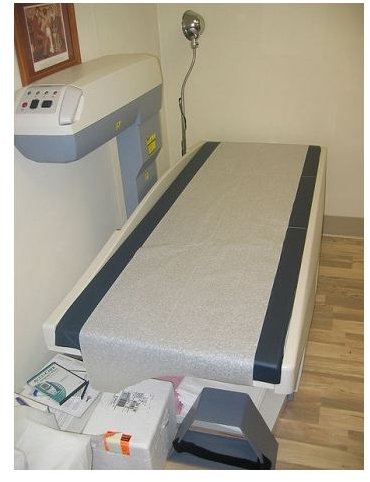
What is a DEXA scan?
A DEXA (Dual-Energy X-ray Absorptiometry) scan is a form of x-ray that measures bone mineral density (BMD). It is the preferred method for measuring BMD (instead of a regular x-ray) because it is more accurate, requires less radiation, and is less expensive.
What is a DEXA scan used for?
A DEXA scan is used to diagnose osteoporosis, a disease in which the bones become very fragile and are vulnerable to breaking easily. It is also used to assess ones risk of breaking a bone and to assess the progress of osteoporosis treatment.
LVA (Lateral Vertebral Assessment) is an additional procedure (low-dose x-ray) performed on the DEXA machine to examine the spine for vertebral fractures.
How is a DEXA scan performed?
There are two types of DEXA machines:
Central
The central DEXA device is a large machine that measures BMD in the spine and hip. To have this test, the person will need to go to a hospital or medical office.
The person will be asked to lie on a padded table. When viewing the spine, the legs will be supported on a padded “box” (to flatten the lower spine and pelvis) and when viewing the hip, the foot will be placed in a brace (to rotate the hip inward). An imaging device located above the person will slowly pass over the area being examined, generating the images on a computer monitor. While the image is being taken, the person will be asked to lie very still and hold their breath for a few seconds.
The whole procedure can take about 10-30 minutes. A LVA test can add on a few more minutes.
Peripheral
The peripheral DEXA device is a much smaller piece of equipment (a portable box-like structure) that can be used in mobile health vans and in drugstores. This device is used to measure BMD in the wrist, finger, or heel and usually takes just a few minutes to complete.
Who should have a DEXA scan?
People who are highly recommended to have a DEXA scan include post menopausal women, women who have had a complete hysterectomy, men or women who have suffered a fragility fracture after the age of 40, and those with certain medical conditions such as type I diabetes, liver disease, kidney disease, hyperthyroidism, hyperparathyroidism, and rheumatoid arthritis (RA).
Having a family history of osteoporosis or hip fracture, taking certain medications (including corticosteroids and some anti-seizure drugs), drinking excessive amounts of alcohol, and smoking also puts one at risk for osteoporosis.
A LVA test may be recommended for the elder who have lost more than 1 inch of height or who have unexplained back pain.
Health insurance/Medicare may or may not pay for the examination. The cost can vary and is normally under $300.
What is required before a DEXA scan?
• Normally, there are no restrictions on eating or drinking prior to the test.
• Calcium supplements should be discontinued 24-48 hours before the test.
Women who are pregnant should not have a DEXA scan done unless absolutely necessary (a woman who thinks she may be pregnant should inform her doctor). If a “contrast” x-ray or nuclear scan was recently done, one may have to wait 7-14 days before having a DEXA scan.
Sources Used
https://www.radiologyinfo.org/en/info.cfm?pg=DEXA
https://www.osteoporosisfaqs.com/dexa _scan.htm
Photo Credit