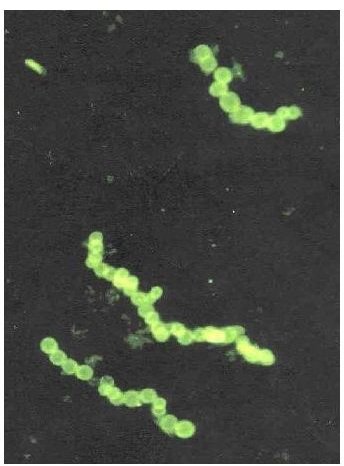
Bacteria reproduce through the process of binary fission and budding. In this article we will look at how these process work, including the phases of bacterial growth and factors required for bacterial growth.
Binary fission
Binary fission is a form of asexual reproduction, which enables one parent cell to split into two daughter cells. First, the bacterial cell grows to double its normal size. Next, DNA replication begins within the cell and continues until all the genetic information is replicated. Bacteria have cell membranes, and as they grow these membranes grow in size. DNA strands attach to the cell membrane, which elongates. This results in the separation of DNA. The membrane stretches down the middle of the cell and eventually splits, forming two daughter cells. The entire process takes about 15 minutes.
Budding
Budding is another means of reproduction for bacteria. The host cell forms a bud that protrudes out of the side of the bacteria. By the process of mitosis, a second nucleus is formed for the bud by the parent cell. The nucleus is then transferred to the bud, and the bud detaches from the parent cell, forming a new cell and a new bacterium.
Phases of Bacterial Growth
How does backteria grow? In four main phases. These are briefly described below:
1. The Lag Phase - In this phase, the cells become accustomed to their environment with zero net change in the number of cells. Metabolic activity peaks, and a large number of cellular components are produced.
2. The Log or Exponential Phase - Under the conditions provided, bacterial growth takes place at its fastest rate. The formation of end products, as a result of metabolic activity, also takes place.
3. The Stationary Phase - Cell division becomes stationary in this phase, due to a decrease in nutrients and an increase in metabolic waste. Antibiotics also force bacteria into the stationary phase. In this phase, the bacteria begin to sporulate.
4. The Death Phase - Dead cells greatly exceed the number of new cells formed, due to a deficiency in nutrients and also because of the high levels of toxic waste being accumulated.
Factors Needed for Bacterial Growth
Various factors are needed for optimal bacterial growth. Water is essential, as is carbon. Additionally, many bacteria require carbohydrates, lipids, amino acids, nucleic acids and other essential organic nutrients, in order to grow. Minerals such as potassium, iron and calcium are also required in high levels for growth. Further, aerobic bacteria require the presence of oxygen to grow. Anaerobic bacteria, on the other hand cannot reproduce in the presence of oxygen. Temperature also greatly influences bacterial growth. Minimum and maximum temperatures range for various species, and if the temperature requirements are not met, the bacteria cease to grow. Finally, pH levels also have to be suitable for growth. The ideal pH level for bacteria is near 7, the pH of water.
If the right conditions were present all over the globe, bacteria would cover the planet.
References and Credits
1. https://www.scribd.com/doc/6694153/Lecture-4-Bacteria-Nutrition-Metabolism-and-Growth
2. https://www.scienceiq.com/facts/howdobacteriareproduce.cfm
3. https://www.ehow.com/how-does _4565396_bacteria-reproduce.html
Image Credits: Wikimedia Commons/NASA