Scientists have moved a big step closer to using genetic engineering to restore hearing to the deaf. A therapy is not round the corner just yet but the advance in understanding from this new research is significant.
Causes of Adult Deafness
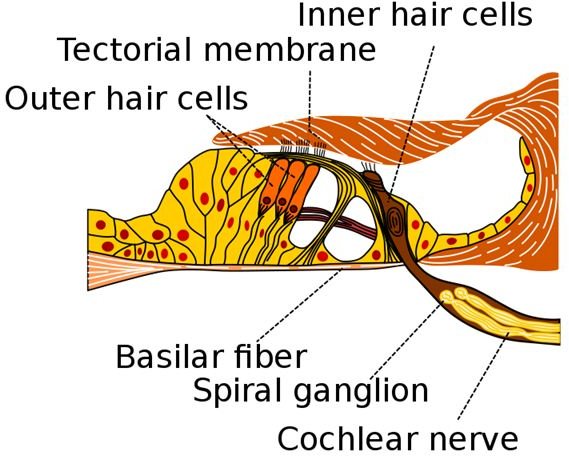
One of the contributory causes to age-related hearing loss is the loss of tiny hair cells in the organ of Corti, which is located in the ear’s cochlea. As people age, the ability to hear clearly diminishes as these cells die off. The cells are also lost if a person is exposed to loud noises for a protracted period of time.
Knowing this provides an obvious direction for scientific studies. If these cells could be re-grown then hearing could be restored. And scientists at the Oregon Health and Science University have just done that by producing auditory hair cells in the cochlea of the mouse inner ear.
Hearing gene
The cells increased in number after the introduction of a gene called Atoh 1. It was transferred into the developing inner ears of mice along with a florescent protein (GFP) that makes jellyfish glow . GFP was used to determine where Atoh 1 was being expressed.
The introduction of Atoh 1 resulted in expression of the gene inside the organ of Corti, which is where the hair cells form. As a result, many more hair cells were formed.
Hearing cells
The formation of the cells was one thing, but were they actually functionally viable? That’s a little harder to find out. Dr Anthony Ricci, associate professor of otolaryngology at the Stanford University School of Medicine was able to test the electrophysiological properties of the hair cells and found them to be consistent with the signals one expects to receive from naturally grown hair cells.
Gene therapy for deafness?
The scientists were able to show that Atoh 1 expression leads to the development of auditory hair cells. What is unknown at this stage is whether transfer of the Atoh 1 into the ears of deaf mice will restore hearing. That awaits the next round of research. However, this is an important step on the road to ultimately developing a gene based therapy for deafness.


