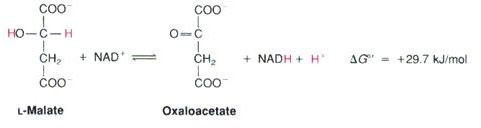
Malate dehydrogenase is an important element of the metabolic pathway in the human body, and MDH gene mutation can prove disastrous. Find out why!
What is MDH?
MDH, or malate dehydrogenase, refers to the catalyzation of malate into oxaloacetate. When humans ingest glucose, or sugar, it enters a metabolic pathway called glycolysis that degrades the sugars into usable energy at the cellular level. In the second pathway, called the citic acid cycle, malate, a substance in the cycle needs to be catalyzed into oxaloacetate so that the cycle can continue and the cell gets the energy it needs to survive and thrive. Without MDH or a highly effective MDH, the cell will die because it will lose its ability to break down sugars from the body. A MDH gene mutation in the glycolytic pathway or the citric acid pathway can be detrimental to the survival of the human.
Images
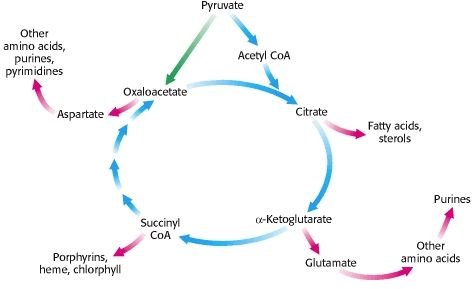
Citric Acid Cycle
Malate is oxidized, or loses an electron, by the molecule NAD+ and MDH. Thus NAD+ is reduced, or gains an electron, and becomes NADH. It is a common error to get confused by the words oxidation and reduction. As an electron has a negative charge, when added to a molecule, that molecule is being reduced because of the added negative charge. When a molecule loses an electron, its negativity is decreased which is called reduction. This simple process is imperative to the breakdown of all foods in the human body. One mistake in the composition of MDH can result in the loss of metabolism in an organism. Without this, the organism loses the ability to digest foods and make energy out of it.
What happens from a mutation?
As with any catalyzing molecule in the metabolic processes, having a mutation highly reduces the changes that the organism will survive. Without the ability to break down foods, the cell can no longer function. However, depending when the mutation occurs can severely alter the ability to live.
If the mutation occurs in DNA replication at an early stage of infant development, the chances of survival are slim. Without stopping the initial MDH gene mutation all daughter cells will be influenced and will largely go unstopped. This would be fatal; regardless if MDH is null or inefficient will certainly have an effect on the development and growth of the fetus.
If the mutation occurs in transcription or translation, this gives the cell a chance to find a re-route, or another pathway that is useful to the cell. The cell might even undergo another mutation that negates the mutation of MDH. Either or, having a MDH gene mutation is likely terminal but there is a slight increase in survival if the mutation occurs in transcription or translation. Why? Because the cell will simply die and the body will create anew.
Mutations can occur for chemical or physical agents that alter the shape or even code of the DNA. Mutagens can include X-rays, chemical warfare agents, and UV rays.
References
- Journal of Bacteriology. Regulation of Malate Dehydrogenase (mdh) Gene Expression in Escherichia coli in Response to Oxygen, Carbon, and Heme Availability - https://www.ncbi.nlm.nih.gov/pmc/articles/PMC177521/pdf/1776652.pdf
- Journal of Bacteriology. Chromosomal Location of Mutations Affecting the Electrophoretic Mobility of Malate Dehydrogenase in Escherichia coli K-12 - https://jb.asm.org/cgi/reprint/122/1/329.pdf
Image References
- Malate to oxaloacetate. https://oregonstate.edu/dept/biochem/hhmi/hhmiclasses/bb451/lectnoteskga/citricacidcycle.html
- Citric Acid Cycle. https://www.ncbi.nlm.nih.gov/bookshelf/br.fcgi?book=stryer&part=A2415