Glioblastoma multiforme is one of the most aggressive forms of brain cancers. It arises not from nerve cells, but the supporting glial cells. Little is known about the causes, but a number of risk factors have been identified and they include exposure to radiation and genetics.
Glioblastoma Multiforme
Approximately half of all brain cancers are called gliomas - they affect the glial cells and not nerve cells . And the most common and aggressive glioma is Glioblastoma multiforme.
Glioblastoma multiforme prognosis is generally poor. The cancer grows quickly and the tumours extend through the brain, making it impossible for them to be completely removed.
General symptoms are the same as for other brain tumours and include: -
- Dizziness
- Nausea
- Headaches (usually worse in the morning)
- Vomiting
- Changes in concentration levels
- Personality changes
- Seizures
- Progressive memory loss
Brain tumours are graded according to the way the cells look under a microscope. Glioblastoma multiforme is grade IV which means the cells are the most abnormal looking and likely to grow and spread quickly.
What is the Cause of Glioblastoma Multiforme?
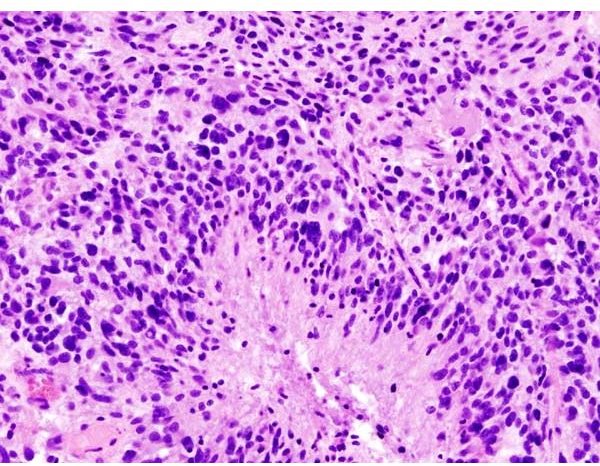
Glioblastoma multiforme causes are poorly understood, though general risk factors for brain cancers include exposure to ionising radiation, environmental pollutants, and genetics.
In December 2009 scientists at Columbia University published a paper in Nature about their discovery of two genes that appear to be responsible for glioblastoma multiforme. They were found to be active in 60% of glioblastoma patients.
The two genes are C/EPB and Stat3. C/EPB codes for CCAAT-enhancer-binding proteins which are a family of transcription factors found in a number of cells include kidney, liver and brain cells. They are involved in cellular differentiation, proliferation, and growth. Stat3 codes for Signal transducer and activator of transcription 3 which is also a transcription factor. It is involved in a number of cellular processes including growth and cell death.
The Columbia scientists say that C/EPB and Stat3 work in tandem and when simultaneously activated turn on other genes which makes cells cancerous. All study patients with tumours where both genes were active died within 140 weeks of diagnosis. But about 50% of patients without activity from these genes lived for longer. The genes did not appear to cause very much damage when acting on their own.
When the researchers turned off both genes in human glioblastoma cells, it blocked their ability to form tumours when injected into mice.
Treatments
The two genes appear to be causative and not markers; they are major players in the cause of this type of brain cancer according to Columbia scientists. And so the research team is actively looking for compounds that will block the activity of C/EPB and Stat3 genes and proteins and form the basis of new therapeutics that will stop the cancer in its tracks.