Mitochondrial diseases are caused by inherited or acquired mutations in mitochondrial DNA or by mutations in nuclear DNA that code for mitochondrial parts. One way to overcome the problems they cause could be achieved by transplanting whole chromosomes.
Mitochondria
Mitochondria are the tiny organelles that provide cells with energy to do their work. They are sausage-shaped mini power packs and there are thousands inside each cell, apart from red blood cells. They are found outside the nucleus and possess their own DNA which is separate from nuclear DNA. A human mitochondrial DNA sequence contains 16,569 base pairs that encode 37 genes. The mitochondria within a cell are usually all the same type, but sometimes there can be a mixture of mutant and normal types. This is known as heteroplasmy.
More than 150 mutations of the mitochondrial DNA have been identified by researchers in recent years, and some can cause a whole host of mitochondrial diseases which primarily affect organs such as the liver, kidneys, skeletal muscles, endocrine system, and brain.
Mitochondrial Disease ‘New Treatment’
DNA mutations that can cause a mitochondrial disorder are passed from a mother to a child in her eggs - they are not carried by nuclear DNA . However, the main problems with trying to use genetic-based cures are that there are so many mitochondria in a cell and they are so widely dispersed. But there could be a solution - chromosome transplants.
Scientists have speculated that women could produce healthy children if their chromosomes were transferred to a chromosome-free egg that had normal mitochondria, and this has been demonstrated in healthy monkeys.
Experiment
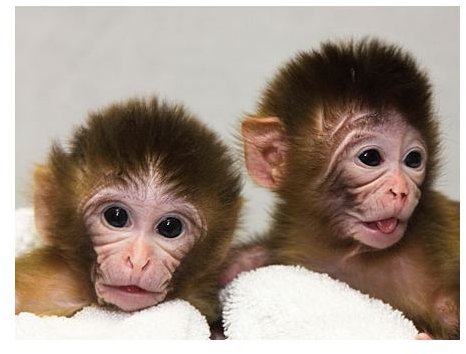
A team from Oregon Health and Science University in Beaverton successfully created twin rhesus monkeys (called Mito and Tracker) by carrying out this DNA transplant technique, and then fertilising the egg using standard IVF procedures. They took the nuclear DNA from a mother with a mitochondrial disease and transferred it into a healthy enucleated egg. In this way the faulty mitochondrial DNA was ignored.
Healthy babies were born and the mutant DNA was eliminated; researchers found no trace of the original egg’s mitochondrial DNA in the baby monkeys.
It’s far too early in the process to see how this might play out in humans, and regulators will be nervous of sanctioning the technique, because it creates changes that can be inherited down the generations.
Controversy
Unsurprisingly there is widespread opposition to chromosome transplants with some people voicing concerns that there could be unintended side effects in a child that is created from three sources of DNA - the mother, the father, and the donor. Others point out that it could open up a potentially exciting route for new therapies to treat inherited diseases. And according to Shoukhrat Mitalipov, one of the coauthors of the study it could be ready for use soon. “We believe that the technique can be applied very quickly to humans, and we believe it will work,” he said in a briefing to journalists in August 2009.
Photo Credit
Oregon National Primate Research Center at OHSU