What is airplane turbulence? How is it created? What are its different intensities and how can you avoid injury during air turbulence? In this article, we will look at answers to these questions and offer answers.
What Is Airplane Turbulence?
When an airplane flies through irregular and violent waves of air, it bounces around and yaws. It’s like two seas meeting, causing waves and current. A boat passing by those meeting seas would bounce on the water. Airplane turbulence is the invisible incidence of the same.
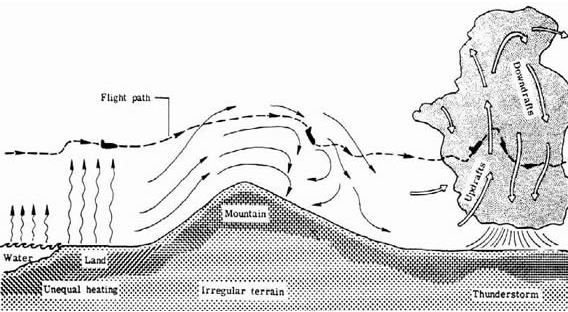
The irregular and rapid movement of air that causes airplane turbulence can be formed by any number of different conditions including thunderstorms, jet streams, mountain waves, warm or cold fronts, microbursts or atmospheric pressures. In other words, airplane turbulence is caused by the irregular movement of air created by the collision of different pressures or streams of air.
Many of us have who have traveled by an airplane have experienced turbulence. It’s always disconcerting when an airplane starts to toss around, but really there is little to fear.
Image Credit: www.aviationexplorer.com
Different Intensities Of Air Turbulence
Airplane turbulence is of different intensities and each level has a slightly different impact on the airplane. The following are different intensities of airplane turbulence:
Light turbulence: Causes slight, variable changes in an airplane’s altitude. Light chop: Slight and rapid bumpiness without obvious
changes in altitude.
Moderate turbulence: Causes intense and irregular changes in altitude but the airplane remains in control at all times.
Moderate chop: Causes intense and rapid jolts or bumps without noticeable changes in altitude.
Severe turbulence: Causes large and rapid changes in altitude and the airplane may become temporarily out of control.
Extreme turbulence: In extreme turbulence, the airplane is aggressively tossed about and goes out of control. The reactions inside an airplane during extreme turbulence vary from unsecured items being displaced and passengers feeling strain against their seat belts through to unsecured items being tossed about and passengers being forced fiercely against seat belts.
Image Credit: www.aviationexplorer.com
Clear Air Turbulence
Clear Air Turbulence (CAT) is a type of turbulence that occurs when the sky is clear of clouds. It is usually encountered at heights where a cruising airplane suddenly enters dangerous turbulent areas.
Airplanes have very sophisticated and advanced radars for weather forecast, but they can not detect Clear Air Turbulence. When it occurs, it is usually mild on the flight desk and more severe in the rear, so pilots can’t physically measure its actual intensity.
Although pilots can’t foreknow or see CAT, scrutiny of the forecasted turbulence factor or the weather charts could warn them of possible turbulent areas on the route.
Injury Prevention
Airplane turbulence is one of the main causes of in-flight injuries. There are numerous reports of passengers who were badly hurt while moving in the cabin when air turbulence is encountered. Recently, the FAA reported that among non-fatal air accidents that happen in the USA each year, about 58 passengers are injured by turbulence while not wearing seat belts.
Passengers often ignore the advice to keep seat belts fastened even when the seat belt signs aren’t illuminated. They can certainly move around the cabin to use toilets or exercise on long-haul flights, but seat belts must be fastened at all times when seated to avoid injury from unexpected airplane turbulence.
References
USAToday, https://www.usatoday.com/weather/wturbwht.htm
Popular Mechanics, https://www.popularmechanics.com/technology/aviation/safety/4327148