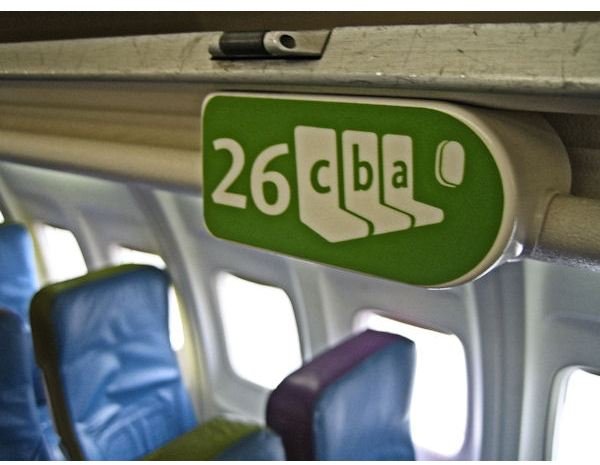
Where is the best place to sit while traveling on board an aircraft? A window seat? A seat nearest to the cockpit? Or the seat beside the emergency exit? Though the choice of the seat depends on the passenger, his or her safety is always given the first priority. Find out more inside the article
Introduction
Statistics say that airplanes are the easiest, fastest, and safest way for traveling from one place to another. The question, “Which is the best place to sit on an airplane?”, therefore, might sound strange or a bit dazed. However, it is a known fact that many people are still paranoid to travel on airplanes. People, who are scared traveling by air, generally look for seats which are thought to be safest and least affected by the altitude and internal environment of the airplane. It is for this reason that the procedure of selecting the best place requires so much of thought. Many factors such as emergency situations, noise, and pressure and altitude effects are taken into account while selecting a seat while traveling by air.
Safety vs. Comfort
Practically, the entire airplane is designed to be safe; however, choosing the best and safest seat makes people feel “extra safe.” Thus, when it comes to selecting the best seat on an airplane, safety is given the first priority, which is then followed by comfort. Comfortability is viewed in terms of the width of the seat as well as the legroom available.
All these factors were not given much thought earlier, but the increasing number of risk factors (the latest one being DVT) have lead people to spend more time selecting the perfect seat. Deep Vein Thrombosis, better known as DVT , occurs due to immobility while traveling. One of the ways to prevent this is to select a comfortable seat, which is usually the prerogative of first or business class.
First class seats are at least 22 inches wide with legroom of around 60-90 inches, whereas business class seats have a legroom of 45-50 inches. Economy classes are increasingly being crammed in to include more passengers and further lower the rates. Here the seats are 17-18 inches wide with a legroom of just 31-34 inches. If the choice of the seat is based on the above mentioned factors, information regarding the seating arrangement of the particular airline should be derived before selecting the seat. This is because the legroom and the number of seats in a particular class vary according to both airlines and aircraft.
Image Credit: Wikimedia Commons/Jakob Lodwick
Safest Seat on an Airplane - Does it Exist?
Subsequent to the choice of class, sufficient thought is to be given to the place where you need to spend your entire traveling time. However, there are no substantial theories to prove which is the safest place in an aircraft. Some consider it is safest to sit near the wings, while experts believe that seats at the rear of the aircraft promises a higher survival-rate during crash (this may be one of the motives when placing the black box at the airplane’s tail segment).
However, the contemporary school of thought believes that the safest seats are the ones near the aisle and emergency exit. According to the norms, airplane evacuation plans should be designed so that all the passengers can be evacuated within 90 seconds of crash landing. But in actuality, emergency evacuation is a frenzied task as people make choices between their precious belongings as well. Thus, sitting near the exit will surely be the safest option. Secondly, choosing a seat near the aisle also facilitates easy access and quicker exit during standard debarking as well.
Learning from Past Accidents
A look at past crash landings suggests that as you move toward the back of an airplane, your chances of survival increase. Also, theories suggest that the safest seat is the one which faces the back of the aircraft. The rear seats safeguard a passenger during an emergency (minor ones) due to the back-cushioning effect on the body. Even the facts conclude that passengers near the tail-end have about a forty percent better chance to survive airplane crashes. However, in spite of being safer, these seats are fast disappearing from present-day aircrafts as the forward-facing seats appeal more to fare paying passengers. Whatever is the custom, safety has always been one of the first priorities while selecting a seat on an airplane.


