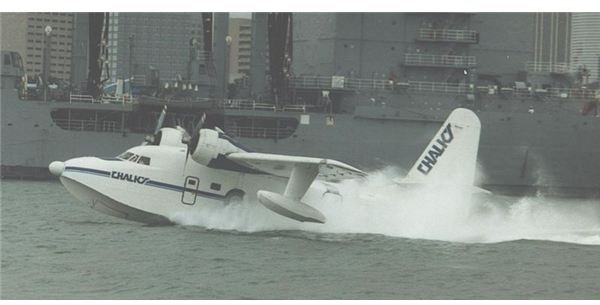
The seaplane is a vehicle designed like a fix-wing aircraft, but also has the ability to land and take off from water. This makes the impacts of the seaplane an asset to those in need of transportation to areas that do not have established landing strips.
Development
Shortly after the success of the Wright Brothers’ on developing the fixed-wing aircraft , a number of designers approached the concept of making planes that were capable of landing and taking off from the water. One of the major early impacts of the seaplane was on transatlantic flight after the first World War. Due to the lack of runways across the world, as well as general safety issues involved with flying over water, many large transportation companies sought to develop seaplanes. The most notable of these was Pan-American World Airways, which used seaplanes for long distance services around the world, especially in remote areas.
Impact on the Military
During World War II, seaplanes were used heavily by the Allies in areas without runways across the Pacific. They were essential in reconnaissance efforts, emergency search and rescue operations and even anti-submarine warfare. The most famous of these seaplanes was the Consolidated PBY Catalina, an American seaplane design which were integral in hunting down German warships. Following the war, both the Soviet Union and United States continued to expand its use of seaplanes, particularly in terms of waterbombing potential. However, after much research into creating jet powered seaplanes, both militaries limited their use to traditional means.
Remote Access
One of the most important impacts of the seaplane in modern terms involves the remote access capabilities. Throughout less developed regions of the world, seaplanes allow for better transportation options in places where no runways exist. Remote areas such as the Alaskan and Canadian wilderness are accessible to many due to the seaplane. In addition, areas such as the Caribbean or the Mediterranean benefit from the planes as a way of connecting the various island chains. Establishing a system of runways on every island in the area would not be cost-effective or viable, so using the system of docks with these seaplanes is the best option. Other such operations are being constructed around the world in less remote areas such as Scotland, where the Loch Lomand Seaplanes company, launched in 2007, delivers passengers and materials from Glasgow to coastal cities.
Above left: Grumman Albatross landing. (Supplied by RuthAS at Wikimedia Commons; Creative Commons Attribution 3.0; impacts of the seaplane,search and rescue,takeoff from water,Consolidated PBY Catalina)
Rescue
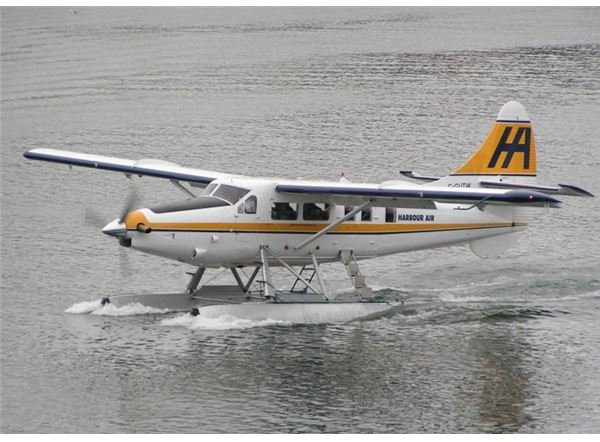
Perhaps the most important use of seaplanes is the ability to conduct rescue operations over large bodies of water. Capable of longer distance operations than helicopters and able to fly through more dangerous weather, seaplanes are essential for organizations attempting to locate lost boats or seafaring craft and people. This is especially helpful in extreme conditions such as hurricanes and for Coast Guard operations. However, seaplanes are limited in one aspect as they cannot land on waters that are heavily disrupted by large waves.
Right: DeHavilland Single Otter. (Supplied by Ben W. Bell at Wikimedia Commons; GNU Free Documentation License; https://upload.wikimedia.org/wikipedia/commons/f/fb/DeHavilland _Single_Otter_Harbour_Air.jpg)
Noise Problems
One of the negative impacts of the seaplane technology according to the Federal Aviation Administration is the noise the vehicles make upon both takeoff and landing. Part of the challenge behind controlling the noise problems is the fact that seaplanes must be at or near full speed during takeoff. This means that the engine is operating at peak efficiency and produces volumes not dissimilar to a major urban airport takeoff. However, according to the FAA and other organizations, one of the advantages in dealing with this problem of noise pollution on the environment is the fact that seaplane usage is less common than traditional aircraft.
In summary, the impacts of the seaplane since it’s development have been noteworthy. From the most important task of a rescue mission, to providing access to remote areas, the seaplane has been a valuable aircraft indeed.
Resources
“Seaplane Noise” Seaplanes.org (https://www.seaplanes.org/UserFiles/File/SeaplaneNoise.pdf )
“Flying Boats” Century of Flight (https://www.century-of-flight.net/Aviation%20history/coming%20of%20age/flying%20boats/flying _boat.htm)
“Seaplanes” StateUniversity.com (https://encyclopedia.stateuniversity.com/pages/19774/seaplane.html )