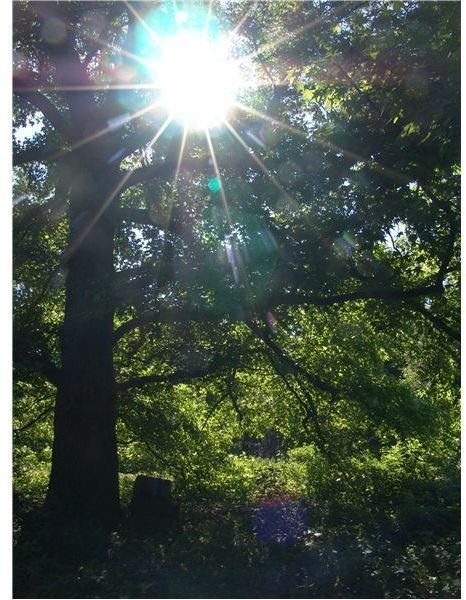
Lens flare can be an artistic touch or an annoying artifact, depending on what you’re trying to accomplish. Learn what causes it and a few ways to cut back on the flare!
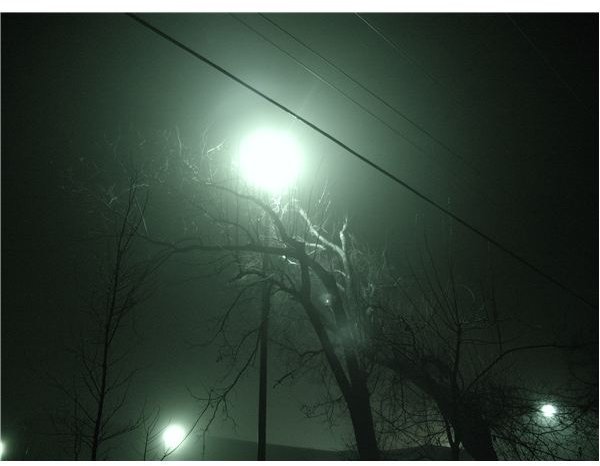
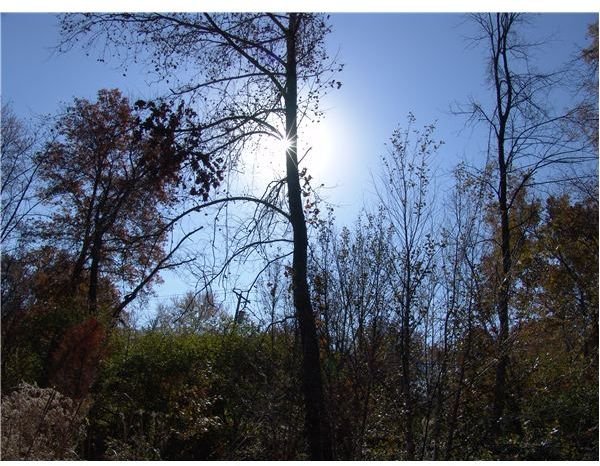
What exactly is lens flare? If you’ve seen circles, streaks, or polygonal “artifacts in your photographs, you’ve seen the effects of lens flare. Sometimes it resembles an even more widespread “washing out” of part of a picture.
Put simply, lens flare is caused by light- in this case, it’s light that doesn’t travel directly from the scene to the imaging sensor in your camera. Some light makes it inside the camera only to bounce around, caroming off optical elements and what-have you before making its way to the sensor. Anti-reflective coatings are often used to minimize this effect, but very strong light sources such as the sun, or artificial lighting can overwhelm this protection.
One way to correct for this problem is to look at the problem again; if the problem concerns light not making it to the sensor, it follows that controlling the angle at which light enters your camera can mitigate the problem. Some ways of reducing lens flare include using a lens hood. These hoods can dramatically reduce lens flare and traditionally come in two varieties- conical and petal. Conical hoods are simple and give uniform protection all around, but may interfere with the field-of-view (FOV) on a zoom lens. Petal hoods have noticeable lobes and are designed with specific camera in mind; they maximize glare and flare reduction without sacrificing field-of-view, though on zoom lenses they’re optimized for the widest FOV.
Another solution for those who use digital SLRs is to use a prime (or fixed) lens. Since lens flare is caused by internal reflections in the optical elements of a camera, choosing a lens with fewer of those elements is one way to attack the problem.
An extremely effective solution that doesn’t involve additional expense is to think outside your viewfinder. Just because a light source isn’t in your FOV doesn’t mean that it can’t introduce lens flare into your photo. Use a hood if you have it, but also consider partially or completely blocking those unwanted light sources using intervening objects such as a tree, building, or lightpost. And if all else fails, enlist the aid of a bystander to block the light!
Images