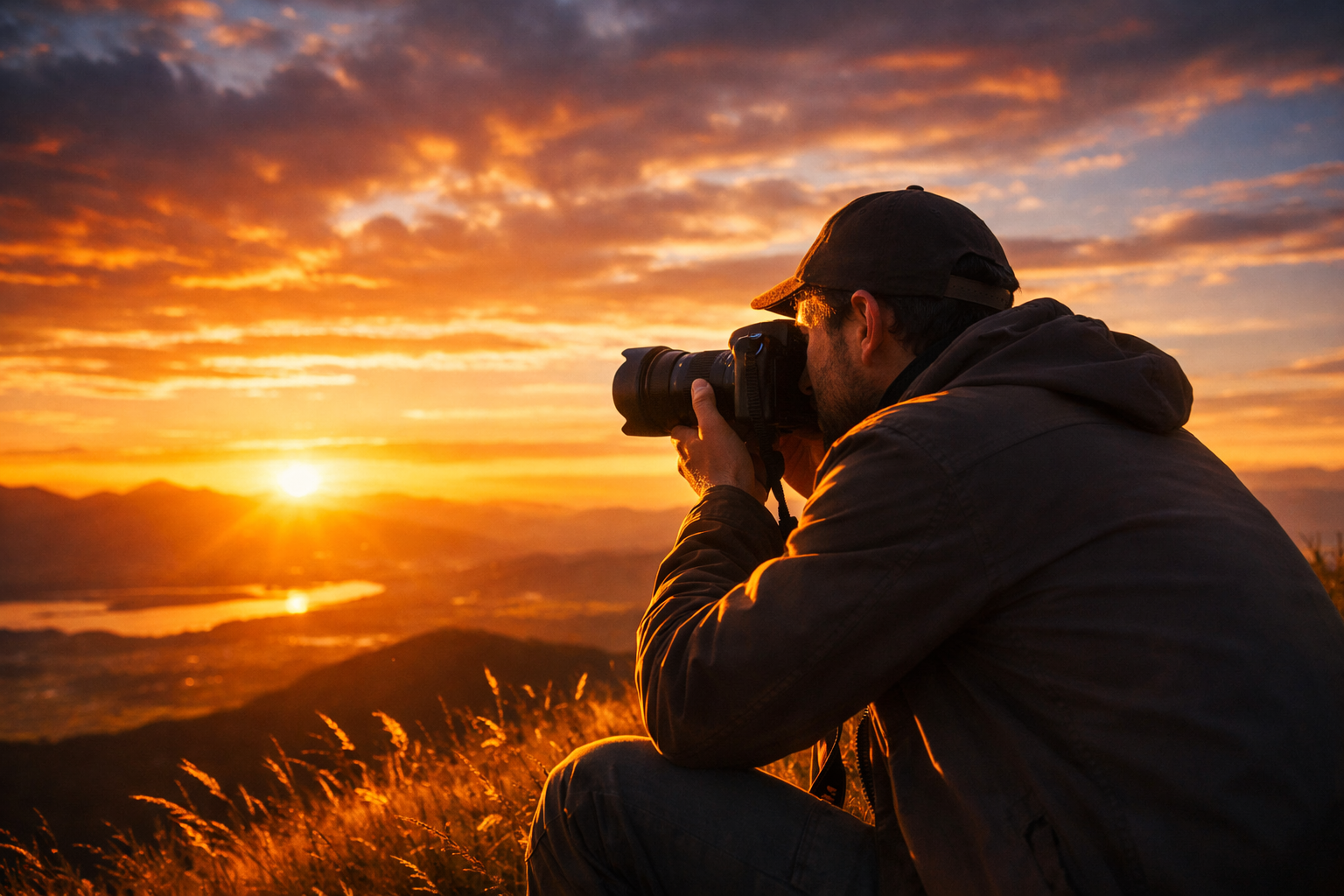
Sometimes, for all your hard work, a shot doesn’t turn out quite the way you want. Bracketing can give you that extra bit of insurance you need.
Introduction
Who hasn’t had the frustrating experience of composing and taking a shot only to find out after the fact that some parameter (exposure , focus, white balance , or flash) was slightly off target? Many photographers compensate for these problems by bracketing, taking multiple shots of a subject at different settings to insure an optimal result. While such adjustments might not be much of a problem when shooting stationary subjects, they can be difficult to impossible when dealing with moving ones.
Occurrences such as these are the reason that camera manufacturers started to include autobracketing functionality in their cameras. With this feature, cameras automatically adjust settings for you. Autobracketing can cope with all four conditions- to find out whether your specific model has autobracketing and what modes it possesses, consult your manual. Keep in mind that bracketing involves taking multiple pictures, so it only is effective in non-action situations.
Exposure bracketing
Exposure bracketing is the most common of autobracketing modes, not surprising at all considering that underexposure or overexposure of a particular photo may or may not be acceptable, depending on artistic preferences and the compositional focal point of the picture. In this mode, the camera takes multiple shots at ½ or 1/3 stop increments on either side of your selected exposure by varying shutter speed or aperture . If you’re interested in using this capability, be sure to check to see how large of an exposure range the camera can handle!
Focus bracketing
Focus bracketing can be extremely useful in situations such as macro photography , since the large apertures involved severely constrain the depth of field. By combining photographs taken at different focal distances, an in-focus composite image can be created. The time required for this method does not lend itself to high-speed photography or pictures taken unsupported.
White Balance Bracketing
While modern digital cameras can automatically perform white balancing, the compromise value may not be the most flattering for your photo; even the presets for general lighting conditions (sunny, cloudy , fluorescent, etc.) are still approximations. If you’re shooting in RAW format , you can always adjust this value after the fact, but if your photos are in JPEG , bracketing can save you the trouble of trying to salvage a poor white balance setting after the fact.
Conclusion
Exposure bracketing is likely to be the most useful of these modes, especially if you have lots of room on your memory card or are interested in delving into the realm of high dynamic range photography . Many of these modes are common features on “prosumer” and DSLR cameras; refer to your manual to find out how to employ these techniques with your model of camera.