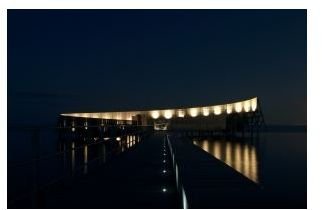
Have you ever tried your hand at night photography? This can present a whole new fun challenge for photographers. Start with these basic tips to obtain brilliant night photos.
Night Falls
Photography is all about capturing the light that bounces off of subjects and objects, as is the human sight from which it is based. Night time presents special challenges because light is lacking and therefore the photographer has to strain their equipment to pick up this visual information. To do this they add and remove attachments, make special aperture and ISO decisions, deal with exposure changes, and fight the movement of subjects at all costs. Here is a look at how to approach night photography with a special look at the settings and equipment that go along with the DSLR camera itself.
Lenses
The primary focus of night photography will always be to get light in, which for many people means a form of wide angle photography. This is not always going to be the best night photography lens since it may end up distorting your image and might not necessarily meet your goals. You are going to have to open up the aperture in general, which is going to shorten your depth of field so you will need to make sure your lens choice just allows you to get fine focus where you need it.
Your shortest lens is not necessarily the best night photography lens, but you do not want to go excessively high. You are likely going to have to bring up the ISO, which is going to add a fair amount of grain to your image while it also lightens it. This can become very apparent with a long telephoto lens, so as long as you push under 80 mm you will likely be fine for your image. At the same time you may have to bring down your shutter speed below 1/60, which will add motion blur for camera movement. This is also more obvious when you are utilizing a telephoto lens, so avoid this when you can.
Filters
When taking photographs at night, people often want to alter the way that the camera reads light so they can heighten it, giving as much image information as possible. Many will try to turn to a filter, but it is often better to remove all filters that you have on the camera including any kind of UV or neutral density filters.
However you can use technically modifying filters that instead change the entire way that the camera gets an image. In this sense, a night vision attachment could be the best option. It is not going to capture images in the same way as an unmodified camera would, and everything will be in the form of a green haze, but it will end up getting clear representation of what took place. This is much better if you simply need a visual record of something, but the photos themselves are not going to be a cherished piece on their own.
Stability
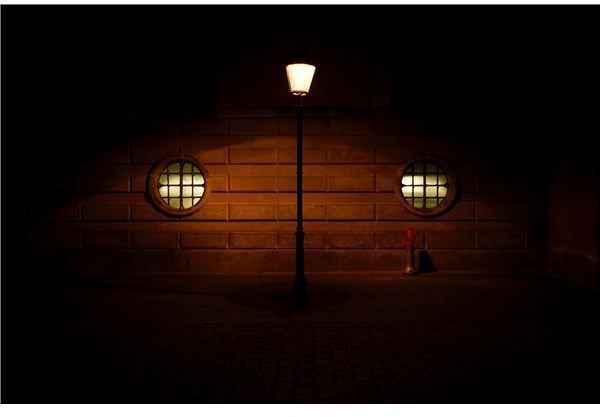
Night photography requires much longer exposures than you would during the daytime. This necessitates a tripod, or some type of stability that does not require active participation by the photographer. This will cut down on the motion blur that happens at lower shutter speeds in general, and when you are below 1/60 you need complete stability if the image is to come out at all. This is also important since you will need to match the stability of the subject, and will likely require more set up time.
File Format
The image noise is also going to be a problem because of the high IOS setting you are going to be required to shoot at, so you want to avoid any more interference coming from the storage system of the DSLR. Compressed photo formats, like JPEG, actually maintain even more image noise because of their compression process. To avoid that you should shoot in the RAW format, which is the full size file that needs to then be processed and altered for printing in your photo editing software.
Aperture
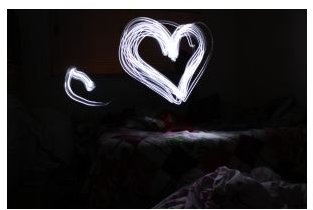
At night, the largest depth of field you can go with will be your best option, though you will be tempted to open up your aperture to smaller f-stop readings because of the low light. Instead, try to figure how high you can get your f-stop to be by altering the on sight light and dealing with the shutter speed and ISO.
You have a lot of freedom when it comes to completely still subjects and landscapes, but this may be a problem when you are working with movement. If you are using a wide angle lens you may want to bring in the aperture around f8 for fine focus, but this will change depending on what you have decided is the best night photography lens.
References
Photos
Sources
Author’s Own Experience