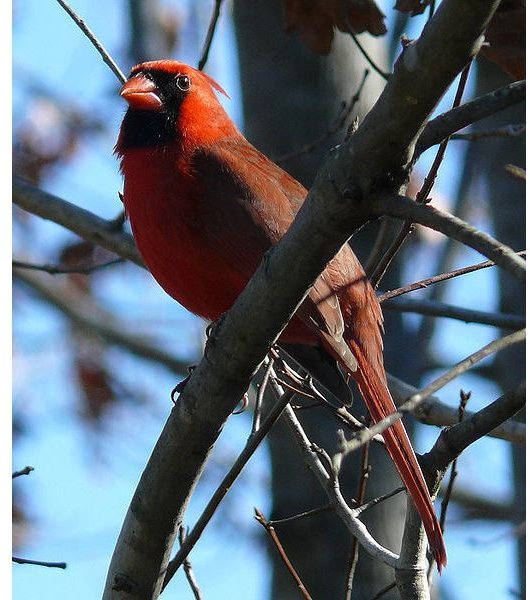
The Northern Cardinal, also known as the Virginia Nightingale, is a non-migratory bird that has expanded its range over the past decades. Read more about the cardinal’s distinguishing features that make it such a striking bird.
Northern Cardinal
Northern Cardinals are midsized North American songbirds that actively sing a variety of different melodies. They are also called Common Cardinals or Redbirds. The male Northern Cardinal sports a vibrant red plumage, which is why they earned the name Redbird, whereas the female is an attractive gray.
Traditionally, Cardinals were more common in the warmer climates of Southeast US. However, in past decades they have expanded their range up North America. This expansion is credited to winter bird feeders and the bird’s ability to adapt to human habitats and parks.
Beak
Northern Cardinals are mainly granivorous, feeding on seeds and grains, but they also eat fruits and insects. Almost 90 percent of the diet of Northern Cardinals consists of grains, seeds, fruits as well as beetles, grasshoppers, snails, cicadas, berries, maize, sunflower seeds, nuts and oats. Cardinals have very strong beaks that help them to eat their food. They have a cone-shaped bill that helps them to crack hard shells, nuts, seeds and berries. Their beak has a special feature that makes cracking easier. The edges of the lower beak fit into special grooves in the upper beak and the bird uses its tongue to maneuver seeds into the groove.
Feathers
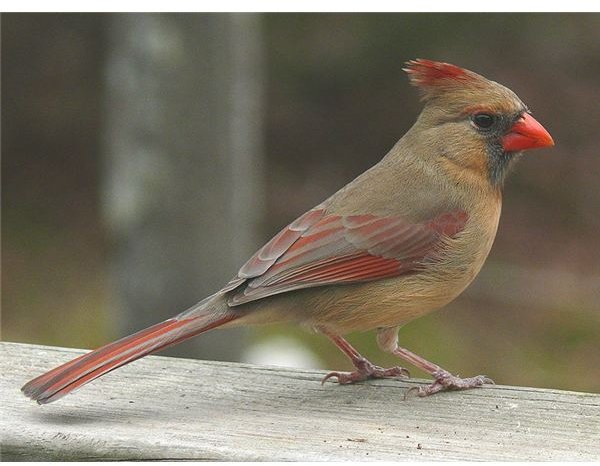
Northern Cardinals have nine primary feathers. The upper wing coverts of the male are bright red, and of the female are dull gray. Cardinals develop more feathers in the winter to protect themselves from the cold and harsh weather of the North.
Songs
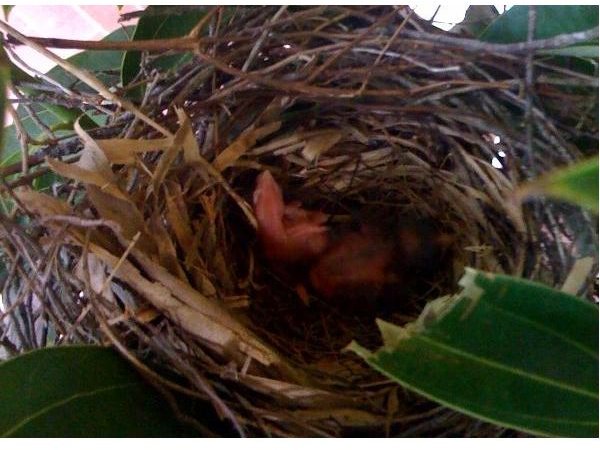
A Northern Cardinal is a territorial songbird. The Cardinal male sings a clear, loud and whistled song from a high location to guard its territory. He often chases off other males from its area. Northern Cardinals also have a unique alarm call that is given to warn the female cardinal when predators approach the nest. The volume and frequency of these calls increase as danger becomes larger. However, Northern Cardinal songs differ regionally.
Migration
Northern Cardinals have short and round wings that do not allow them to fly long distances. Therefore they don’t migrate. They remain in their habitats of dense shrubby areas. They usually make their nests in the overgrown fields, woodland edges, swamps, riparian areas and also in suburbs, gardens and backyards.
Behavior
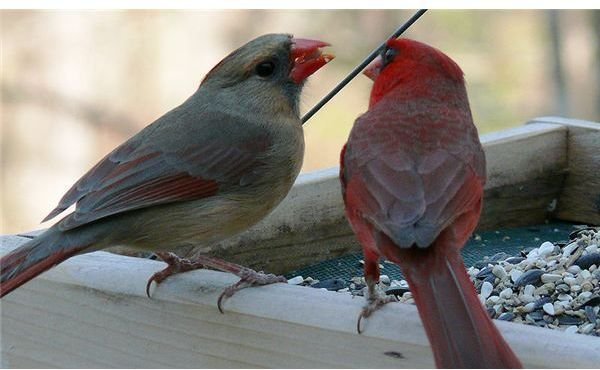
Northern Cardinals jump through low branches to hunt for food near the ground while they sing and preen from high branches. When they are agitated, their distinctive crest is raised and pointed. Otherwise it is lowered and hardly visible. Typically, the Northern Cardinals move around in flocks but they can be seen moving around in pairs during breeding season.
Those who want to attract these beautiful birds should set up bird feeders in their backyard. Northern Cardinals form a truly magnificent sight with their bright red plumage and black beak against the snowy backdrop of winter.
References
- https://www.allaboutbirds.org/guide/Northern _Cardinal/id
- https://ftp.columbia.edu/cu/pr/96 _99/19389.html
- https://sdakotabirds.com/species/northern _cardinal_info.htm
Image Credits
- https://en.wikipedia.org/wiki/File:Northern _Cardinal_Male-27527-2.jpg
- https://en.wikipedia.org/wiki/File:Northern _Cardinal_Female-27527.jpg
- https://en.wikipedia.org/wiki/File:Northern _Cardinal_Pair-27527.jpg
- https://en.wikipedia.org/wiki/File:Northern _cardinal_hatchling.JPG