Do you know how fast ladybugs can flap their wings? Do you know how they protect themselves or how many aphids they can eat? Find answers to these questions and more interesting ladybug facts in this article.
The Ladybug
The ladybug, also known as lady beetle and ladybird beetle, is a well known insect that benefits gardens and crops. There are roughly 5,000 different species that live throughout the world in most regions. Over 450 species live in North America (with some being native while others were introduced from other countries). Below, you will find some wonderful and interesting ladybug facts for kids and adults.
Description
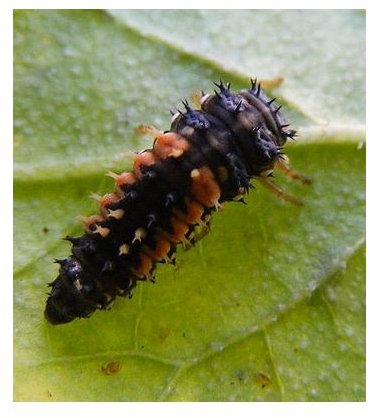
A young ladybug (larva) does not resemble the adult ladybug. Larvae have long and slim bodies (ranging from 1 mm to 1 cm in length). They have an alligator -like appearance with spiny bodies and six legs. Many larvae are black or gray with orange or yellow markings.
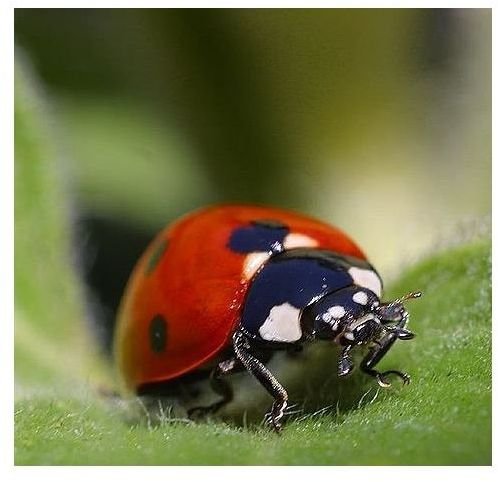
As they mature into adulthood, they develop a round to oval shaped body. They are about 1 cm long and vary in colors. Most are orange or red with black spots. Other colors include yellow with black spots or black with red spots.
Diet
Ladybugs have a voracious appetite and benefit many plants (natural pest control) by consuming large amounts of aphids (and other plant-damaging insects). However, it is a fact that not all species have the same appetite (a few eat plants and not plant-eaters). Some species eat only certain aphid species and others will eat a variety of aphid species. One ladybug can consume up to 5,000 aphids in its lifetime.
After ladybugs have eliminated an aphid colony, they will move on to other areas in search for food. If aphids are scarce, they will feed on small insects, insect eggs, pollen, nectar, and even other ladybugs if desperate enough.
Reproduction
The ladybug can lay 20 to 1,000 eggs over a 1-3 month period (beginning in spring or early summer). The eggs are about 1 mm in size and are placed in protected areas on leaves and stems. They are also placed near aphid colonies so the newly hatched larvae can begin feeding right away. Larvae can consume its weight in aphids each day. In 3-6 weeks, they become adults.
Protection
Ladybugs have three ways of defending themselves. When a predator bites into them, they secrete a foul tasting fluid. In the future, the predator will most likely remember their attractive colors and distinctive markings and associate them with the foul taste, thus they will leave them alone. Lastly, they can play dead when faced with a threatening situation.
More
The following are more interesting ladybug facts for kids and adults:
• Ladybugs are not bugs. They are beetles. The common name bug refers only to “true bugs” in the insect order Hemiptera (meaning half wing) and beetles belong in the insect order Coleoptera (meaning sheath wing).
• When flying, their wings can flap about 5,100 times a minute.
• Ladybugs are active during the day and rest at night. During the winter, they hibernate in places such as ground cover, tree trunks, and sometimes in homes.
• They can live up to 3 years in the wild.
• You can buy ladybugs (including through the mail) to add to your gardens.
References
https://animals.nationalgeographic.com/animals/bugs/ladybug/
https://everything-ladybug.com/ladybug-facts.html
https://www.nysaes.cornell.edu/ent/biocontrol/predators/ladybintro.html
https://www.canadiangeographic.ca/kids/animal-facts/lady _bug.asp
https://skagit.wsu.edu/MG/bugs/Ladybugs%20or%20Ladybeetles.pdf
Image Sources
https://commons.wikimedia.org/wiki/File:Ladybug.jpg
https://commons.wikimedia.org/wiki/File:LadyBugBeetle2009.JPG