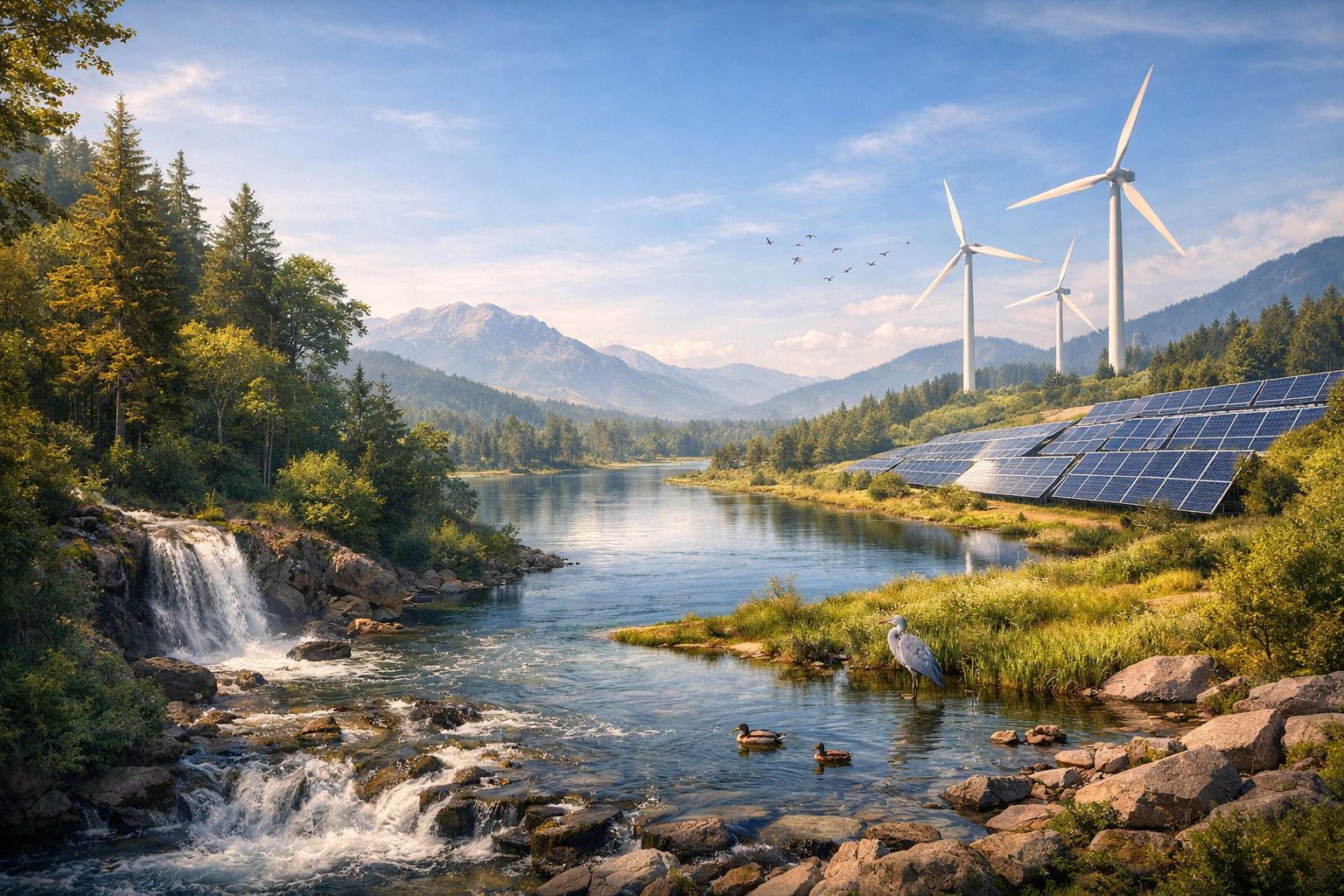
The biotic factors of the forest ecology are all of the living things that make up the forest ecosystem. Learn what they are and how they interact so create a balance in their environment.
The Living Things in the Forest Ecosystem
The biotic factors of an ecosystem are compromised of all the living things, from the trees and animals down to the invisible microorganisms in the soil. There are three types of biotic factors: producers, consumers and decomposers. This article will examine the three types of biotic factors and how they interact and contribute to the forest ecology as a whole.
Producers of the Forest Ecology
Producers are the factors of an ecosystem that are able to make their own food through photosynthesis. Producers are mainly plants, although some bacteria and algae are also capable of photosynthesis. A healthy forest is composed of a wide variety of vegetation.
Coniferous forests are primarily populated with evergreens such as pine, fir, spruce and larch, and also may have low-growing bushes, herbaceous flowering plants, grasses, and mosses. In areas of a coniferous forest that have been disturbed, some species of broad-leaved trees such as birch, aspen or poplar may also be found.
Temperate deciduous forests have a mixture of different types of trees, including oak, beech, aspen, hickory, birch and maple. Other types of plants in a deciduous forest include shrubs, woody vines such as poison oak or ivy, flowering plants, ferns, and moss.
Consumers of the Forest Ecology
Consumers are organisms that cannot make their own food, and must eat other organisms to survive. Primary consumers are herbivores that live entirely on plants or seeds. Some examples of primary consumers in the forest ecosystem are insects, rabbits, mice, voles, squirrels, chipmunks, beavers and gophers, and larger herbivores including deer, elk and moose.
Secondary consumers may be omnivores that eat both plants and animals, or carnivores that eat only animals. Some examples of secondary consumers in the forest ecosystem are foxes, badgers, racoons, coyotes, mountain lions and bears. Reptiles and amphibians including salamanders, lizards, snakes and frogs that eat insects and small mammals are an important part of the forest ecology. Birds are often omnivores, feeding on insects and seeds. Raptors such as hawks and eagles are carnivores.
Decomposers of the Forest Ecology
Decomposers are a third type of biotic factor of the forest ecology. These organisms are a critical part of the ecosystem because they break down organic material into a simpler form so that the nutrients can be returned to the environment. Fungi such as mushrooms, bacteria, lichens, and some types of insects and worms are decomposers.
Biotic Factors Interact in a Complex Food Web
All of the biotic factors of the forest ecology play an important role in the ecosystem, forming a complex food web that keeps all of the organisms in balance. If one of the important predator species is removed, there will be no natural control of the population of their prey species, and the food web will be thrown out of balance.
For example, if all of the wolves are removed from an area, there will be nothing to control the population of deer that the wolves normally eat, and the deer population will increase. The excessive numbers of deer will deplete the vegetation, and other herbivores will not have enough food, so their populations will decline. This in turn will result in insufficient food for the predators that eat these herbivores, and the populations of the predators will also decline. Thus, the effect of the loss of one species will be felt throughout the entire ecosystem .
Resources
Woodward, Susan L. Biomes of Earth. Westport: Greenwood Press, 2003.
Blue Planet Biomes, www.blueplanetbiomes.org