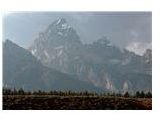
Driving through the open spaces of Wyoming and into its share of the Rocky Mountains, loss of habitat seems like a problem for more crowded states. Sadly, habitat loss is an issue in this frontier state.
Two causes of habitat loss in the Wyoming Rockies illustrate the problems looming over native species. Energy development and inconsistent Endangered Species Act (ESA) policies are creating havoc all along the Rocky Mountains and Wyoming’s stretch is not immune.
The Wildlife Society issued a 2007 report chronicling the effects of energy development on the Sage-grouse habitat in the Powder River Basin (PRB) of Wyoming and Montana. According to the report, coal-bed natural gas (CBNG) development needed further regulation to stop CBNG development near sage-grouse leks (sage grouse male gatherings in mating season) on federal lands. The report raises concerns over the loss of sagebrush and the ensuing long-term loss of habitat.
Fast-forward two years later. The Wyoming Game and Fish Department announces that wind energy development constitutes a threat to sage grouse habitat. Weigh these complex issues. While traditional energy development frequently is seen as threatening to endangered or threatened species, some people see wind energy as safer. Not so for the sage grouse.
The Endangered Species Act, which was designed to protect species habitat, has become a political blade that slices through protections at the whim and the agendas of different administration both liberal and conservative. In 2008, protections for the Preble’s jumping mouse were lifted in Wyoming and upheld in Colorado. This uneven behavior at the federal level points toward doom for the Preble’s mouse. Wildlife protection advocates such as the National Resource Defence Council (NRDC) and Biodiversity Conservation Alliance in Laramie, Wyoming continue to fight to save the mouse’s dwindling habitat.
Threatened
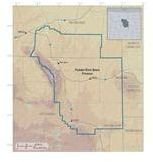
The Wildlife Society’s Journal of Wildlife Management report specifies the impact of CBNG on the sage grouse in Wyoming. The report details the analysis of habitat and infrastructure to determine the effects of CBNG. According to the report, greater sage-grouse “experienced rapid, widespread changes to their habitat” from recent CBNG development. Specifically, between 2001 and 2005, leks in “CBNG fields declined more rapidly” than elsewhere.The report recommends rapid and “more effective mitigation.” (See Resources, Greater Sage-Grouse)
In 2008, Endangered Species protection was lifted from the Preble’s jumping mouse in Wyoming. Ironically, the mouse’s habitat in Wyoming is its best remaining habitat. Unfortunately, others want this precious territory for ventures threatening to the endangered (listed or not) Preble’s mouse.
The NRDC and the Center for Native Ecosystems accuse the Fish and Wildlife Service of political motivation and bad science. When Endangered Species Act inconsistencies such as this arise, habitat and species protection group file suits to stop delisting. The fate of Preble’s jumping mouse remains uncertain in Wyoming, which means its future as a species is in danger.
References
- WGFD News release, http://gf.state.wy.us/downloads/pdf/wind%20in%20core%20areas _1.pdf
- Image: Tetons by refractor under CC BY 2.0
- Author unknown, “Greater Sage-Grouse Population Response to Energy Development and Habitat Loss,” http://cat.inist.fr/?aModele=afficheN&cpsidt=19309736
- Image: Powder River map by USGS under public domain