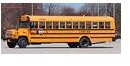
In line with the government’s various programs to improve air quality, another way of protecting children from air pollution is the implementation of school bus idling regulation. In addition, school bus operators should retire old school buses and retrofit others for conversion to natural gases.
“Clean School Bus USA”
The school bus idling regulation is being implementeded in view of the rising incidences of asthma in children . The U.S. Environmental Protection Agency or EPA considers old school buses as sources of air pollution hazards; hence, policies and procedures through the “Clean School Bus USA” aims to eliminate pointless idling.The regulations likewise include the upgrading or retrofitting for conversion of buses if necessary. The move aims to limit schoolchildren’s exposure to diesel exhausts and air pollution.
This will benefit twenty-four million American children who ride the school bus on a daily basis constantly exposed to these potential dangers, in as much as these children spend an average of one and a half hour in a school bus.
National Idle-Reduction Campaign Regarding Pointless Idling
The following are the school bus idling regulations launched by EPA to promote awareness among children, teachers, school bus managers and bus drivers, about the quality of air and diesel discharge being emitted by the school bus. The bus driver plays an important role in protecting the children by improving the quality of air while on board the school bus.
Idling produces emissions of diesel fumes that pollutes the environment and likewise enters building structures through open windowpanes, doors, and ventilation intakes. The National Idle-Reduction campaign aims to promote cost efficiency as engine life of school buses will be prolonged and will equate to savings in terms of maintenance costs.
Based on the idling computation of the EPA, a bus with a reduced idling of 5minutes per day will give an annual fuel savings of around 7.5 gallons or $30 (@ $4 per gallon). The amount of savings per bus multiplied by the number of school buses in operation denotes a hefty amount of cost savings involved.
To attain its effectiveness, the standard school bus idling regulations require that:
1. The engine is turned-on, only when it is moving.
-
There will be an immediate engine turn-off upon arrival at the loading or unloading areas.
-
The engine will be restarted only when it is about to leave.
Advertisement
- Early morning engine warm ups should not be more than five minutes.
Upgrading or Retrofitting of Buses
A diesel-fueled school bus is required to undergo upgrading or retrofitting to be considered as fit and clean for school bus operations. It is either fitted with a technological gadget that can minimize pollution or is using an Ultra-Low Sulfur Diesel (ULSD), or both.
The technological gadget is called Diesel Oxidation Catalyst. This device is capable of breaking down the pollutants through a chemical process. In turn, the emission of harmful components such as particulate matter (PM), hydrocarbons (HC), and carbon monoxide (CO) will be reduced. However, if the school bus operator has to control only the particulate matter emissions, there should be a filter installed in the exhaust system.
The use of ULSD in connection with the installation of the particulate matter filter will give significant reduction in PM, HC, and CO between sixty percent at the least, to a high of ninety percent. However, a stand-alone use of the ULSD can only give a modest result.
School bus conversion can also make use of other cleaner fuel alternatives like biodiesel and emulsified diesel. The former is made from vegetable oils and animal fats while the latter is made up of other additives, water, and diesel fuel. Each has its own advantages and disadvantages.
Replacement of New Fleet of Buses
Most school buses currently in operation were built prior to 1990, they do not have the pollution control devices, and safety features common in today’s automobiles. Hence, the emission of air pollutants is sixty times higher than those that were built in 2007. The sad part is that they are still operational because diesel engines can last for a long time. These old buses account for about 75,000 school buses still in use.
The solution is to replace these school buses with new engines that pass the emission standards, or better yet purchase a new model school bus.
This move of the EPA is in line with efforts to improve the quality of air , schoolchildren breathe. The worsening state of asthma incidences has reached epidemic proportions and children are said to be the hardest hit. School bus idling regulations should be observed while waiting for the passengers. EPA’s recommendations for retrofitting and replacing unfit school buses can likewise help in protecting the children.