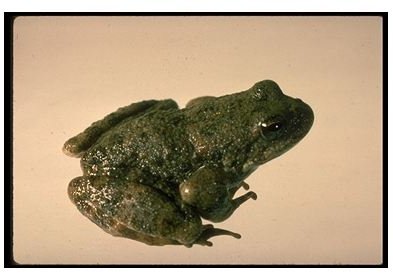
Global warming was found to be the main cause for the massive disappearance of the Sierra yellow-legged frogs and Yosemite toads. Yet, recent studies reveal that the emergence of the deadly “chytridiomycosis” fungus is a result not only of the changes in temperature but also from pollution run-offs
Fungus Thriving in Globally Warmed Temperature
Frogs dying in massive numbers still baffle scientists. However, the changes in temperature resulting to habitat loss and the discovery of the deadly “chytridiomycosis” fungus in these amphibians have led scientists to conclude that global warming has brought about the near extinction of the mountain frogs.
Fungi are one-celled organisms that usually live as parasites. They are spore-like and we recognize them as mold, yeast or mushrooms and often times can be harmful since they are capable of carrying toxic substances. Based on researches, an increase in temperature will cause fungi decomposition to take place and will let off one-product of decomposition, carbon dioxide.
As scientists have foreseen, climate changes have created an impact not only on plant and animal life but in fungi and microbes as well. As evidenced by the findings in the case of the dying frogs, even the ancient microbial species have sprung back to life brought about by the global climate changes.
It has been established that the Sierra Nevada frogs are still on a rapid decline based on the last report of the U.S. Geological Survey (USGS). It was estimated that there are only about 122 of the adult yellow-legged species existing in the wilds. Today, the said frogs together with the Yosemite Toad and Southern California Red-legged toad, are included on the Endangered Species List in Southern California.
Actions Taken to Save the Frogs and Toads
Unfortunately, scientists still haven’t found the solution to the“chytridiomycosis” fungus that continue to plague frogs and toads on a global scale.
Nevertheless, in an effort to preserve the yellow–legged frogs, the San Diego Zoo’s Institute for Conservation Research is exerting efforts to breed this particular frog species in captivity. So far they are optimistic about the yellow-legged frog’s breeding program but could not get their hopes too high. The frogs in captivity are said to be breeding at a young age, hence of the 200 eggs they initially found in their tanks, only a few were fertile enough to develop into tadpoles. Still, the scientists at San Diego’s Zoo are still waiting for the results of the next breeding season which is from December 2009 to March 2010.Once the success of this breeding program has been achieved, the institute will proceed with the ultimate goal of returning the yellow-legged frog to their natural habitat.
In the meantime, other sectors are in-charge of habitat protection and restoration. Since habitat loss is one of the reasons for the yellow-legged frog’s near extinction, a slope reconstruction project to repair a failing road is partly aimed at restoring the yellow-legged frog’s natural habitats along the river banks on Route 330 in San Bernardino Mountains. Actually, the frogs in San Diego Zoo’s breeding program were rescued from the dried up creeks in San Bernardino National Forest. Wildlife biologists have discovered that pools in the area have been drying up as a result of the declining creek water levels.
Update about the Breeding Program
The latest update about San Diego Zoo’s breeding program starts on a happy note, as 500 of the yellow-legged frog eggs have been reintroduced into the deep permanent pools in a creek at the James San Jacinto Mountains Reserve last April 2010. Biologists from the USGS are in in attendance to closely monitor the released eggs, as they develop from tadpoles through their transformation as adult frogs. Accordingly, the morphing process takes about two years, thus, the USGS biologists have to make sure that they stay within the bounds of the University of California Natural Reserve System.
On the other hand, the Yosemite toads have yet to be managed since suitable habitats for this species is still unknown. Habitats in which they have historically existed have been degraded by pollutants coming from livestock grazing as fungal, bacterial, and parasitic infections have brought about diseases.
The endangerment of the Sierra Nevada Mountain yellow-legged frog and Yosemite toads were intially attributed to extreme climate changes due to global warming. However, the latest findings likewise include loss of habitats due to the pollutants coming from pesticides as they drift from agricultural areas, from automobile exhausts and from the debris left behind by mountain hikers. All these have contributed to the contamination of shallow breeding waters on which frogs subsist.
Reference Materials and Image Credit Section:
Reference:
- San Diego Zoo Releases Yellow-Legged Frogs Back into the Wild – https://media.sandiegozoo.org/?p=4049
- Species of the Sierra Nevada — https://www.fs.fed.us/r5/snfpa/final-seis/vol1/chapter-3/3-2/3-2-2/3229.html
Image Credit:
- By David M. Green / Wikimedia Commons