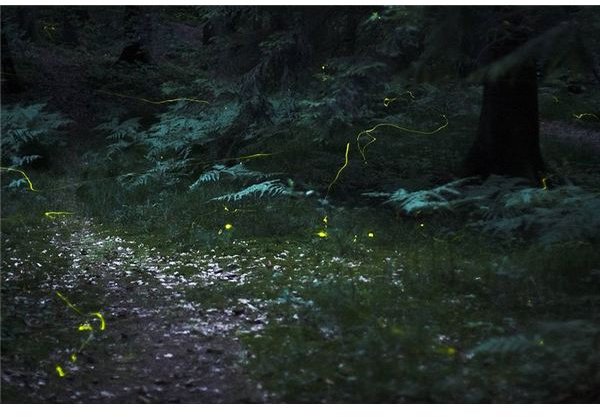
A brief look at the amazing little firefly.
Perhaps one of the most magical memories of childhood is the wonder of running through a field on a summer night and watching as the horizon comes to life with the glow of a million little pixie like lights across the sky. Fireflies, also called lightening bugs, have captured the imagination for generations, but most people know very little about these small insects.
Biology and Habitat:
Fireflies are a type of beetle known for their glowing, flashing abilities which have earned them the alternative name of lightening
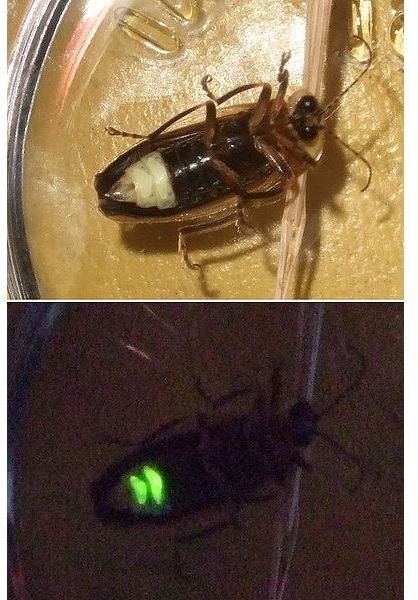
bugs. The light that they produced is done so through a chemical process that emits cold light, or light absent of any UV or infrared rays. There are more than 2,000 species of this amazing little bug, a beetle, which can produce a light that is general green or yellow in color, although some species emit a light that a more reddish tone to it. Even in their developmental stage, fireflies can emit light. These larvae are often referred to as glowworms because of this unique ability. This remarkable ability is made possible by an enzyme known as luciferase.
Fireflies inhabit a number of tropical and temperate ecosystems all over the world and typically, you can find a number of fireflies around marshes or other damp and wooded areas. Most firefly species are nocturnal insects, meaning that they are night dwellers, although a few do prefer to be active during the day. Generally these species, although they may be able to emit a small amount of light, are generally not the glowing icons of their nocturnal cousins.
Behavior:
So what is the point of all of this flashing? The process, called bioluminescence, is actually part of a mating ritual and plays a vital role in the communication between a male and female firefly. The males fly into the air in their grand light display as females watch from a stationary position. Once she spots the male she is interested in, she will respond with a flash of her own. And so begins this illuminating mating ritual. Amazingly enough, each species has its own unique flashing pattern which helps them to determine their own species from another.
Diet
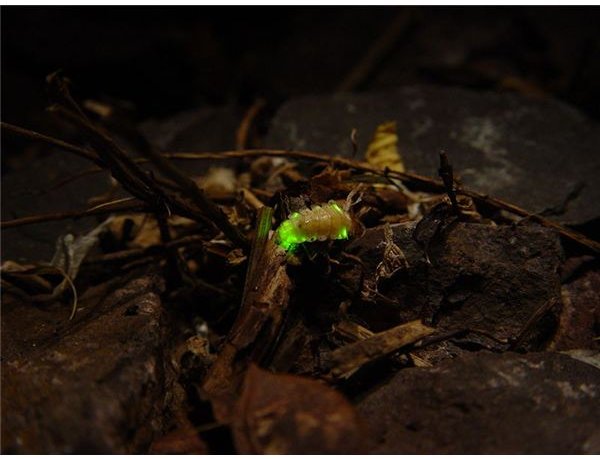
The diet of the firefly consists mainly of slugs, snails, and earthworms while they are developing as larvae. Adults feast on plant nectar although mated females may often lure males of other species in by replicating the patterns of that specific species and then devours the unsuspecting male when he lands.
Scientific Classification:
Kingdom: Animalia
Phylum: Arthropoda
Class: Insecta
Infraclass: Neoptera
Superorder: Endopterygota
Order: Coleoptera
Suborder: Polyphaga
Infraorder: Elateriformia
Superfamily: Elateroidea
Family: Lampyridae