Scientific studies have shown that squid have a well developed sense of hearing. How does noise pollution affect squid? Evidence from recent strandings has raised concern. Research at the Marine Biological Laboratory is studying what frequencies squid can hear.
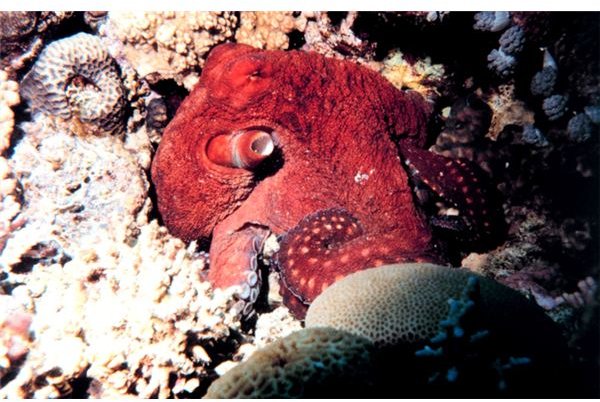
Zoologist T. Aran Mooney at the Marine Biological Laboratory is conducting a study on noise sensitivity of cephalopods. Cephalopods are octopuses, squid, cuttlefish and nautiluses. Mooney is conducting the study using Loligo pealeii squid as test subjects. The study will monitor the brain waves of squid while they are exposed to various noises, including sounds of predators. The sound tests will evaluate what sound frequencies cephalopods can hear and how they react to the sounds. Mooney will also try to train the squid to avoid certain noises.
Cephalopods are found in every ocean and have highly developed senses and large brains. They utilize hearing to escape predators and to find prey. In the deep ocean where visibility can be low, hearing is an important sense for survival.
The Marine Biological Laboratory is not the first to study cephalopod hearing. While cephalopods were once thought to be deaf, several studies have shown that they have a well developed sense of hearing. A study conducted on the Octopus vulgaris and Loligo vulgaris showed that the cephalopods were sensitive to low frequency noise between 1 and 100 Hz. (Budelmann and Bleckmann 1988).
In 2001 and 2003, nine Giant Squid stranded themselves after seismic air guns were used. The stranded squid had internal organ damage that is believed to be caused by the seismic noise. All of the nine squid had damage to the hearing organs. Two of the nine had severe damage to many organs. Some of the organs had exploded and were not recognizable. Seismic air guns produce noise in the frequency range of 20 to 150 Hz, which is within the range that the Budelmann and Bleckmann study showed cephalopods could hear.
Understanding the noise frequencies that cephalopods hear, could help us to understand the degree of harmful effects anthropogenic noise has on them. Anthropogenic noise is noise pollution caused by human activities. Anthropogenic noise has proven to be harmful to a wide variety of marine life. Anthropogenic sound can travel to far distances in the water, affecting a large amount of marine life. To learn more about the sources of anthropogenic noise in the oceans, read Sources of Anthropogenic Noise in the Ocean.
Images
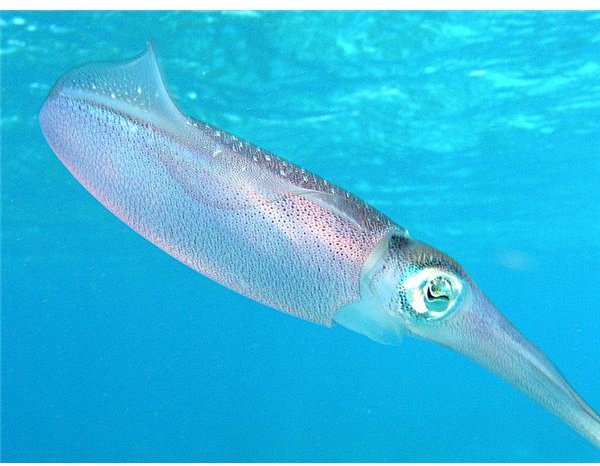
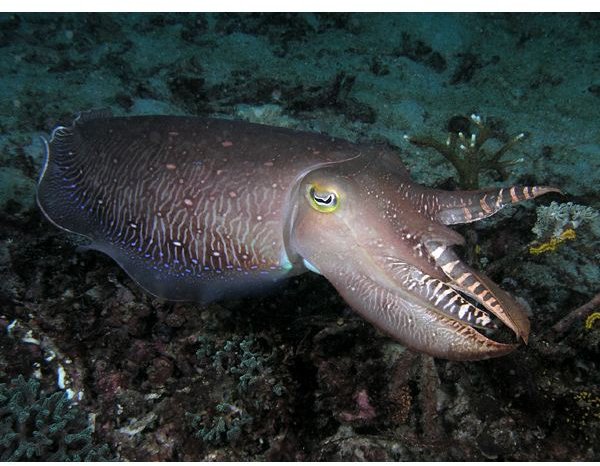
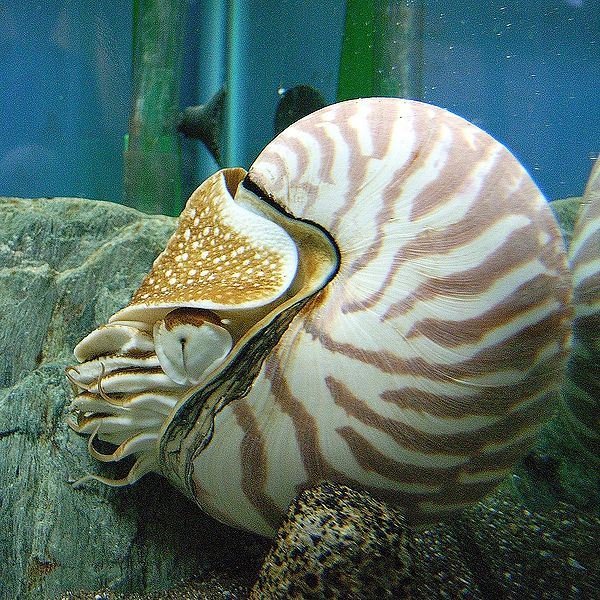
Image Credits
Octopus in the Gulf of Aqaba, Red Sea: NOAA’s Coral Kingdom Collection / Mr. Mohammed Al Momany, Aqaba, Jordan
Squid: Jan Derk / commons.wikimedia.org/wiki/File:Caribbean_reef_squid.jpg
Cuttlefish at Komodo National Park: Nick Hobgood / Nhobgood / creativecommons.org/licenses/by-sa/3.0/deed.en
Nautilus: OpenCage.info / creativecommons.org/licenses/by-sa/2.5/deed.en
Resources
J Comp Physiol A (1990)