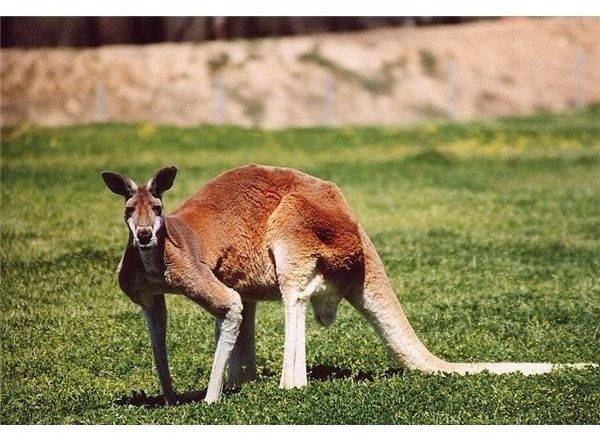
To the entire world, the kangaroo of Australia is synonymous with the outback. Global warming is affecting the very lives of this docile creature.
Global Warming and the Kangaroo
In the December issue of Physiological and Biochemical Zoology, researchers are releasing their findings that a simple 2 degree Celsius increase in temperature can have a marked effect on the Australian kangaroo population.
The study results offer evidence that small amounts of global warming on a large scale can affect an entire species. The kangaroo population in Northern Australia is being threatened by global warming.
Measuring the Effects of Global Warming
Researchers used a computer model and years of observations within kangaroo communities in the field to plot out the possible outcome of global warming on the kangaroo species. When looking 500 years into the future, researchers found that the kangaroo species can be affected by a small temperature increase of as little as 1/2 degree Celsius. When global warming affects the temperatures much as 2° C the kangaroo population could shrink by nearly 50%. When a change of 6° C was noted in research, the kangaroo populations became nearly extinct.
Reality Versus Research
When comparing this research to the reality of how Northern Australia will be affected by global warming, researchers found that an increase in temperature of up to 6° C could be expected by 2070. This essentially means the entire Northern Australia kangaroo population could be extinct by 2070. While the kangaroo population may be able to adapt to the new environment, the lands may not adapt as quickly as the mobile kangaroo.
The plant species native to Northern Australia would not be able to evolve as quickly as the animal population. This means less and less food availability for the animals in the region. Combine this lack of food with a lack of water due to increased temperatures during the dry season and the kangaroo is left with little hope of survival.
How Kangoroos Adapt
Kangaroos adapt to changing food rations and an increasing lack of water supply by moving from one place to another. As the lands dry up and produce less and less vegetation, there will be far fewer spots for the kangaroo to relocate to.
Which Species is at Greatest Risk?
The Antilopine Wallaroo, an Australian kangaroo living in the wet tropical climates is at the greatest risk of extinction. A 6° C increase in temperature would render the vegetation grasslands and thus the wallaroo if unable to adapt to this new form of food will become extinct.
Reference Materials
https://www.sciencedaily.com/releases/2008/10/081015120734.htm
Image Source
RedRoo (Supplied by Keith Edkins at Wikimedia Commons; Public Domain; https://upload.wikimedia.org/wikipedia/commons/5/5d/RedRoo.JPG )