Do you know that you can cook a Steak using sunlight? You can even BBQ meat with solar cookers. Learn about solar cookers and how they work.
Traditional cooking on stoves and ovens employ gas, wood or coal. These are traditional, non renewable, and highly contaminant fuels. The sun is practically a non-extinguishable source on clean energy. It does not leave any carbon footprint and can be used for many purposes including cooking. To do that a solar cooker is needed.
How do Solar Cookers Work?
Basically, a solar cooker work by converting sunlight (sun energy) into heat. The generated heat is what will cook food. Solar cookers work on sunny days. Many hours are needed and of course on cloudy or at night it is not possible to do “solar cooking.”
S
olar cookers need to capture sun energy, concentrate it, and retain heat. Dark surface are utilized to capture sunlight. On the contrary white surfaces will reflect light, not absorbing it, so , for solar cooking a dark pot and surfaces will work better. Sunlight will “hit” these dark surfaces and energy will be absorbed onto them, and transformed into heat that will cook the food contained in it.
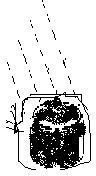
A sort of trap is needed for heat to be contained once it has been obtained form sunlight. The simplest way to do that is with a plastic bag or a glass box. This way heat is contained around the cooking pot and used for cooking.
Capturing “Extra” Sun Light
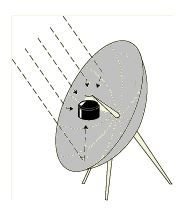
The basic solar cooking that has been described above can be easily improved by adding simple devices that will help concentrate and capture more solar energy. This can be done by adding shinny surfaces around it that will reflect more light and direct it towards the cooking device. There may be many designs on how this can be accomplished. In a boxed solar cooker a mirror or shinny surface can be placed in such a way that the sun light is reflected towards the cooking device. There are also simple and relatively inexpensive panels that can be added around the cooking device to concentrate solar energy. Finally, curved concentrators or “parabolics,” are able to achieve high temperatures on solar cookers.
In addition to cooking, solar cookers can be used for pasteurization of water and milk which it is practically impossible in certain areas of the world and it would be a way to help the environment by using renewable, clean sources of energy. That would be the topic of the next article.
Source:
Beth Halacy. 1992. Cooking with the Sun: How to Build and Use Solar Cookers
Morning Sun Press. ISBN 9780962906923