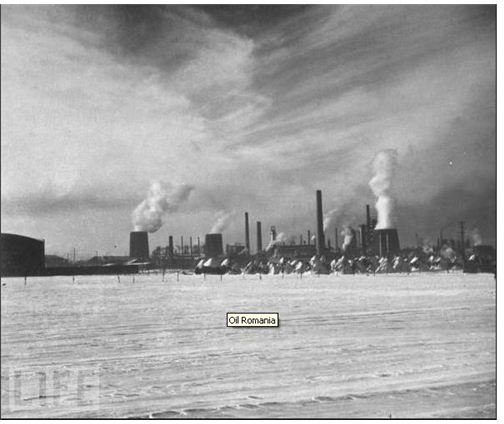
The German War Machine, like any machine, needed fuel to keep it running, but since the need for oil made it necessary for mobilization, Germany came up with a method to synthesize oil from coal. How did it work, and is the process efficient for use today?
The German War Machine Needs Fuel
Up until the onset of World War II in 1938, most of Germany’s oil and fuel supplies came from three sources: imports from overseas, oil extraction from local oil fields, and the production of German synthetic oil from coal.
Allied blockades prevented the importation of fuel to Germany. This resulted in Germany having to rely on its own resources for fuel. Of course, they utilized fuel from conquered countries, but they also had to rely on coal-to-oil conversion. The process by which coal was converted to oil or synthetic fuel is known as the Fischer-Tropsch process.
Partial oxidation of the coal results in the production of carbon dioxide and monoxide. This is a catalyzed process by which carbon monoxide and hydrogen are converted to variations of liquid hydrocarbons. These hydrocarbons are then refined to produce the resulting German synthetic oil.
However, there was another efficient process of coal-to-oil synthesis. Hydrogenation, a process by which the coal-to-oil conversion is exposed to hydrogen, was found to be an efficient option in comparison to the Fischer-Tropsch process.
The reason for this was because the raw materials needed for the Fischer-Tropsch process was more than what was required for the hydrogenation process. The Fischer-Tropsch fuel had a lower octane than the other, but diesel fuel was satisfactory. Also the Fischer-Tropsch fuel was more expensive than hydrogenation in both running and capital expenses for German synthetic oil.
The bombings of synthetic fuel plants by allied forces in May of 1944 had made a huge impact on Nazi Germany and their war effort.
Coal Liquefaction - Is it Workable and Justifiable?
That being said, I would think fuel synthesis is justifiable due to the fact that countries might have been forced into a position financially to use it as an alternative fuel. People are always looking for ways to save money. Also, the price of gas would be cheaper if this coal-to-oil process were used. In Jan ‘09, a barrel of oil cost around $42, but by using the Fischer-Tropsch process, it could make a barrel of oil cost around $25 a barrel. This would probably make gas around a dollar and change a gallon.
In the coal shale of Utah, Wyoming, and Colorado, there are trillion of barrels of oil that could be synthesized! The issue is that the Fischer-Tropsch process itself is quite costly. The Center for Renewable Energy Science and Technology is conducting research to produce a type of “microfluidic” technology that would make this process more affordable than the cost of the German technology.
China is focusing in this conversion process due to their dwindling oil reserves, however, according to the Huffington Post website, this can be the leading cause of CO2 emissions, so this is not necessarily a “green” method of alternative fuel production. Twice as much CO2 emissions result from this process. I suppose some prefer to pick the lesser of the two evils.
Resource Links
Becker, Peter W., Air University Review, July-August 1981, The Role of Synthetic Fuel in World War II Germany
The Huffington Post, Nov. 22, 2010, Coal Liquefaction: China’s CO2-intensive Solution to Diminishing Oil Reserves (Video)
RP-I.com: The Fischer-Tropsch Process
Fort Worth Business Press: UTA professors seek cheap fuel in coal-to-oil study
Reverso-Softissimo: hydrogenation