This article focuses on ways to cool the house with water, instead of using an air conditioner. A homemade air conditioner with cool water typically utilizes the principle of evaporative cooling. It depends on the evaporation of water and the movement of air. A roof sprinkler cools a house as well.
During the summer, the temperature in the house can rise to an uncomfortable level. The usual response by home owners is to turn on the air conditioner . As a result, the house cools, but at a cost. Most likely, the energy bill will increase dramatically since air conditioners require a lot of energy to operate. If you are considering ways to save energy, and in the process save money, consider these alternatives that utilize water to cool a house.
Evaporative Cooling
A homemade air conditioner with cool water is probably the best way to cool down a house if you are on a tight budget. There are various methods that use cool water to cool down a house, but all of them work because of a process called evaporative cooling. Evaporative cooling is basically cooling an area by evaporating water. Usually, an absorbent material is soaked in water, a large bowl is filled with water, or misting apparatuses spray water. While this is occurring, an open window, fan, or pump circulates air throughout the room. The idea is for hot circulating air to pass through the cooler water, forcing the water to cool the air by evaporating. The cooler air then circulates through the room, reducing the room temperature.
Homemade Evaporative Cooler
There are several ways to construct a homemade air conditioner with cool water. For example, set up a large bowl of water on a coffee table at one end of the room and place an oscillating fan behind it. Have it aimed toward the area where you would sit. The air blown from the fan will cool slightly before reaching you, since it will have passed over the water bowl. Placing ice in the water will also help cool the surrounding air.
Another way to cool the house is to place water soaked sheets near open windows. As warm air enters the house, it will pass through the sheets and cool slightly. If you have open porches, hang several water soaked sheets around the porch and use a fan to pull air through the sheets. During the night time, the breezes can cool the porch quite well.
Commercial Evaporative Cooler
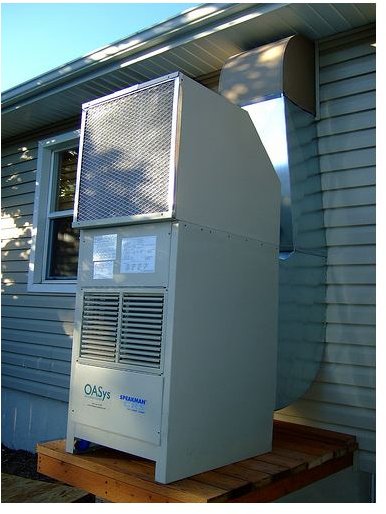
When you are ready to upgrade to a professional evaporative cooler, remember that it costs less than an air conditioner, and it uses almost half as much energy. An evaporative cooler consists of a fan, absorbent pads, water reservoir, and a water pump. The unit can be mounted on a window or installed as a central unit. The fan draws warm external air through the moistened pads and blows the cooled air into the house. A central unit requires duct work to carry the cooled air throughout the house.
Image by Lowjumpingfrog from Flickr
Roof Sprinklers
By extending the idea of evaporative cooling to the roof, you can invest in a sprinkler system designed to spray water onto the roof during hot summer days. As the water evaporates, the surface of the roof cools. This will help reduce the temperature inside the house.
Reference
1. https://www.consumerenergycenter.org/home/heating _cooling/evaporative.html
2. https://www.builditsolar.com/Experimental/RoofCooling.htm